















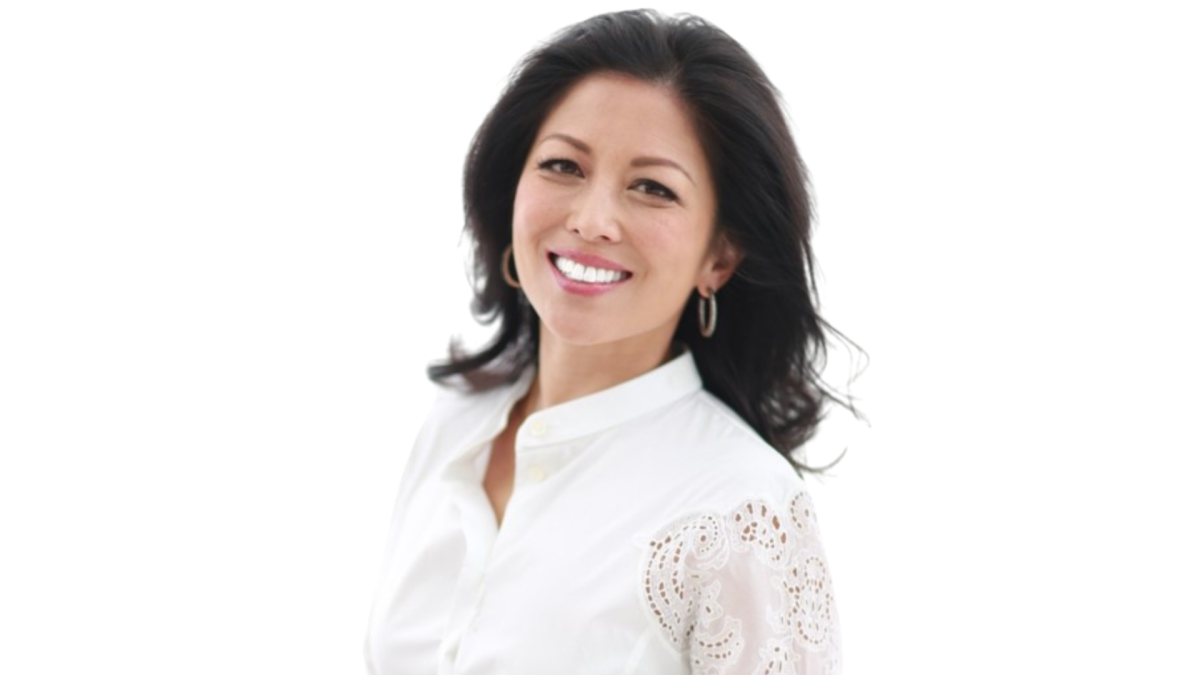
![Dr. Zanita Kelly, Director of Lower and Middle School, pictured above, and the rest of Westridge Administration were instrumental to providing Westridge faculty and staff the support they needed after the Eaton fire. "[Teachers] are part of the community," said Dr. Kelly. "Just like our families and students."](https://westridgespyglass.org/wp-content/uploads/2025/03/dr.-kellyyy-1-e1748143600809.png)

![Lacrosse had an incredible season, making it to the semifinals. Jeff Searock, the father of player Sophie S. '28 has gone to most games and said, "[The season has] been great. Great coaching, great players, kids have great attitude. You can't ask for much more."](https://westridgespyglass.org/wp-content/uploads/2026/05/IMG_3652-1200x900.jpeg)










In Romeo and Juliet, William Shakespeare famously wrote, “What’s in a name? That which we call a rose by any other name would smell as sweet.”
Walking through campus on any given day, the greetings sound slightly different depending on whom students pass. They can range from “Hey DCal” and “Thanks Maria” to “Hi Ms. Wei” and “Good morning Dr. Busch.” This variety reflects something Shakespeare questioned centuries ago: does a name really matter, or is a person’s essence more important than their label?
At Westridge, the way students address adults on campus varies widely. Some teachers are known by shortened last names or nicknames and others by formal titles like “Dr.,” while many Dining Services and facilities staff members are simply addressed by their first names.
These patterns may seem small, but they may reveal something about school culture—how familiarity, respect, and authority coexist in everyday interactions.
Students say these differences are noticeable, but not necessarily divisive. For some, the less formal names make classrooms feel more approachable. “It’s an equal relationship,” Lexie F.-W. ’28 said. “There’s a sense of respect, but more familiarity.”
For Upper School Latin Teacher Dr. Hilary Malspeis, the name students use reflects a balance between familiarity and recognition. She explained how some people do not know how to pronounce “Malspeis” which, over time, led to students calling her “Dr. M.” But while the shortened name makes the classroom feel less intimidating, the title itself still holds a degree of respect.
“‘Dr.’ is a degree that I earned,” Dr. M, who holds a doctorate from University of La Verne, said. “I feel like I want to be recognized for it by both my colleagues and students.” Rather than shaping the tone of the classroom, the title reflects something more personal: the value she places on that achievement.
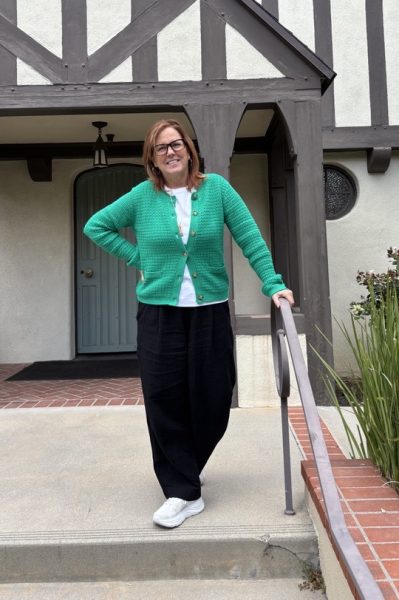
However, some students say that formal titles can initially shape perception, even if that effect fades over time. “At the beginning of the year, when you walk into a teacher’s classroom and they introduce themself as ‘Dr.,’ it can feel a little scary,” Amelie S. ’28 said. “But once you get used to it, you stop noticing it.”
For Director of Admissions Margaret Shoemaker, who holds a doctorate from University of California, Los Angeles, the use of “Dr.” has shifted depending on her role within the school. Earlier in her time at Westridge, when she first served as Middle School Division Director and later as Upper School Division Director, she was more consistently addressed as “Dr. Shoemaker,” a title that aligned with her position and visibility in day-to-day school life.
Now, in her admissions role, she finds that the formality matters less. “I don’t have strong feelings either way,” Ms. Shoemaker said. “I just kind of go with whatever the vibe is for the people around me and the circumstance that I’m in.”
While some students and faculty members still use “Dr. Shoemaker,” many now default to “Ms. Shoemaker,” reflecting her more outward-facing role with prospective families rather than daily interaction with students.
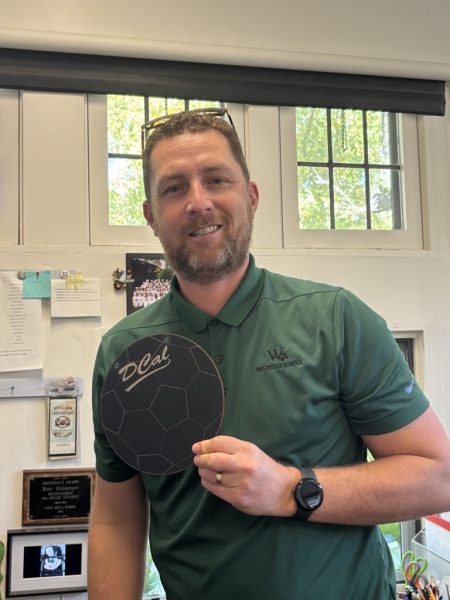
For Upper School Computer Science Teacher Mr. Daniel Calmeyer, better known to students as “DCal,” his nickname developed almost accidentally. It started on a Discovery Week trip during his second year at Westridge, when a student felt that calling him “Mr. Calmeyer” while traveling together felt too formal. When she suggested the nickname “DCal,” he didn’t correct her, and soon other students started using it as well. “Two classes later somebody else tried it,” DCal said. “And I just responded and kept going.”
Over time, the name stuck. He believes the nickname subtly shapes the classroom environments of Geometry, Full Stack Web Development, and Physical Computing and Robotics, the three classes he teaches this year. “It helps lower the temperature,” he said. “We’re learning math or computer science, and there are still high expectations, but we can take the material seriously without taking ourselves too seriously.”
Still, he emphasized that the tone of a classroom depends on more than just what students call their teachers. “You have to set norms,” he said. “There can be a loose classroom environment that leads to disrespect, but you can also have a relaxed environment where students and teachers treat each other with respect.”
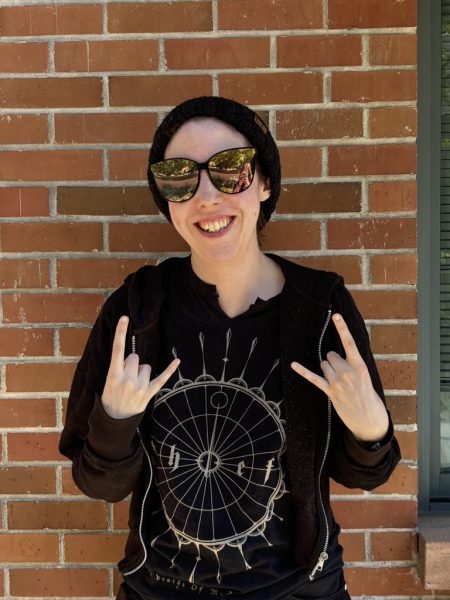
Upper School Computer Science Teacher Autumn Rogers takes this approach one step further: students simply call her Autumn. Part of that decision, she explained, is practical. Using a first name avoids gendered titles like “Ms.” or “Mx.” that she doesn’t feel strongly attached to. But it’s also sociological. “I feel like sometimes when you’re very strict about ‘I am Ms. Rogers,’ it can feel like artificially elevating yourself above students,” she said.
Instead, Autumn prefers to build credibility through teaching rather than titles. “I should be able to prove through my skills that I know what I’m doing and that I’m somebody you should listen to,” she said.
Other names at Westridge developed in their own ways. Upper School Art Teacher Ms. Lorri Deyer is frequently called “Lorri.” And, along with Dr. M., multiple other teachers—like Upper School Science Teacher Mr. Aaron Eichelberger, often called “Mr. E.”—go by their last initials.
According to Mr. Calmeyer or DCal, these naming patterns are rarely intentional. “I think part of it is personality,” he said. “But I also think it’s the old thing of ‘you can’t pick your own nickname.’”
Mx. Stevie Bolton, who is commonly addressed as both “Stevie” and “Mx. Bolton,” sees this flexibility as reflective of a broader perspective on respect. “ I think there are people who feel like respect comes with the moniker—the Mr., the Ms., the Dr., the Mx.,” Mx. Bolton said. “I think I’m very much in the camp of ‘respect comes by calling people how they’ve introduced themselves.’”
Their experience also highlights how more and less formal naming can coexist. While Mx. Bolton initially intended to go by their first name, students’ differing assumptions led to both forms being used interchangeably, something Mx. Bolton ultimately chose not to correct.
Students also emphasized that respect depends less on the name itself and more on how it is used. “As long as teachers are okay with it, it’s not disrespectful,” Adina S. ’28 said. At the same time, she noted that overly casual use can feel different depending on tone. “If you’re just throwing their name around, it can feel a little disrespectful, but it depends on the situation.”
Beyond the classroom, another naming pattern appears around campus. Many students address members of the Dining Services and facilities staff by their first names, reflecting the less formal relationships built through daily interactions in shared spaces like the Commons.
For Director of Dining Chef Brandon, first names help create a space that feels approachable rather than rigid, even while maintaining clear expectations for behavior. “We do want to enforce some rules about the line or the volume of your voices,” he said, “But I definitely want a more friendly, open environment. People can have fun with how they address me, as long as it’s respectful.”
Dr. M., however, noted that this distinction between faculty and staff can raise questions about boundaries. “My belief is that staff members—front office staff, facilities staff—should also be called Mr. or Ms. if they want,” she said. “Because otherwise students might perceive that people who go by their first names deserve less respect.”
Currently, there is no fixed rule around how students should refer to faculty at Westridge; while the Student/Parent Handbook emphasizes the core values of respect, responsibility, integrity, and inclusion, it does not prescribe specific forms of address. Instead, naming conventions are shaped by individual preference and mutual understanding, often guided by how adults introduce themselves.
Despite these different approaches, many teachers agree that names alone do not determine authority. Instead, they shape first impressions and signal tone, while relationships and teaching ultimately define respect. In that sense, Westridge reflects the paradox at the heart of Shakespeare’s line: names may not change the essence of a person, but they still carry meaning—signaling familiarity, hierarchy, or approachability depending on how they are used.
Ultimately, the variety of titles and nicknames reflects something subtler: the culture of the school. “I think there’s probably more teachers here that use a nickname than at some other schools,” DCal said. “And I think that’s a function of the positive culture of the school—a closer-knit community rather than a culture of disrespect.”
Suggested reading:
What the F**k is Up With Swearing at Westridge? The Role Cursing Plays in a Learning Environment




![“I just know every time I look into one of those sorting stations, [I] wouldn't be able to tell which one is a landfill, which one is compost and which one is recycling,” Upper School Service Coordinator and Green Guerrillas advisor Ms. Erica St. John recalled, reflecting upon Westridge’s waste sorting job.](https://westridgespyglass.org/wp-content/uploads/2026/04/FinleyNichols_Recycling-1-e1776618779363-1200x878.jpg)