








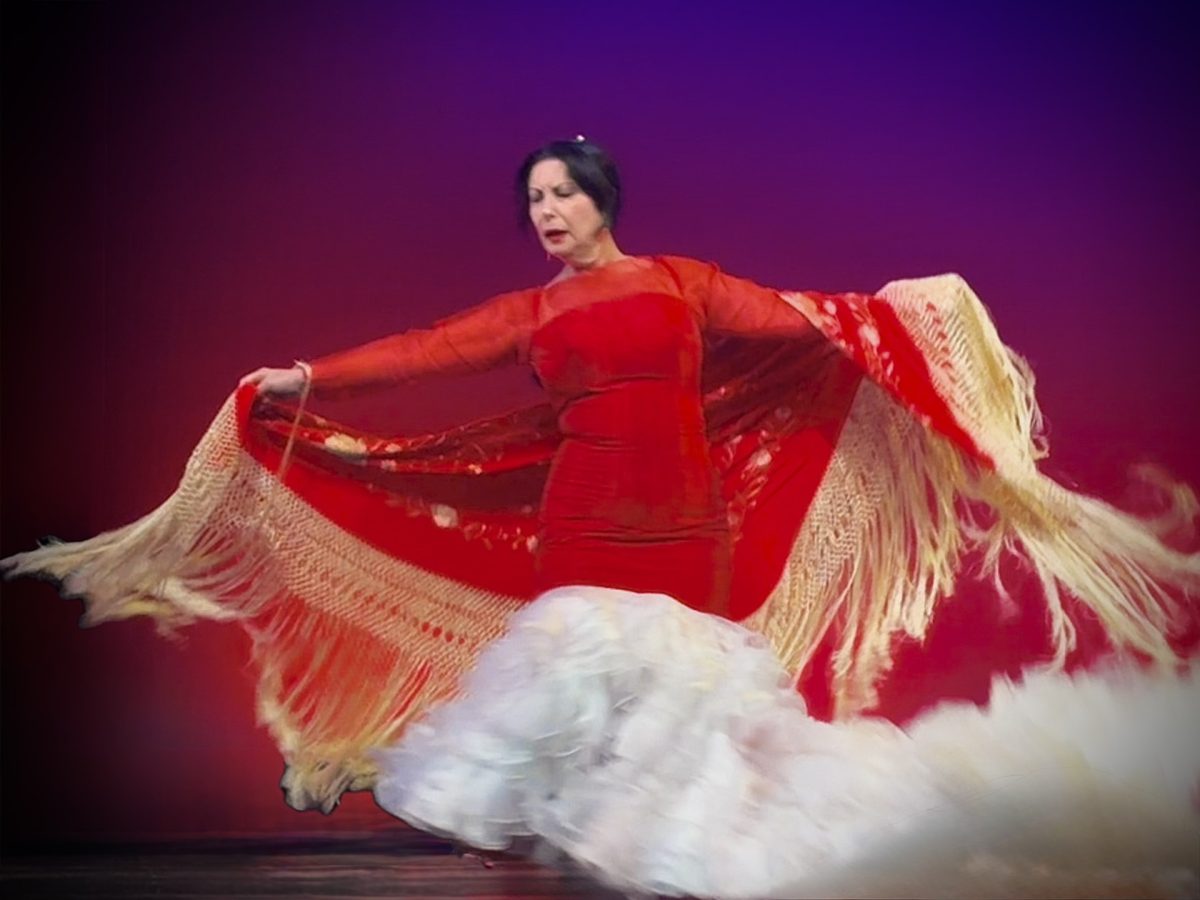

![Dr. Zanita Kelly, Director of Lower and Middle School, pictured above, and the rest of Westridge Administration were instrumental to providing Westridge faculty and staff the support they needed after the Eaton fire. "[Teachers] are part of the community," said Dr. Kelly. "Just like our families and students."](https://westridgespyglass.org/wp-content/uploads/2025/03/dr.-kellyyy-1-e1748143600809.png)
![Lacrosse had an incredible season, making it to the semifinals. Jeff Searock, the father of player Sophie S. '28 has gone to most games and said, "[The season has] been great. Great coaching, great players, kids have great attitude. You can't ask for much more."](https://westridgespyglass.org/wp-content/uploads/2026/05/IMG_3652-1200x900.jpeg)




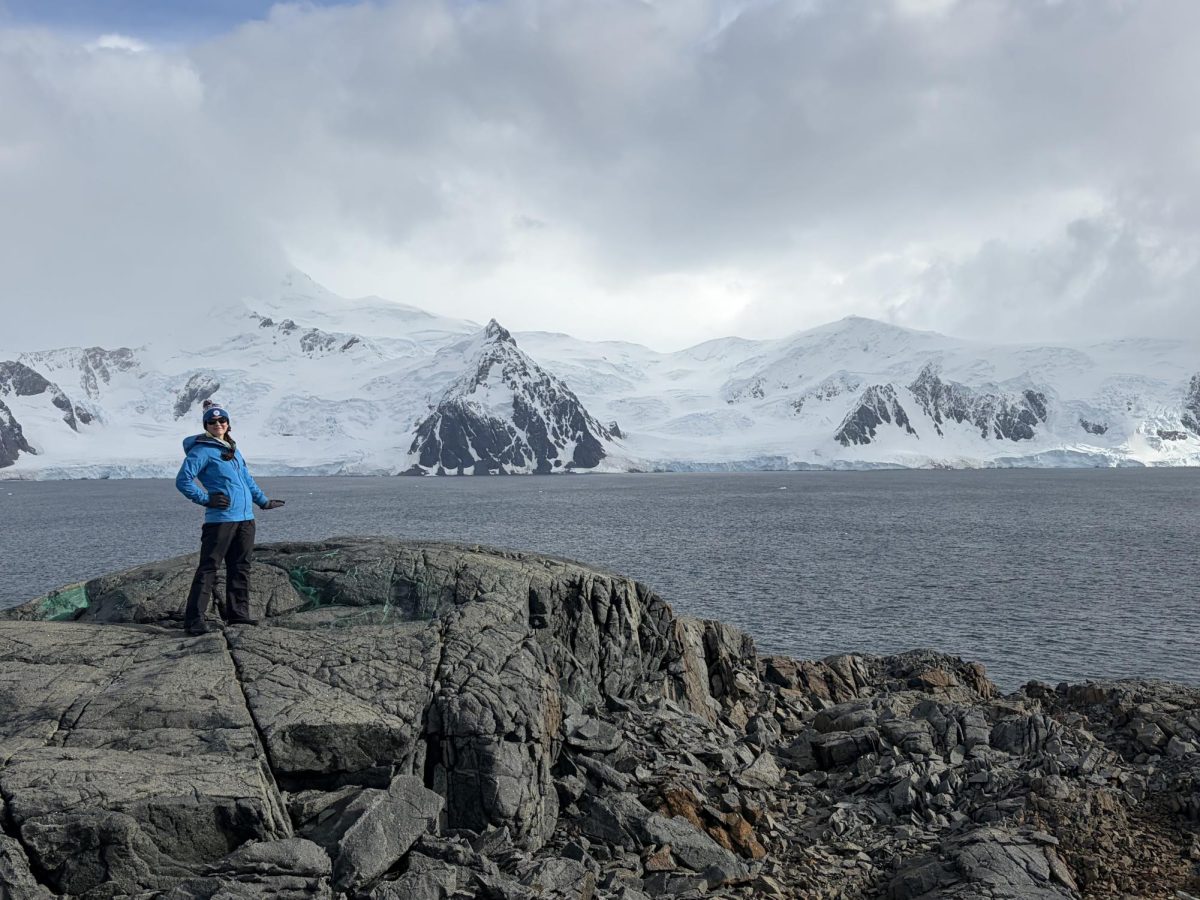
On a small kayak in the middle of the Southern Ocean, Julia K. ’27 came face to face with a minke whale. Just below freezing—around 26 degrees Fahrenheit—Julia paddled through the icy Antarctic waters for the first time, weaving between the chunks of drifting ice floating around her. Suddenly, the spotted dark gray whale surfaced right next to her with a splash, close enough for her to touch. “Dang,” she remembers thinking. “That’s a whale.”
For Julia, that moment was just one of many core memories made during her four-week expedition to Antarctica. From February 10 to March 10, she ventured to the Antarctic Peninsula through Venture Scouts Crew 774, a program connected to her Scouting America troop (formerly, Boy Scouts of America)—which she has been a part of for six years. The trip was led by marine biologist Dr. Jeff Bosanic, who took seven scouts to different sites along the peninsula, mainly traveling by boat. Julia’s crew explored remote landing sites and worked alongside scientists conducting various research projects.
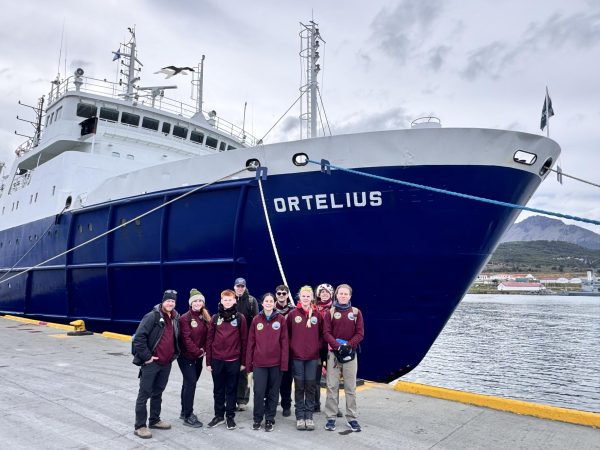
Getting to Antarctica itself took several flights and bus rides. Julia first flew from Los Angeles to Houston International Airport, then to Buenos Aires, and finally to Ushuaia, a port city at the southern tip of Argentina. From there, she boarded the Ortelius, an expedition ship part of Oceanwide Expeditions that would take her to Antarctica and become her home, where she’d sleep, eat, and work alongside the rest of the group for the next two weeks.
While most of the trip was spent on water, the rest was pieced together by bus rides between airports and hotels in Argentina, and once in Antarctica, short trips on Zodiac boats—durable, high-performance inflatable boats—that carried the crew from the ship to shore.
For Julia, her interest in the expedition came from both her involvement with scouts and the opportunity to learn more about environmental issues in the real world. “After I got the chance to talk with Jeff, he was really passionate about it, and he told me how much great science there was going to be,” said Julia. “I thought that’d be an amazing opportunity.”
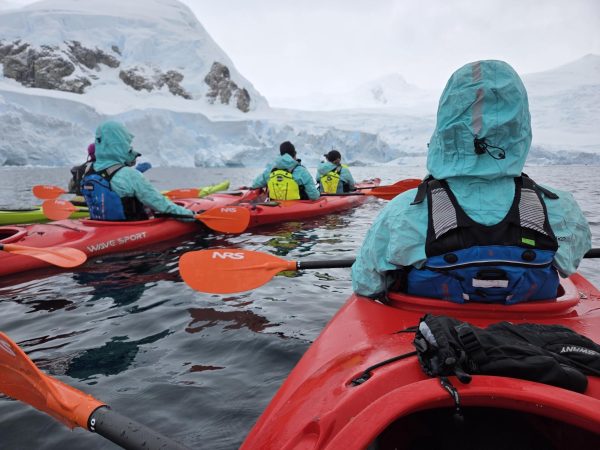
Life on the ship quickly settled into a normal routine. To start the day, Julia would wake up between seven and eight in the morning and eat breakfast on the ship. From there, her crew would head out by either boarding a Zodiac to move through the icy water or doing landings, where the group spent hours exploring remote stretches and areas along the peninsula.
After returning to the ship for lunch, she’d spend part of the afternoon working on environmental research alongside scientists in the field, from microplastic sampling to specimen curing for the Los Angeles Natural History Museum. “I didn’t expect to see all the microplastic[s] that we found in the dirt,” said Julia. “There was a whole plastic water bottle on one of the islands, and it was devastating to see.”
Later in the day, Julia would go back out again before gathering for dinner. During her evenings, she’d sometimes finish up lab work, sit in the lounge drinking hot chocolate, or journal. Surrounded by scientists specializing in fields like glaciology, oceanography, and geology, Julia attended lectures and worked alongside experts—many of whom, she noted, were women.
However, the trip didn’t unfold exactly as planned, as the crew encountered a mechanical failure with the original ship they were supposed to go on, the M/V Plancius. While they were able to switch boats to the Ortelius, the group was forced to change its itinerary, cutting the Antarctica portion of the expedition short by a week. As a result, the crew wasn’t able to complete certain aspects of their trip itinerary, like camping on the continent itself and visiting a king penguin colony.
Still, a big part of Julia’s time on the expedition was spent understanding and learning about Antarctica’s environment. By working alongside scientists, collecting samples, and just being outside in Antarctica, Julia realized how plastic can really affect places as remote as Antarctica.
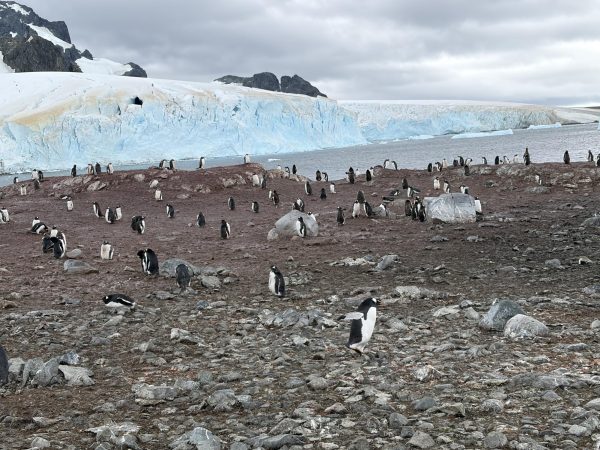
At the same time, Antarctica’s landscape itself was quite different from what she had initially imagined. Instead of endless stretches of white ice, much of the landscape was rocky, with patches of ice only visible at higher elevations. The water looked different as well, with dark and reflective qualities that created beautiful pictures on the water.
Beyond researching and learning about Antarctica, the crew was able to bond and create close connections throughout the expedition. Although she didn’t know anyone on the trip initially, by the end of the four-week trip, surrounded by her crew, Julia formed many close bonds. “I’m usually very shy and not good at talking to people, so it was tough for me to talk to all the people on the crew,” she said. “But once I started talking with them, they were super nice and very open to sharing about themselves—being with them was very bonding.”