


























![Dr. Zanita Kelly, Director of Lower and Middle School, pictured above, and the rest of Westridge Administration were instrumental to providing Westridge faculty and staff the support they needed after the Eaton fire. "[Teachers] are part of the community," said Dr. Kelly. "Just like our families and students."](https://westridgespyglass.org/wp-content/uploads/2025/03/dr.-kellyyy-1-e1748143600809.png)

![Lacrosse had an incredible season, making it to the semifinals. Jeff Searock, the father of player Sophie S. '28 has gone to most games and said, "[The season has] been great. Great coaching, great players, kids have great attitude. You can't ask for much more."](https://westridgespyglass.org/wp-content/uploads/2026/05/IMG_3652-1200x900.jpeg)












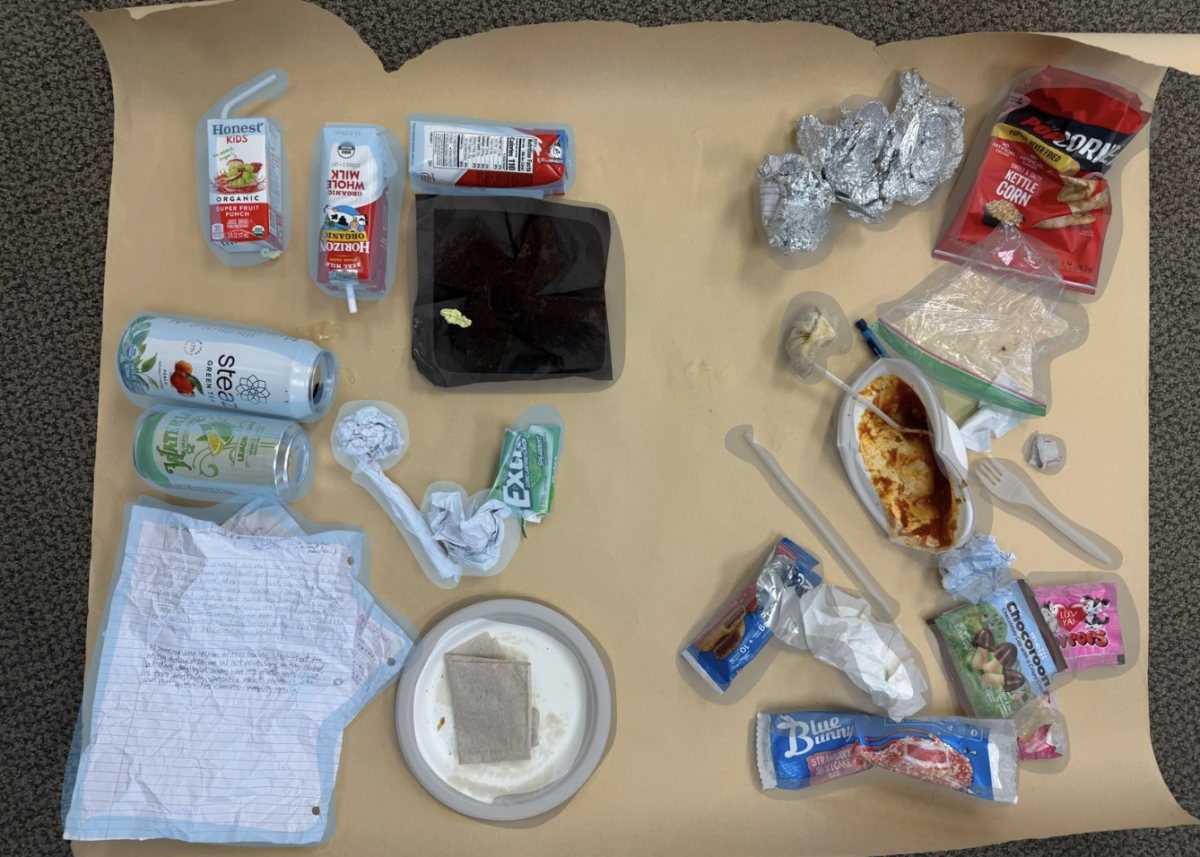
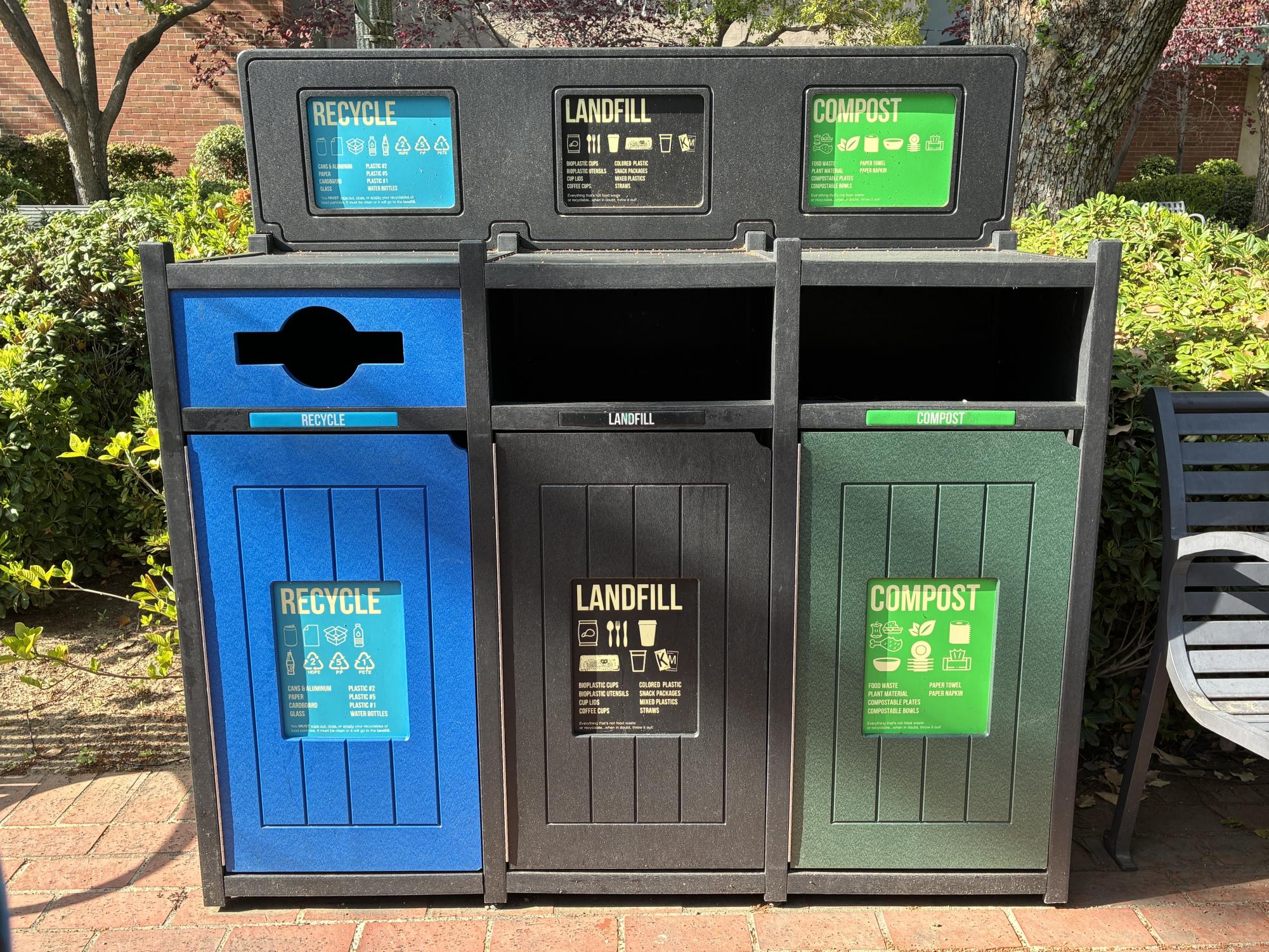
![“I just know every time I look into one of those sorting stations, [I] wouldn't be able to tell which one is a landfill, which one is compost and which one is recycling,” Upper School Service Coordinator and Green Guerrillas advisor Ms. Erica St. John recalled, reflecting upon Westridge’s waste sorting job.](https://westridgespyglass.org/wp-content/uploads/2026/04/FinleyNichols_Recycling-1-e1776618779363-1200x878.jpg)
At lunch, students move quickly between grabbing food, chatting with friends, and throwing away what’s left behind into what’s often the case, the nearest bin. Westridge’s primary Upper School-led sustainability club, the Green Guerrillas, has actively encouraged students to think more sustainably through various student-led initiatives, including clothing swaps, interactive assemblies, and on-campus composting.
Made up of around 20 members, the Green Guerrillas meet during lunch once a week, with around 8-10 members showing up to each meeting. “It’s a very collaborative environment—we’re all joined by enjoying sustainability,” said Green Guerrillas co-head and Spyglass Editor Tekle S.-J. ’27. “Even though we’re a smaller club, we have a lot of committed people. Partially because it’s a lunch meeting, and it takes effort to show up, being like, ‘Okay, I’m skipping my break during the day.’”
This year, the club has aimed to make sustainability more engaging to encourage students to strive towards sustainability. “We’re mostly working on planning fun events and trying to get school policy to better reflect sustainable views,” said Tekle.
In January, the Green Guerrillas launched their on-campus composting initiative with a grade-level competition between the Upper School, which resulted in the juniors winning three free dress days with the largest amount of compost collected by the end of the week. While Westridge uses Athens Services to collect separated waste on campus and transport it offsite for composting, the Green Guerrillas’ initiative focuses specifically on food waste from the Commons, as well as food brought from home, and repurposes it directly on campus. Although the Westridge Permaculture Garden has been composting since 2022, this composting initiative expands that effort by using daily student waste to directly benefit student gardens. Over the past two years, they have worked with the Steamworks Design Studio to build bins and create signage.
The Green Guerrillas worked to revive the composting bin created behind the art room for a CAP project seven years ago. Each grade of Green Guerrillas takes turns dumping the compost bins each week behind the art rooms—a process which involves adding brown materials like wood chips, leaves, or straw on top of the food waste to create the right conditions for aerobic (air-based) decomposition to happen. From there, the generated soil is directly used in the student gardens on campus.
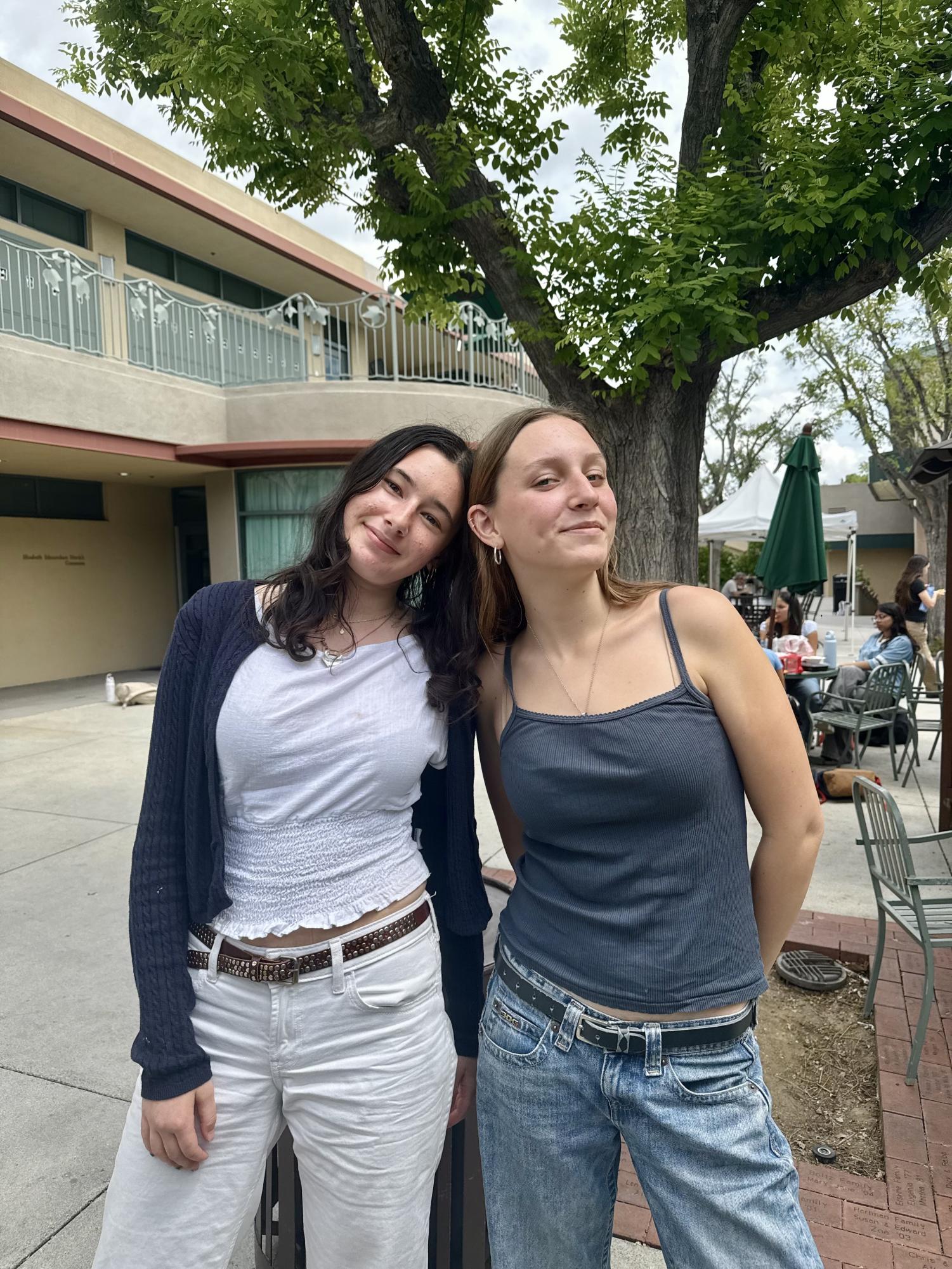
As the composting initiative continues, the Green Guerrillas and STEAMwork Design Studio Coordinator Mr. Mick Lorusso, who has supported various Green Guerrilla initiatives and has played a big part in the composting initiative, hopes it can expand to entire school participation. “It’s exciting to have our own on-campus composting, because people feel like they’re contributing to plants that are on campus,” said Mr. Lorusso. “It’s not just putting things in bins and not knowing where they get trucked off.”
Still, they have faced challenges in student engagement with the sustainability efforts, including the composting initiative. “I’ve definitely noticed some hypocrisy, where a lot of people at Westridge are happy to say that they support sustainability, but then at the end of the day, that doesn’t end up being the case,” noted Green Guerrillas club co-head Larkin M. ’27.
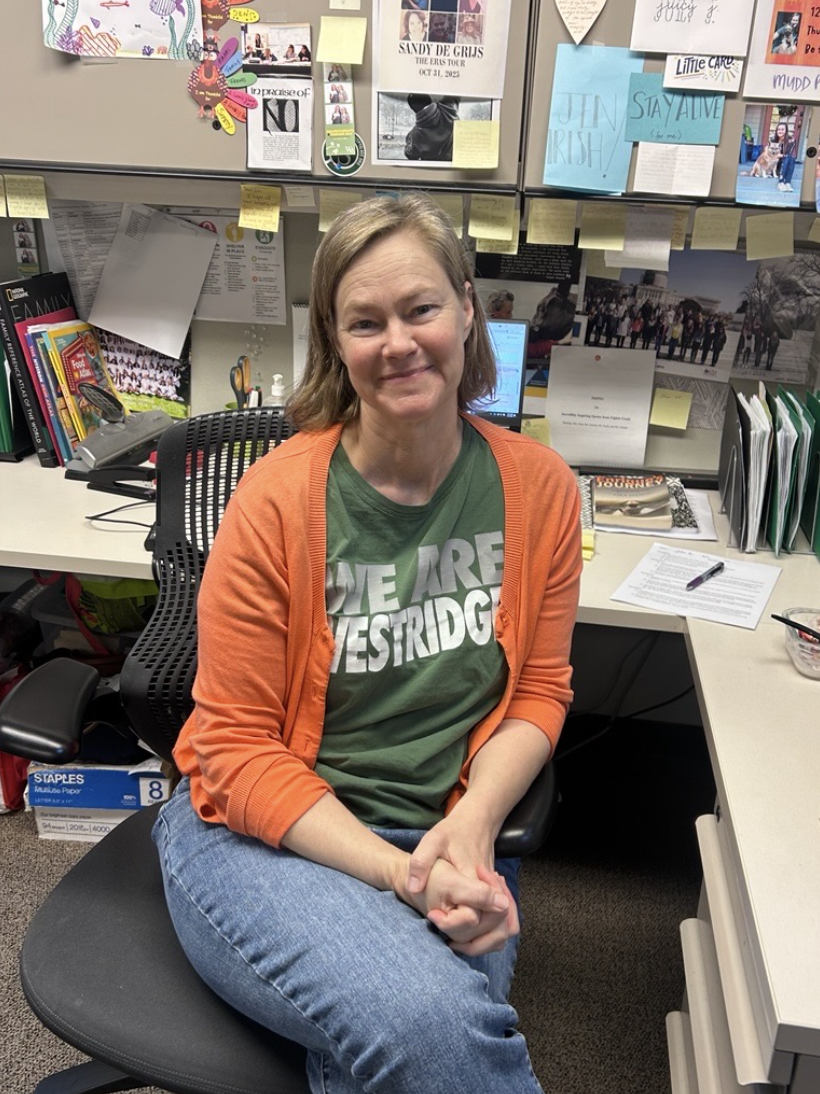
Upper School Service Coordinator and Green Guerrillas advisor Ms. Erica St. John described the club’s efforts to motivate students to support sustainability as an uphill battle. “We’ve been trying to do the trash sorting and brainstorm ways to get Westridge to sort their trash,” she said. “It’s been an agenda item for the past 10 years that I’ve been here, and we don’t seem to be making any progress.”
Giselle R. ’28 said, “We have the three different trash cans, but I feel like no one really pays attention to what they put in the different trash cans. I think we just need to be more conscious about what we’re doing.”
Many students have also acknowledged a gap between awareness and action—a hesitation that often comes down to priority between classes, sports, extracurriculars, and other commitments. “I love that we try to implement a bunch of sustainability efforts, for example, having the compost competition,” said Katherine D. ’28. “But I think a lot of the problem is that students aren’t really willing to take the initiative for that.”
Mr. Lorusso has noticed how the disconnect is reflected in Westridge’s overall culture and notes how this pattern extends beyond campus and reflects broader societal habits. “There’s a lot of virtue signaling,” said Mr. Lorusso. “There’s a lot of people saying, ‘Oh yeah, I think that sustainability is important or good,’ but then when it comes down to it, they might not actually do anything in their own lives to show that it’s truly meaningful to them.”
For Ms. St. John, the problem extends beyond just intention and action. Instead, Westridge lacks a strong sustainability culture altogether, with absent school-wide sustainability goals and limited vocal engagement from students, faculty, and administration. “There are a few individuals on campus that try,” she said. “But for the most part as a school, I think we’re really falling short…we say we care about these things, but where’s the action?”
In the Steamwork Design Studio, Mr. Lorusso has noticed how larger systems can limit local sustainability efforts. For example, trying to recycle wired filament from the studio has been challenging, due to the lack of facilities in California that accept the 3D-printed waste and recycle it. Even when there is an intention to recycle, these barriers make it harder to uphold sustainability practices.
Still, for Carolina A. ’28, Green Guerrilla’s efforts have encouraged her to think more about sustainability. “The Green Gurillas do a really great job of bringing all these different sustainability-centered activities to campus,” she said. “Especially with the new compost bins and Earth Week coming up, I think there’s definitely a lot that they’re doing, and I really appreciate it.”
Although systems for recycling and composting daily already exist across campus, using them correctly requires small, intentional choices that are easy to overlook. “It’s just the problem that we don’t use them, like how reusable utensils are scattered about campus, and how compost is always in the [trash] bin, and how recycling isn’t being sorted—it’s just a little bit sad,” said Tekle.
The pattern of students being unable to properly sort their waste becomes evident at the end of each semester, when the lost and found piles up in the ARC patio, filled with abandoned belongings—many of which are never reclaimed. “People just leav[e] water bottles and clothes, and just not really car[e] about… leaving their belongings just scattered around,” said Mr. Lorusso. “That, to me, is a sign of not understanding that when you don’t take care of the things you purchase, you’re contributing to waste in the world.”
While the Green Guerrillas continue to create new initiatives, many of their efforts also center on encouraging students to engage with the ones already available. The club’s sustainability pledge is one way they have encouraged students to be more mindful of sustainability, with oaths that include increasing the use of reusable items. “I think it’s hard to get people to go above and beyond, but the bare minimum is to just put your trash away, [and] use our compost system,” said Larkin.
After attending a sustainability summit at Polytechnic School, the Green Guerrilla co-heads believe Westridge falls somewhere in the middle compared to other schools. “I think especially for a private school that has a decent amount of funding, we should be farther than we are,” said Larkin. “Hopefully, we can cooperate with the administration more, because sometimes we hit some time-based roadblocks when we’re trying to make progress.”
Ms. St. John added, “We don’t invest in any kind of sustainability initiatives here, like Poly has. Poly’s really invested, and they’ve spent money now that, in the long run, is going to save them money, whereas we just haven’t had that attitude.”
Often, the success of sustainability efforts comes down to daily choices—most noticeably at the Commons, the central place for food on campus, where students interact daily with the systems in place. Director of Dining Services Chef Brandon Worrell has worked with the Green Guerrillas to implement more environmentally conscious options, such as resorting to reusable utensils and allowing for posters to be hung up. “I think it’s good just to get through the habit of actually just doing your part,” Chef Brandon said.
With Chef Brandon’s support, the Green Guerrillas have worked to introduce more sustainable practices in the Commons, such as switching from mixed-material water bottles to aluminum ones, and encouraging the use of reusable utensils and plates. However, these efforts depend heavily on student participation. “Our janitorial staff will actually take pictures and show us forks and spoons and things that kids are just throwing away,” Chef Brandon recalled.
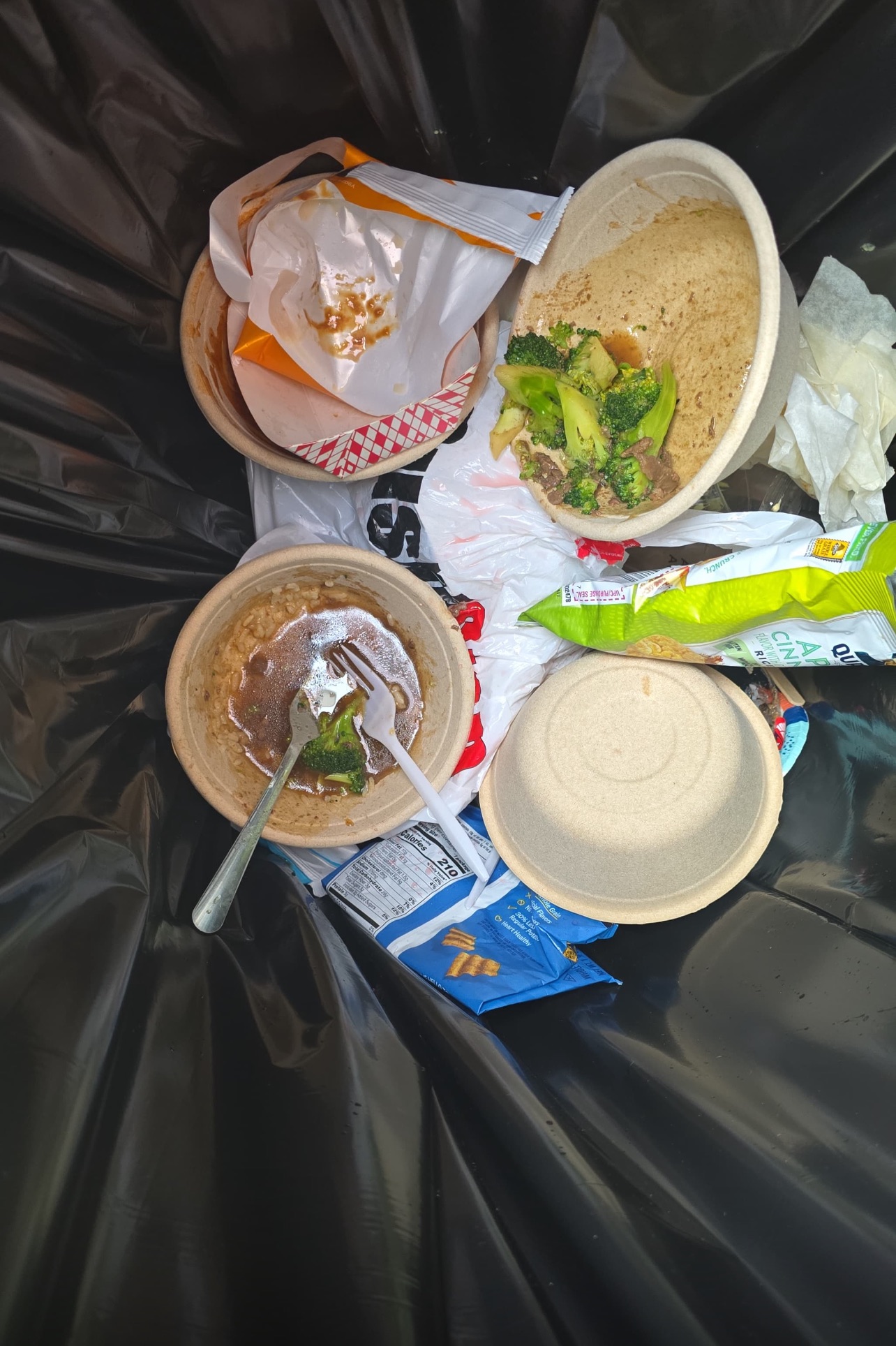
Because of this, the Commons has been unable to fully transition to purely reusable systems. “It really feels like rolling with the punches,” said Tekle. “Whenever Westridge students do something, the Commons has to adapt—sometimes that means adding new, sustainable options, [and] sometimes that means taking them away.”
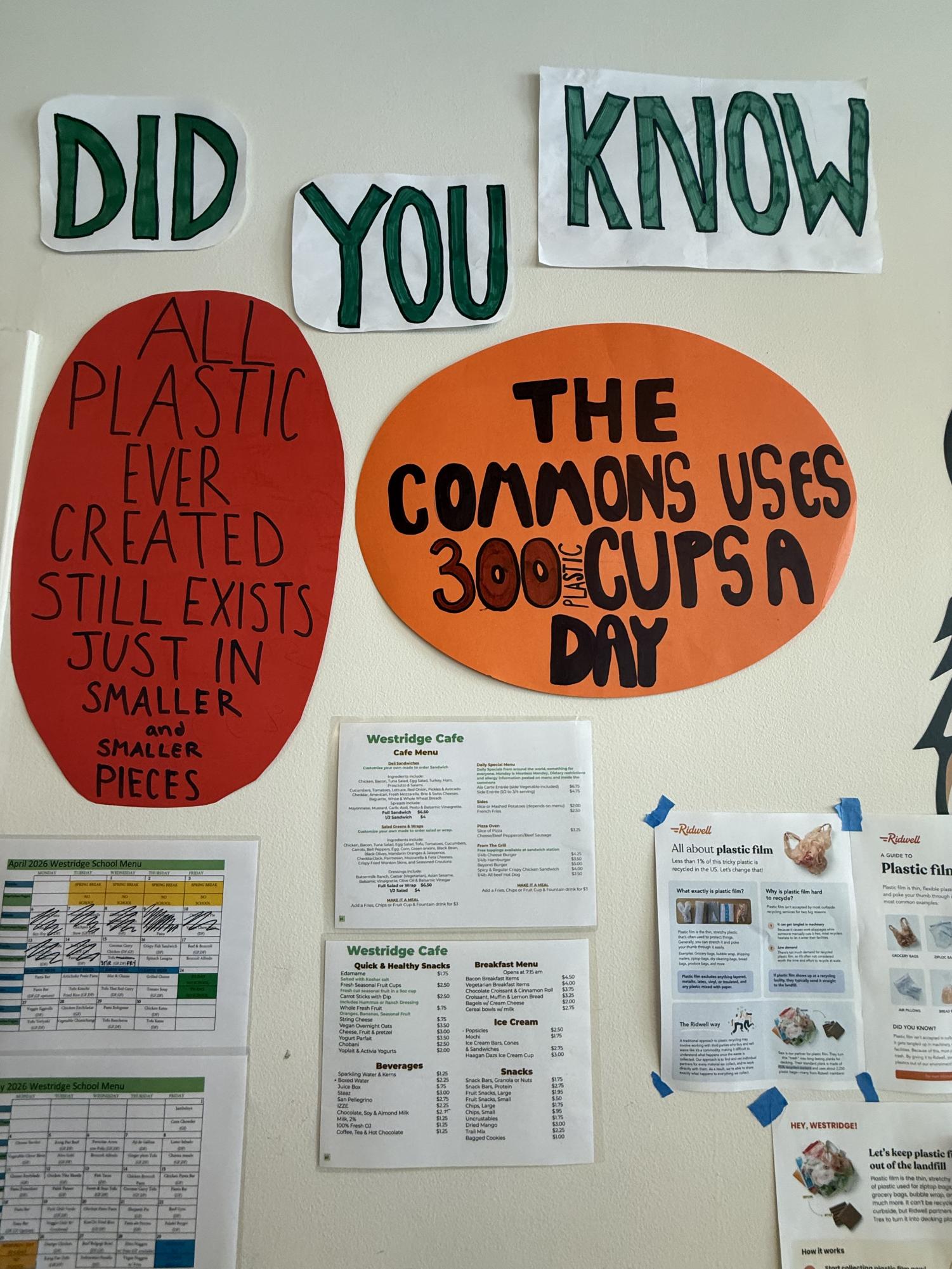
As Earth Week approaches, the Green Guerrillas launched a Ridwell recycling drive, where Westridge students, families, and faculty brought plastic film from April 13 to April 17, which will be recycled and used for new decking materials instead. Additionally, the Green Guerrillas are preparing a series of activities aimed at making sustainability more engaging across campus. From interactive events during lunch to grade-wide competitions, they hope to get more people directly involved in efforts. “It’s definitely finding a balance between education and fun at Westridge,” said Tekle. “In our presentations, we try to incorporate Kahoots and fun, interactive opportunities to try and keep people engaged, because I feel like that’s really been one of our biggest struggles.”
Both students and faculty recognize that true, long-term sustainability depends not only on events and initiatives, but also on a broader shift in culture and the future. “Students don’t really care about waste that much because they think it doesn’t really affect them,” said Jade H. ’29.
“We’re also trying to put things in perspective of something measurable,” said Larkin. “Sadly, people don’t necessarily resonate with the idea of something bad happening a long way away. An important thing to emphasize is that a lot of the negative impacts of climate change are happening right now. It’s not some far-off deadline.”
Mr. Lorusso noted the idea of incorporating sustainability into Westridge’s core values and activities, from Greeks and Romans to the recently purchased 310 Arlington property’s master plan. “I would like there to be an administrative vision, as well as a more student-driven vision,” he said. “Once there’s a culture around something, it becomes valuable… and I don’t think we’ve built that at Westridge.”