
























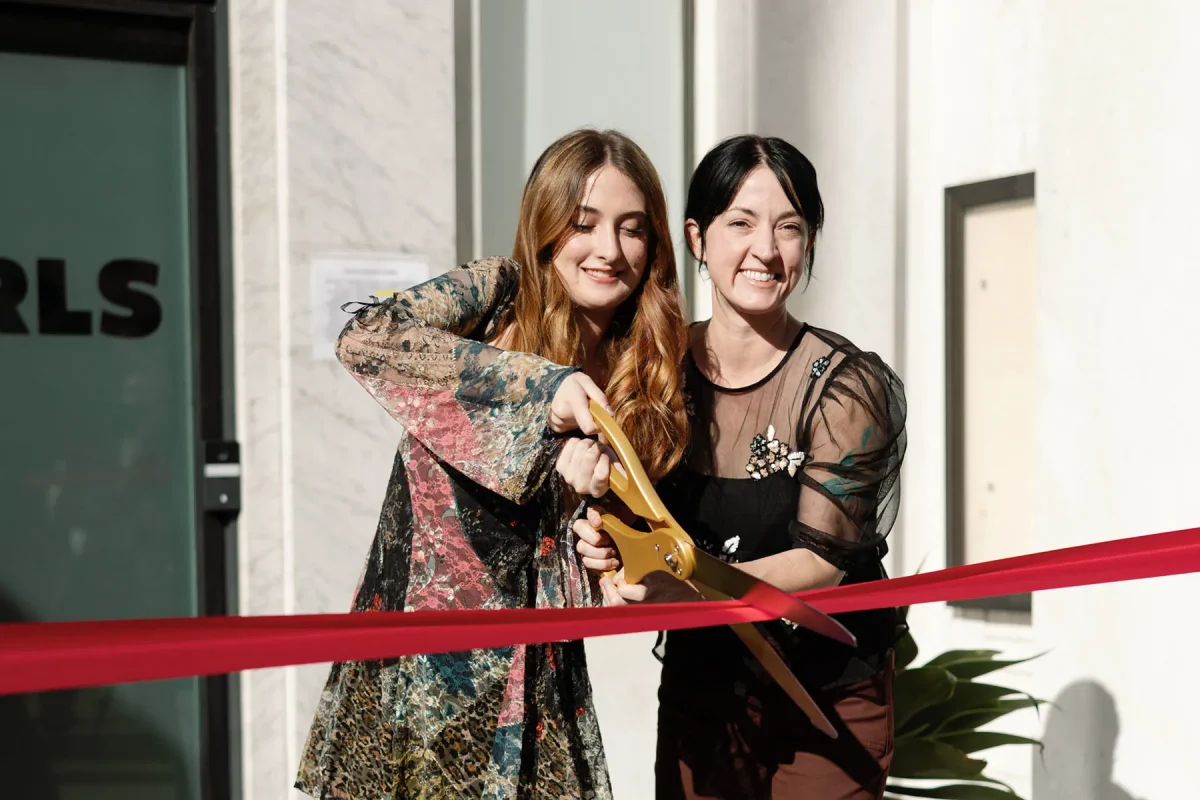




![Dr. Zanita Kelly, Director of Lower and Middle School, pictured above, and the rest of Westridge Administration were instrumental to providing Westridge faculty and staff the support they needed after the Eaton fire. "[Teachers] are part of the community," said Dr. Kelly. "Just like our families and students."](https://westridgespyglass.org/wp-content/uploads/2025/03/dr.-kellyyy-1-e1748143600809.png)

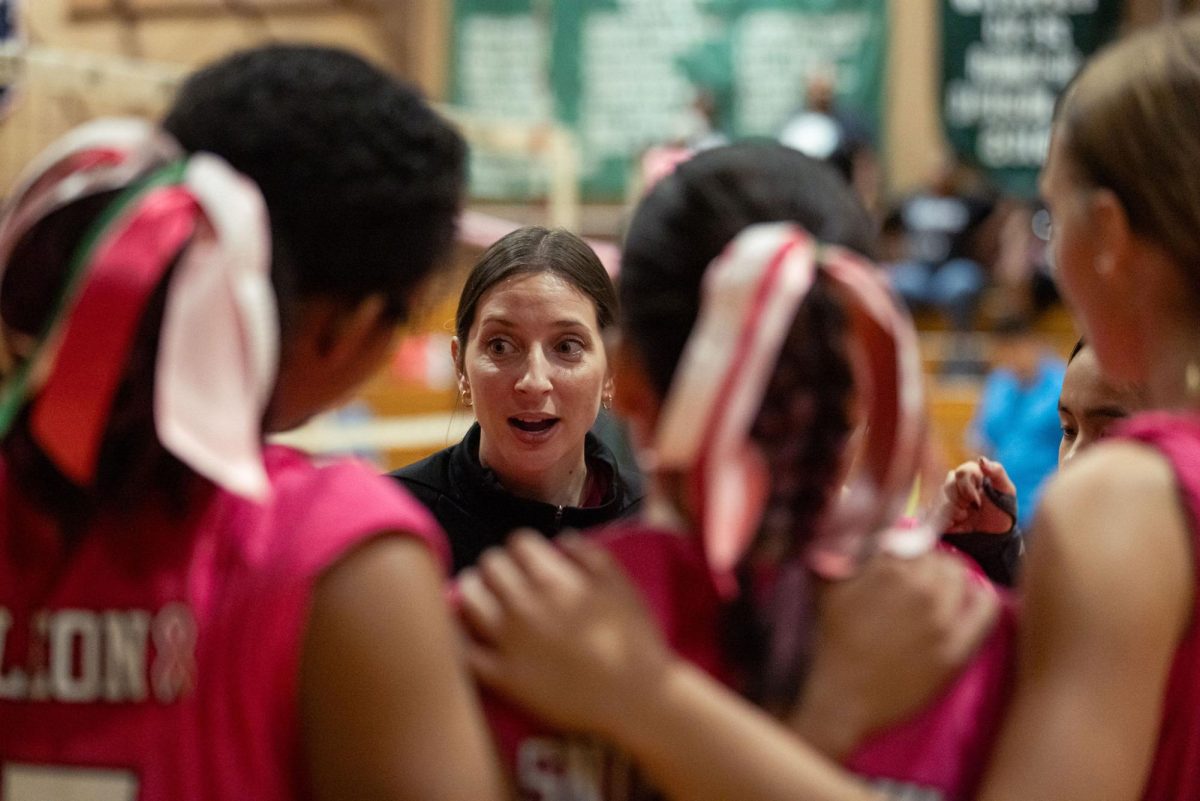
![Lacrosse had an incredible season, making it to the semifinals. Jeff Searock, the father of player Sophie S. '28 has gone to most games and said, "[The season has] been great. Great coaching, great players, kids have great attitude. You can't ask for much more."](https://westridgespyglass.org/wp-content/uploads/2026/05/IMG_3652-1200x900.jpeg)















In a locker room tucked away from the public, laughter exploded; the laughter of boys who had triumphantly been decked with flashy Olympic jerseys and gold medals. They were eager to share the exciting news with the President of the United States. Almost the entire team laughed at the President’s misogynistic joke with childish glee, unable to discern simple humor from common decency. Oops!
At that moment, the supposed heroes became jesters instead.
Following the U.S. Men’s National Ice Hockey Team Olympic gold-medal victory on February 22, 2026, the team received a celebratory call from President Donald Trump. During a leaked video of the call, Trump joked that he would “have” to invite the U.S. Women’s National Ice Hockey Team, who also won a gold medal, to the White House, or else “I do believe I probably would be impeached.” Upon this “joke,” almost the entire team broke into laughter. The leaked call quickly spread across media outlets and social media, sparking controversy for diminishing the achievement of the women’s team.
While many, like me, are deeply disgusted by this incident, others, including women, brushed it off as a mere joke, commenting things along the lines of: it’s not that deep, or people are so easily offended nowadays, people are only being dramatic because Trump is involved, and it’s not that serious.
Only, it is that serious. That laugh isn’t just an awkward moment, a political spectacle gone wrong, or “almost nothing” as Jack Hughes later phrased it, but a reflection of toxic masculinity and exclusivity in hockey culture, while women, LGBTQ+ players, and racial minorities struggle for respect and recognition.
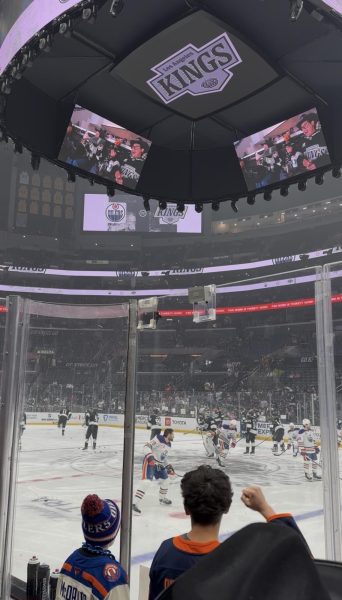
Women’s hockey has always been viewed as secondary despite decades of success. Even after the U.S. women’s team brought to the United States the first Olympic gold medal of 2026, the men’s team still dominated headlines. The women’s team did not receive a congratulatory presidential call prior to their victory, instead becoming a joke for the men’s team. The team also travelled home commercially, while the men’s team travelled by charter plane.
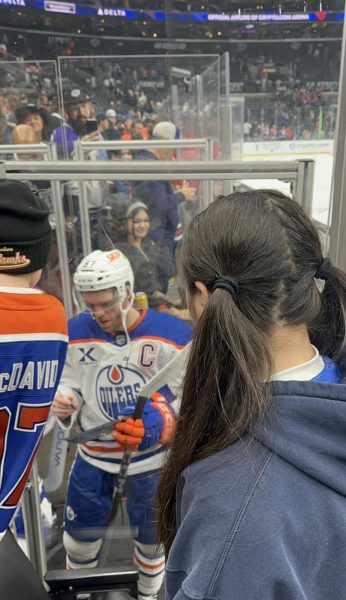
Since 1998, the U.S women’s team has won three Olympic gold medals and medaled in all eight Winter Olympics, while their longtime rival, the women’s team of Canada, won five Olympic gold medals and medaled in every Winter Olympics as well. In 2019, American ice hockey player Kendall Coyne Schofield competed in the NHL All-Star fastest skater competition and beat several National Hockey League (NHL) players with a time of 14.346 seconds, shocking fans who underestimated women’s hockey.
The gap in recognition is not a result of weaker performance but a culture that has decided that men’s hockey was the default, leaving women’s hockey to receive less pay, less media coverage, and fewer opportunities despite being just as impressive, if not more, as the men’s team.
Due to years of underfunding, female hockey players earn roughly 21 times less than male players, often working multiple jobs to afford chasing their hockey dreams. The limited support also caused the Canadian Women’s Hockey League (CWHL) to shut down in 2019, leaving no stable league until the launch of Professional Women’s Hockey League (PWHL) in 2024. Additionally, men’s hockey entered the Olympics in 1920, 78 years before women’s hockey in 1998.
As recently as 2017, the women’s hockey team earned only $1,000 per month during Olympic training cycles, leading a boycott threat before they went on to win the 2017 IIHF Women’s World Championship—even while underpaid and overlooked, they still delivered gold.
However, this pattern of unequal treatment goes far beyond women’s hockey. Across the sports world, men’s competitions are treated as the default, while women’s competitions are treated as secondary, often included only to give the appearance of gender equality. Hockey is one of the most representative examples of this culture—a sport built on toughness, aggression, and emotional repression, all of which contribute to a narrow definition of masculinity.
When the gloves, which seem like the thin veil of aggression, come off, big, bearded men in muscly hockey armor throw punches while the crowd cheers on, teammates slam their sticks against the board, and commentators hype them up for settling things like men. The testosterone is off the charts. When such aggression is glorified in hockey, masculinity, misogyny and exclusion off the ice can feel just as normal as a good old fight on ice.
This culture of masculine dominance is reinforced by whom the sport historically belonged to and is, according to some, supposed to belong to. The sport has also been dominated by white, straight, wealthy, and politically conservative men. In the 2022–2024 seasons, several NHL players and teams refused to wear pride jerseys during Pride Night, leading the league to ban them entirely.
Power in hockey also decides who is protected and who is ignored. Two former NHL Chicago Blackhawks players sued their former coach Brad Aldrich for sexually assaulting them, while the team and senior Blackhawks leaders ignored them to protect the team’s reputation. Apart from certain male players, women are also powerless—overlooked, suppressed, and made into a sexist joke. The team’s response to Trump’s joke was not even an awkward giggle or a polite chuckle to fill the silence, but a laugh so natural because of how normalised misogyny is. Women can win a medal in every Olympic game and still be treated like an afterthought—because in hockey, men run the game.
The laughter in that Olympic locker room is a microcosm for a space drowning out the voices of women, racial minorities, and the LGBTQ+ community.
Masculinity itself isn’t the problem, but the version that hockey rewards. Healthy masculinity uplifts—valuing empathy, connection, resilience, and integrity over exclusion, aggression, and emotional suppression. Toxic masculinity is seen in that bunch of hockey boys who called with Trump in a locker, as they belittle and silence women’s achievements.
While toxic masculinity has long dominated hockey, today’s media and fans are slowly challenging the status quo. From Heated Rivalry to viral memes, pop culture brought in younger audiences, more women, and LGBTQ+ fans to the sport, challenging the old, narrow image of hockey as a white and hyper-masculine space.
For me, Heated Rivalry and my four years of playing hockey as a kid were my entry to the world of hockey. Go Sharks! Fans like me, though often hated by older fans for being disruptive or uninformed, are diversifying the hockey community. Instead of using Heated Rivalry to ship players, we should focus on how it attempts to deconstruct toxic masculinity in hockey, shedding light on its problem of silencing LGBTQ+ voices and harming the mental health of male players while introducing healthy masculinity through emotional vulnerability.

Representation is also seen in more female players speaking out, queer athletes coming forward, and even changes within the NHL. Despite not being the strongest in the league, the San Jose Sharks have gained attention for something rare in hockey: an outward expression of love between team members. The friendship between Macklin Celebrini and Will Smith is a prime example of healthy masculinity rooted in emotional openness and connection, softening the sport and making it more lovable than the old image of toughness ever did.
Even in the locker room controversy, there is hope. As the rest of the team laughed, two men spoke against the boys. After Trump said he will have to invite the women’s team, one said “absolutely,” while another said “2 for 2.” Translated, it means: the women earned their place, and they should be celebrated in the same way.
At the same time, controversies like this also reveal something uncomfortable in our own response. With social media comes a level of performativeness on moral and social issues. Just like how many who do not actually follow the ballet and opera community but furiously criticize Timothee Chalamet for his insulting comment toward these forms of art, it’s easy to criticize a sexist joke online but harder to question if we truly support and are taking action to support the communities we defend. Even as I wrote this article, I found myself being hypocritical—I never watched the PWHL and focused on the NHL instead. Real change demands more than anger; it requires action, whether that is speaking out about representation and equality in hockey, following women’s hockey, or supporting diverse players.
No scripted apology or press tours where the U.S. Men’s Hockey Team stands alongside women players and Heated Rivalry stars can fix a culture of toxic masculinity, misogyny, and exclusion. Until hockey represents more than just one version of itself, the sport will always be an exclusive locker room.



Carys • Apr 20, 2026 at 1:47 pm
peak title
Phoebe Fan • Apr 21, 2026 at 2:58 pm
Thank you so much for coming up with this Carys! So amazing