


























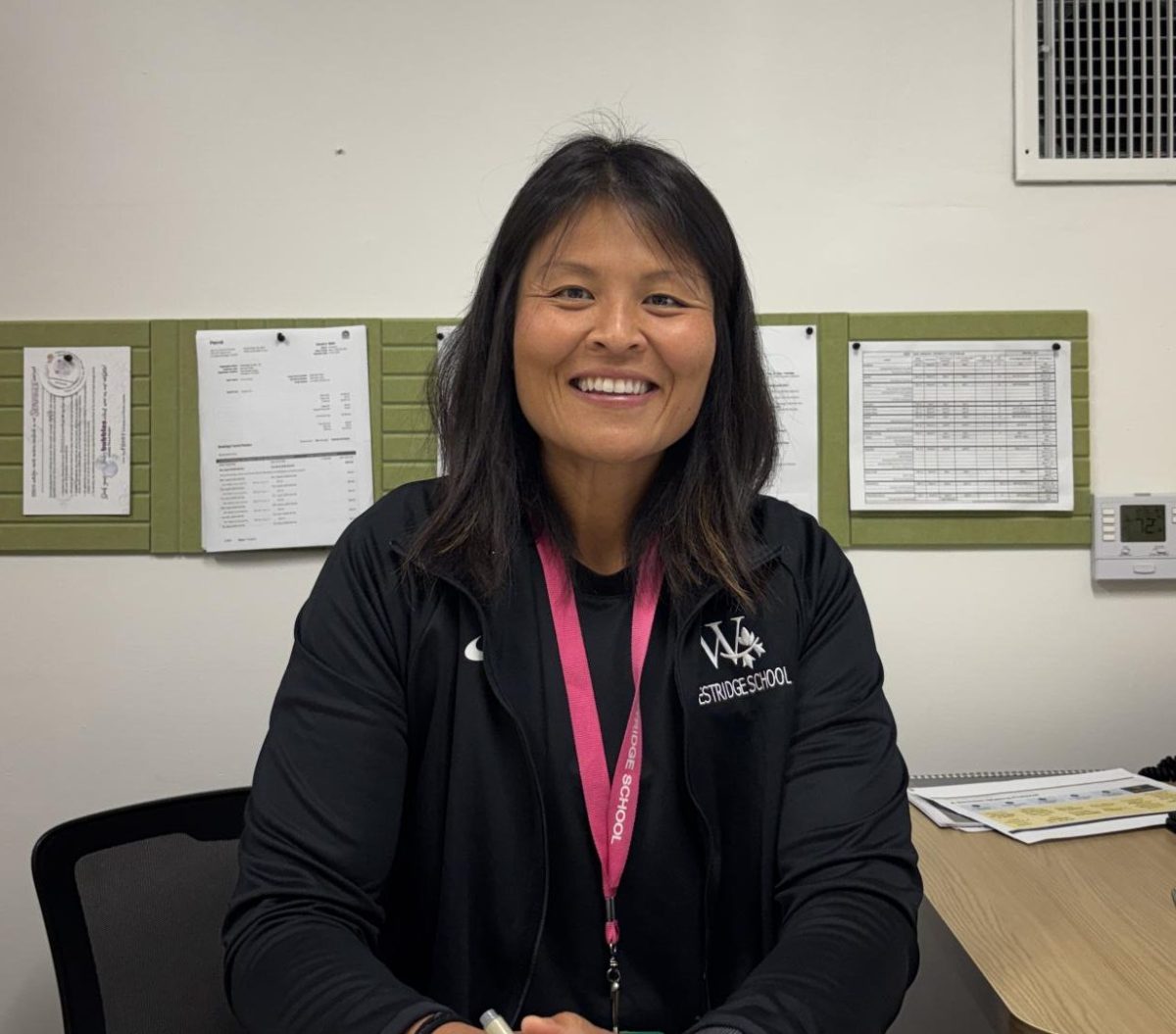
![Dr. Zanita Kelly, Director of Lower and Middle School, pictured above, and the rest of Westridge Administration were instrumental to providing Westridge faculty and staff the support they needed after the Eaton fire. "[Teachers] are part of the community," said Dr. Kelly. "Just like our families and students."](https://westridgespyglass.org/wp-content/uploads/2025/03/dr.-kellyyy-1-e1748143600809.png)

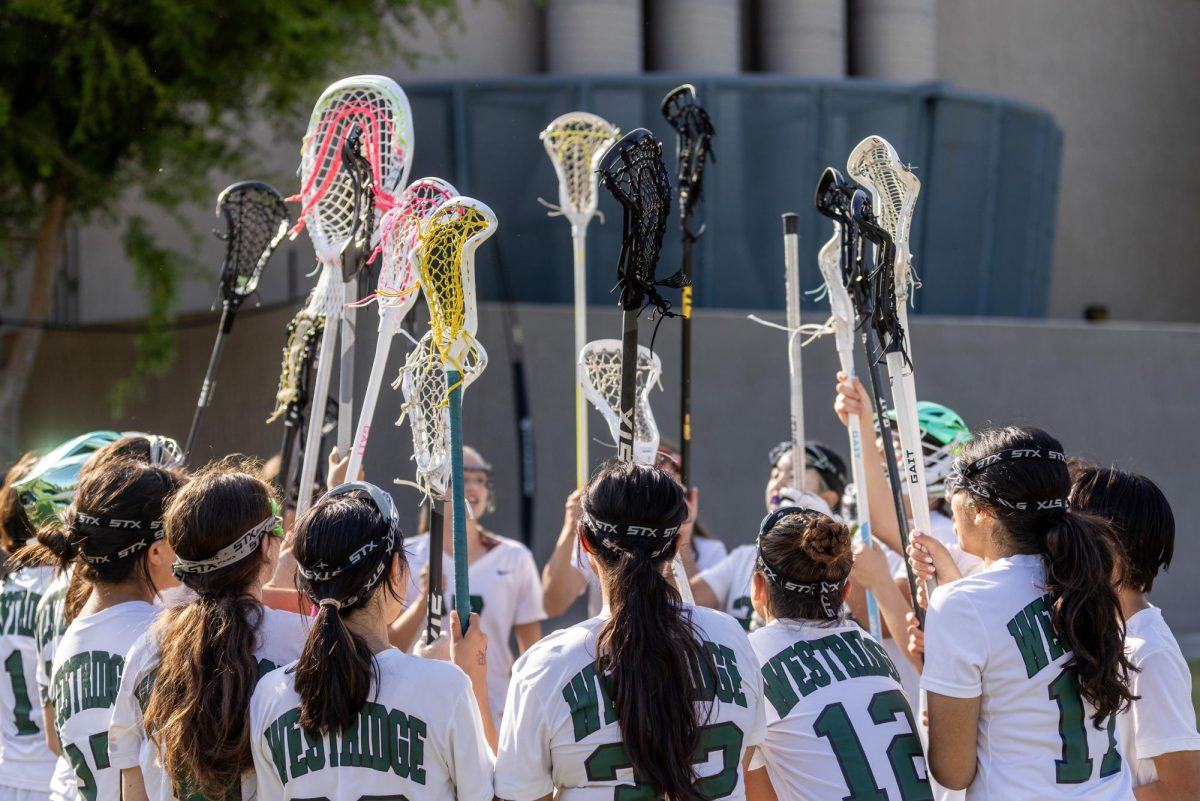
![Lacrosse had an incredible season, making it to the semifinals. Jeff Searock, the father of player Sophie S. '28 has gone to most games and said, "[The season has] been great. Great coaching, great players, kids have great attitude. You can't ask for much more."](https://westridgespyglass.org/wp-content/uploads/2026/05/IMG_3652-1200x900.jpeg)











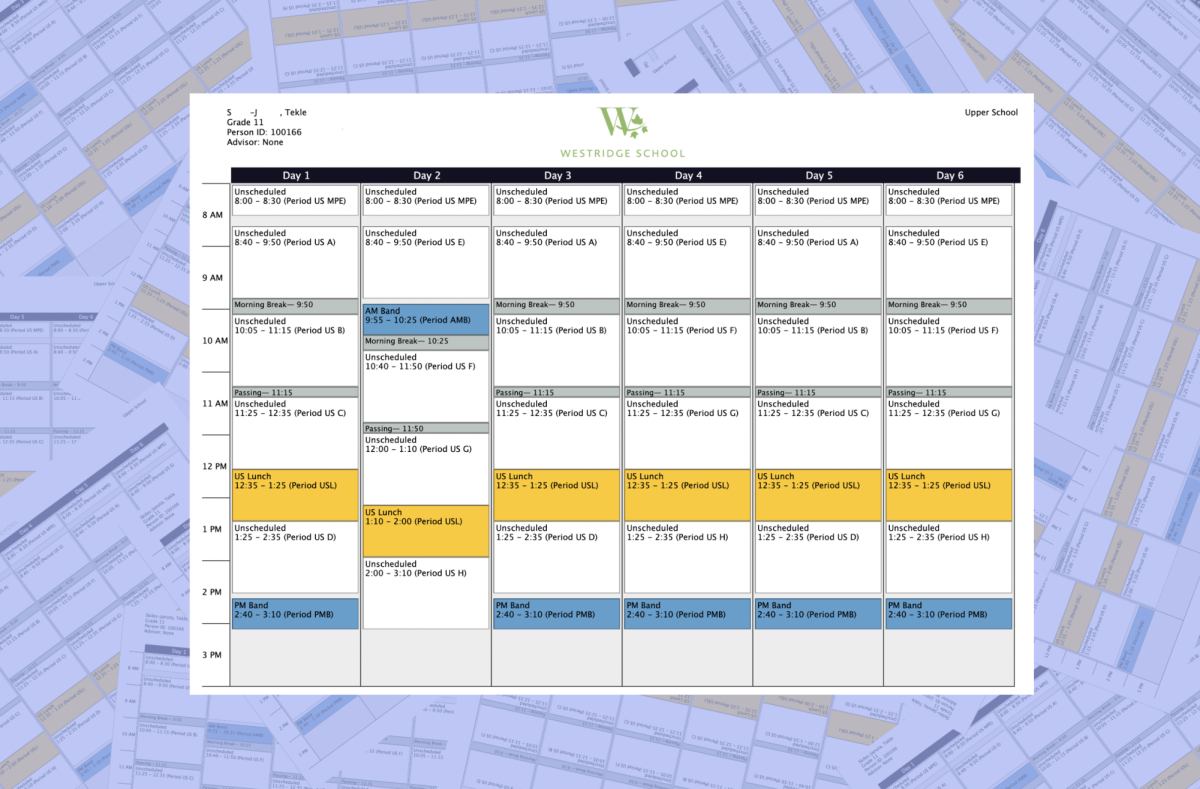
Assistant Head of School for Strategic Priorities and Enrollment Management Ms. Sarah Jallo has confirmed that a waterfall, or cascading, schedule, which has been in the works for three years, is “more than likely” to be adopted in the 2026-2027 school year.
A block-cascade system, a feature of many proposed schedules shown to faculty for feedback, consists of alternating even and odd days of classes, while retaining the existing eight class schedule. However, the order of the classes switches each new day, which rotates the impact of end-of-day classes. A cascade or “waterfall” schedule would spread out the impact of early-dismissals, so student athletes, for example, wouldn’t miss the same classes at the end of the day.
A cascade schedule also takes into account the students’ “chronobiology,” as Ms. Jallo said, the idea that classes would not be taught at the same time every rotation, which benefits students as they get to experience the class through all times of day, not just first thing in the morning or right before lunch, which multiple teachers commented, had a negative effect on their classes.
While details of the new schedule have not been finalized or released, a cascading schedule would be a notable difference to the current schedule—raising the most reaction from faculty and students.
Upper School Science Department Chair and Science Teacher Ms. Michelle Amos, who has experienced a cascading schedule at another school, thinks that the cascade brings opportunities for teachers to use their class blocks more effectively to benefit students. “First thing in the morning, they’re sleepy, and they’re still waking up… After lunch, they’re suffering from a carb coma, and they’re not necessarily completely functional yet, because their blood sugar hasn’t risen,” she said, “That waterfalling or cascading schedule is something that’s a really great thing that you actually get to see your students at different times of the day, and you start to learn the patterns a little bit more.”
Upper School Art Teacher Ms. Shannon Keller has experienced a cascading schedule previously. She believes that the cascade will allow her to “know the students a little bit better.” She said, “You don’t just have them when they’re sleepy in the morning or over it in the afternoon. You get them at all times of the day, leading to, I think, a more well-rounded opportunity to teach…to [a] more receptive audience.”
Although a cascading schedule would mitigate student athletes consistently missing the same class at the end of the day, some teachers are concerned that it would actually have a worse effect. “It’s not just that one subject that’s getting hit again… because then you’re not only catching up on one subject, you’re kind of catching up on different subjects,” said Ms. Amos.
Another anonymous teacher worried about students catching up, and that “finding a rhythm will be really hard for people.” He continued, “I’m just wondering if they’re missing a lot of different things, if that’s gonna make it harder for them to figure it out… if you miss consistently the same thing, you get a habit of how to do it, and… if it’s a different class all the time, then it’s harder.”
Still, Ms. Amos noted that at Westridge, a large percentage of the absences in her class are due to sports-related commitments. “The waterfall schedule did mean that they weren’t always missing out on the same class every day, and I even experienced that two years ago with the current seniors, that when they were in tenth grade, my chemistry class was in the afternoon, and every single season, I would lose a third of my class in the afternoon,” she said.
“On the one hand,” Math Department Chair and Upper School Math Teacher Ms. Leah Dahl said, “[Absences are] going to be spread out across more classes. On the other hand, I think that for teachers overall, the volume of students missing and needing help catching up would be potentially greater…so that could definitely have an impact.”
Though none of these changes are confirmed beyond being “more than likely,” there is still room for adjustments and new input in the world of schedule-building. “My goal also is to meet with students next week about some of these ideas and get their feedback as well before making a final decision,” said Ms. Jallo.
Ms. Jallo anticipates that around mid-June, students and teachers can look forward to hearing what the adopted schedule for next year’s classes will look like.
Developing a schedule is a complex undertaking, and balancing the trade-offs of a multidivisional campus with shared spaces is a difficult endeavor. Ms. Dahl said, “It’s like the main principle of economics—everything has trade-offs, and this is certainly true with schedules. So I know there are a lot of competing priorities that we’re trying to balance out.”



![“I just know every time I look into one of those sorting stations, [I] wouldn't be able to tell which one is a landfill, which one is compost and which one is recycling,” Upper School Service Coordinator and Green Guerrillas advisor Ms. Erica St. John recalled, reflecting upon Westridge’s waste sorting job.](https://westridgespyglass.org/wp-content/uploads/2026/04/FinleyNichols_Recycling-1-e1776618779363-1200x878.jpg)