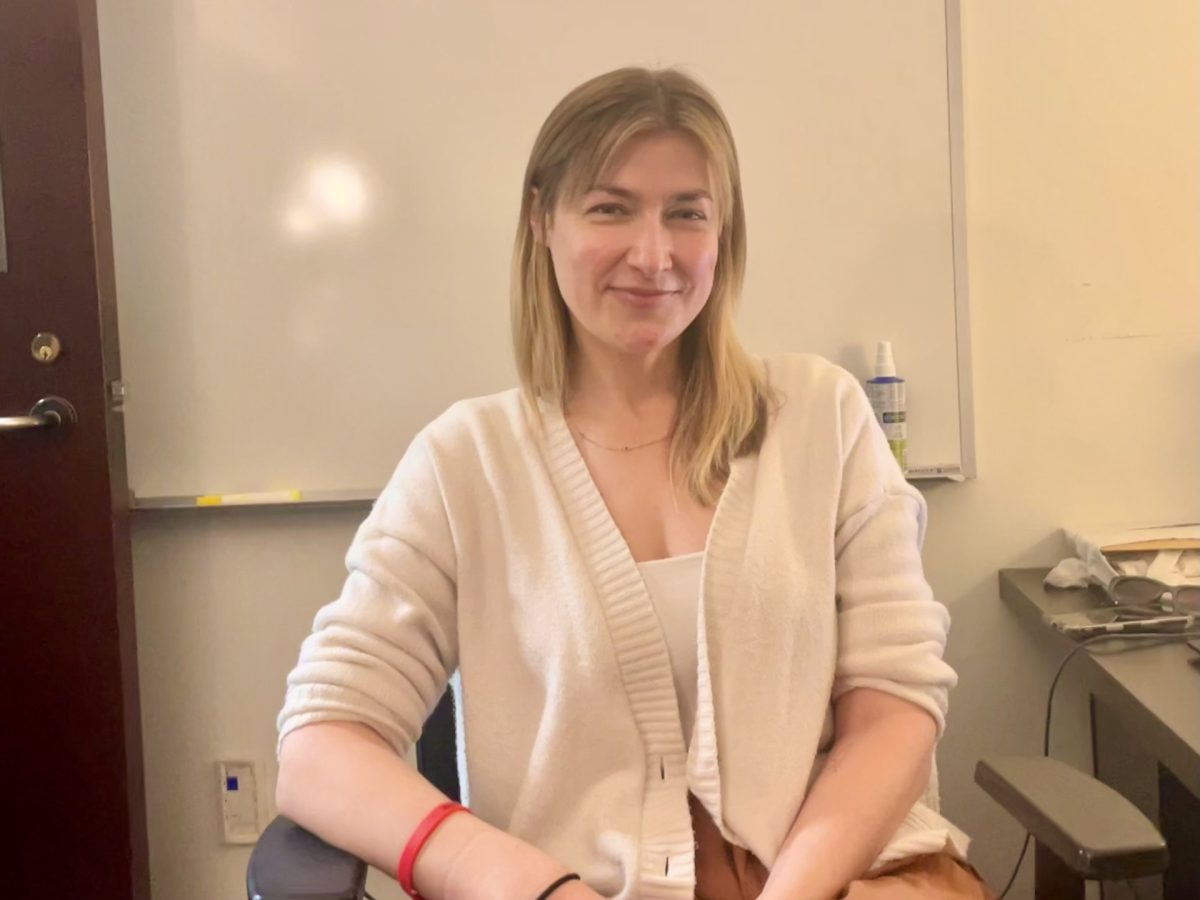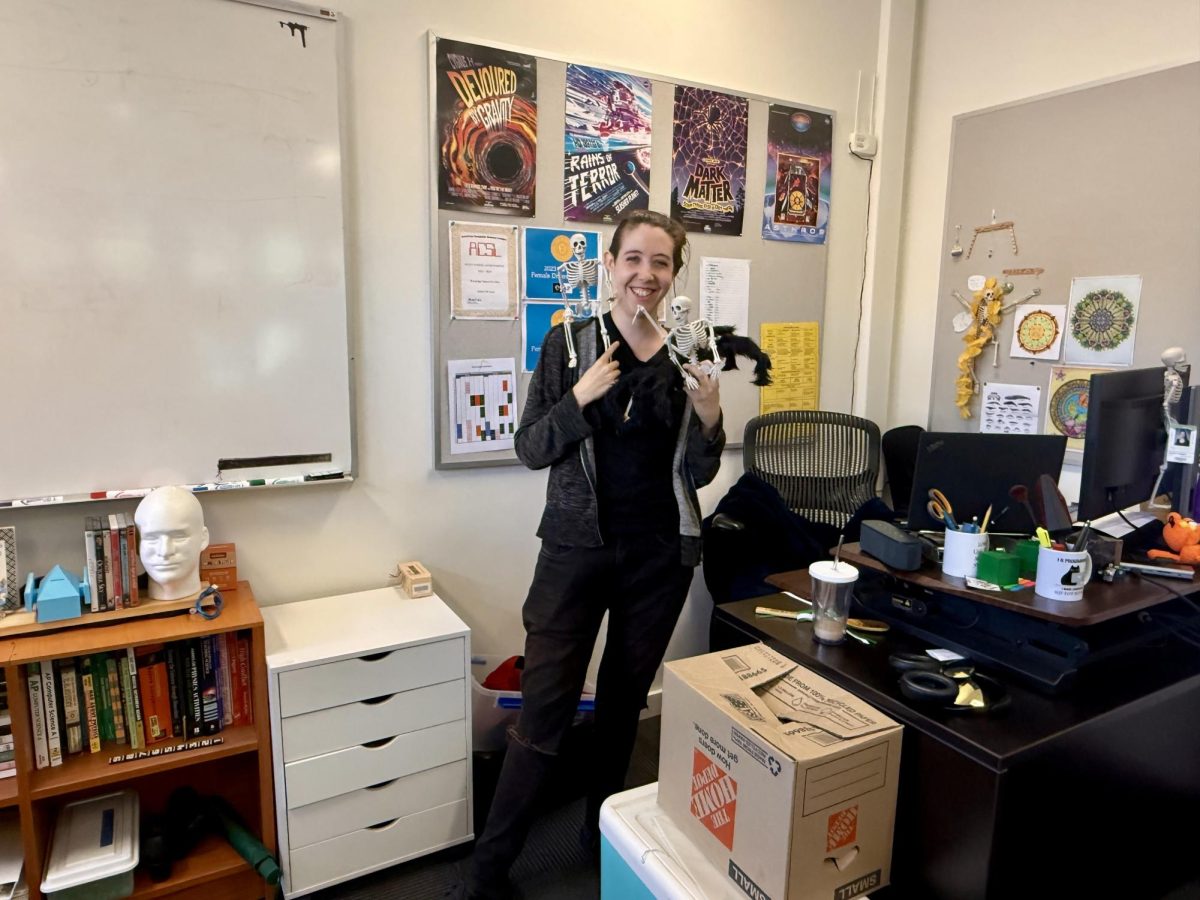












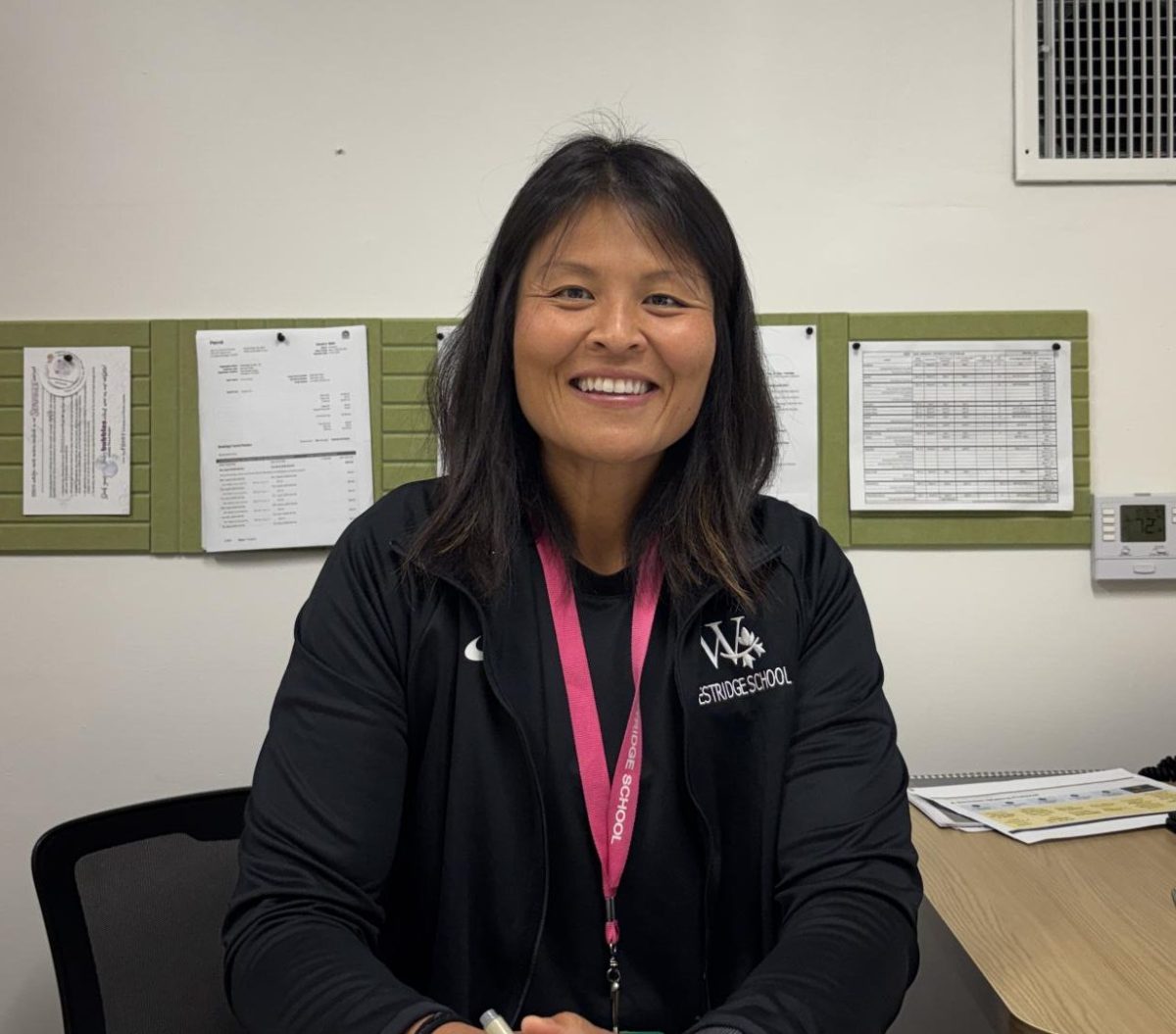
![Dr. Zanita Kelly, Director of Lower and Middle School, pictured above, and the rest of Westridge Administration were instrumental to providing Westridge faculty and staff the support they needed after the Eaton fire. "[Teachers] are part of the community," said Dr. Kelly. "Just like our families and students."](https://westridgespyglass.org/wp-content/uploads/2025/03/dr.-kellyyy-1-e1748143600809.png)
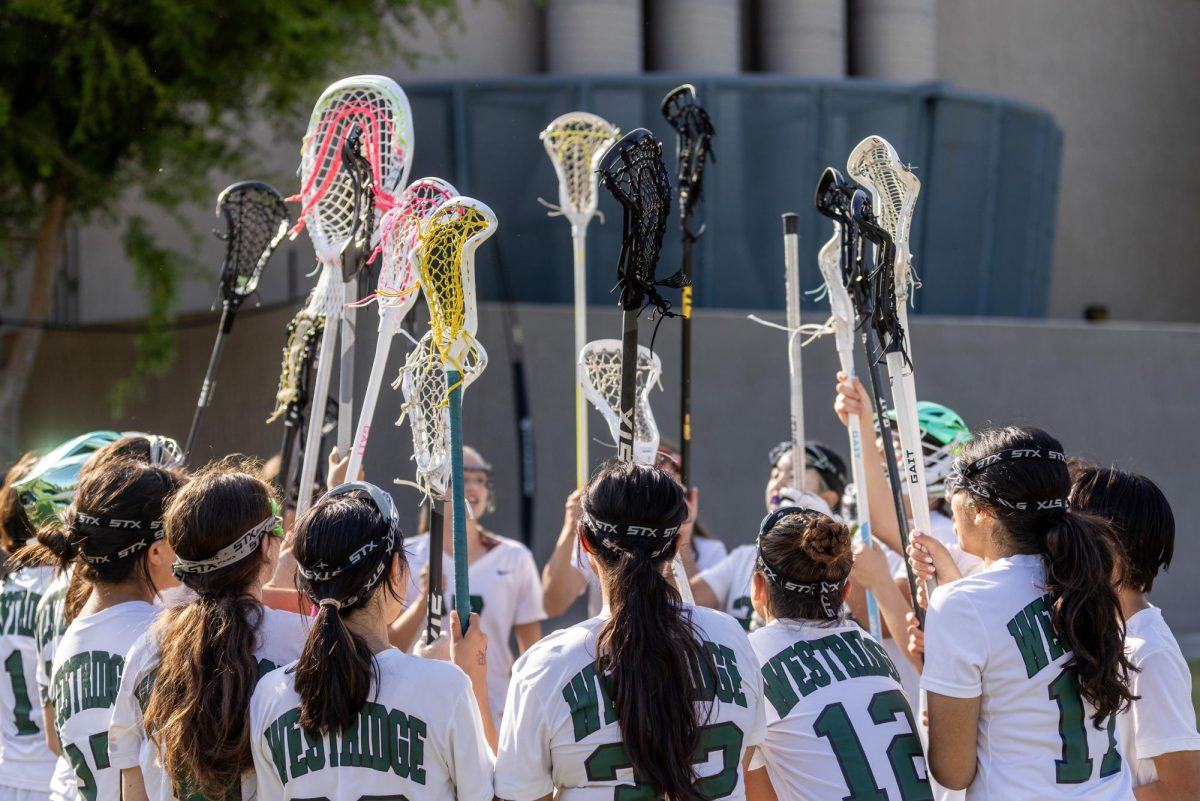
![Lacrosse had an incredible season, making it to the semifinals. Jeff Searock, the father of player Sophie S. '28 has gone to most games and said, "[The season has] been great. Great coaching, great players, kids have great attitude. You can't ask for much more."](https://westridgespyglass.org/wp-content/uploads/2026/05/IMG_3652-1200x900.jpeg)




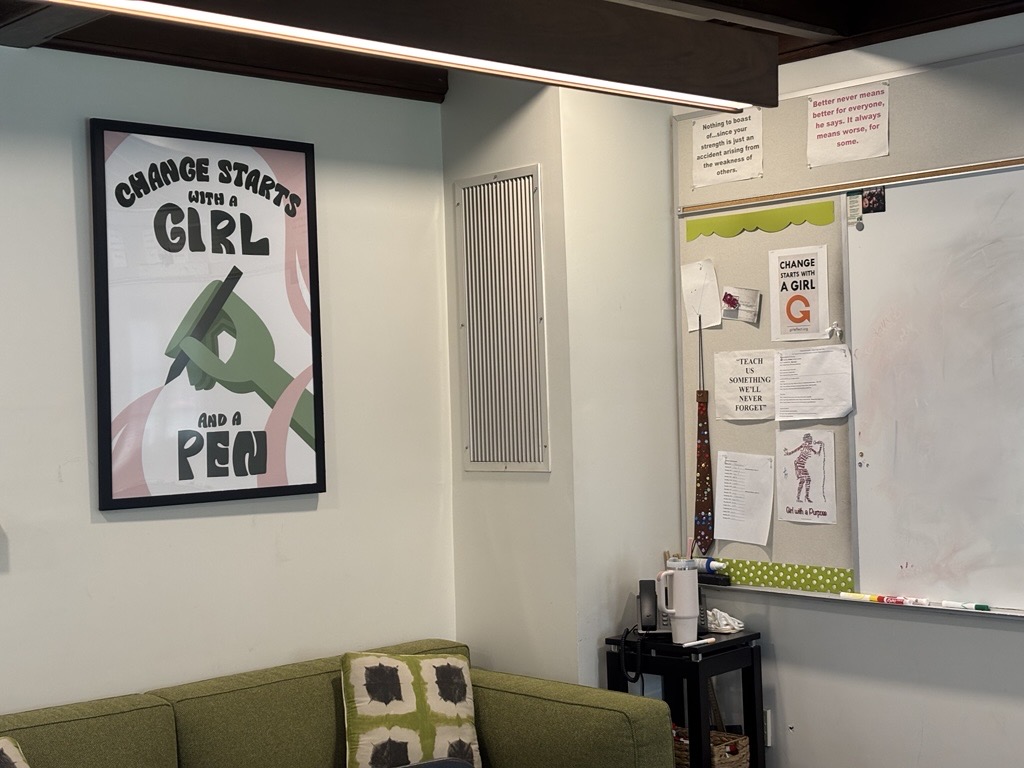
On my second day of freshman year, I walked into EC20 without realizing I was stepping into a classroom that would reshape the way I understood writing itself. By the end of that year, it would become my favorite classroom. I didn’t know that yet—only that I was sitting down, still figuring out where to put my backpack, when Mr. Raines looked at us and said, plainly, “You don’t know how to write.”
I didn’t know what to do with that. Many of us didn’t.
There’s something disorienting about being told you don’t know how to write, especially so early on in high school. It doesn’t leave much room to hide behind what you thought you were good at. It asks you to start over. But that was always the point.
“It wasn’t like he was saying your writing is bad, period,” Josephine W. ’26 said. “He’s saying that so you can grow.”
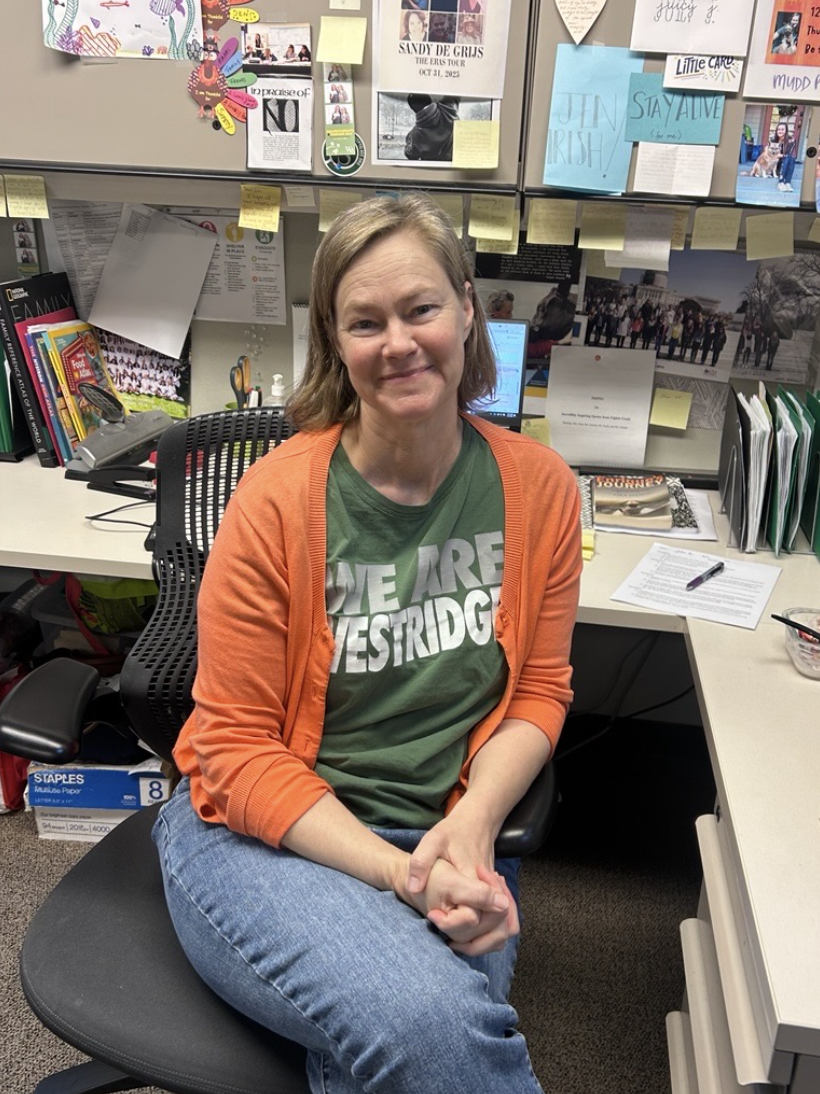
Mr. Ed Raines, who began teaching in 1983 and has spent 24 years at Westridge, built his classroom around that idea—growth, not as something you eventually reach, but as something you’re always in the middle of.
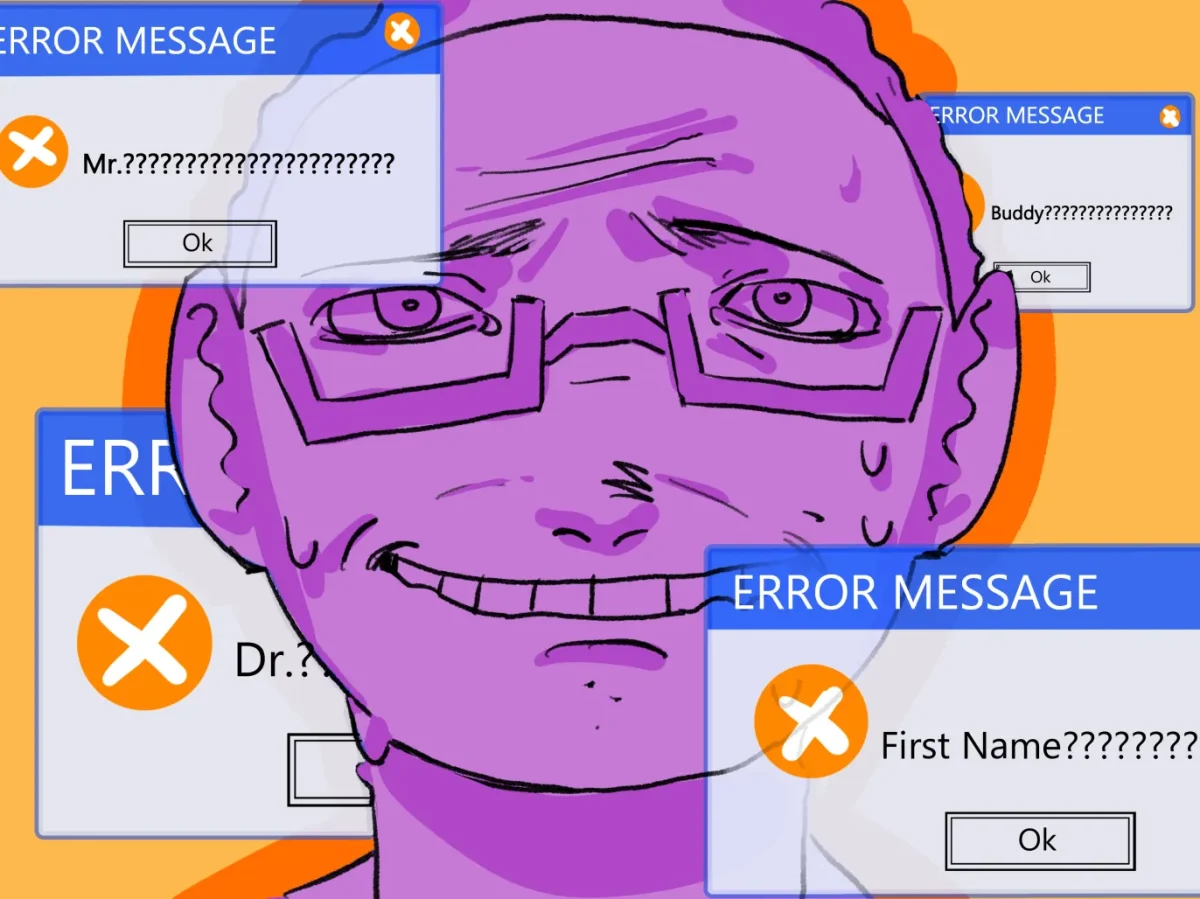
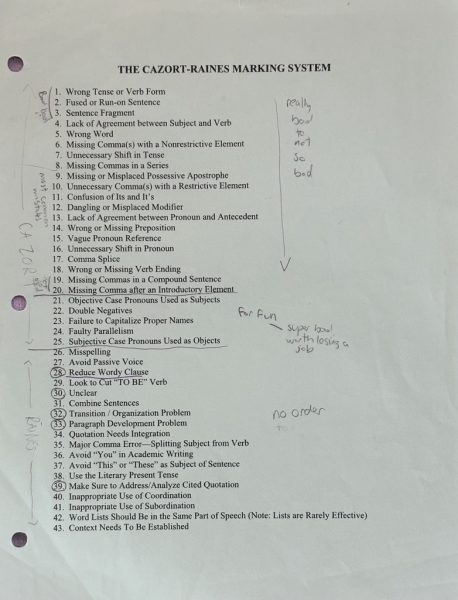
In EC20, nothing ever really felt finished. Papers came back covered with numbers from the infamous Cazort-Raines Marking System, where each number pointed not to failure, but to possibility—43 small reminders that writing could always be pushed further. Even when something felt “good,” there was always more to consider and more to refine.
Siena G. ’26 remembers getting papers back where “you could barely see the actual words that were typed beneath the numbers.” But in retrospect, that abundance of comments became proof of something else: attention, care, and the belief that every draft could still improve.
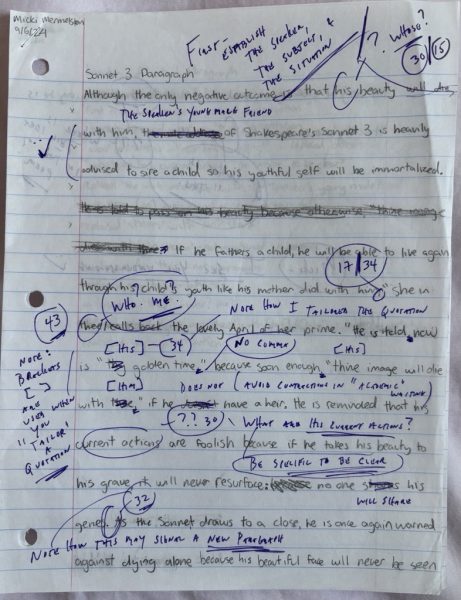
At first, that can feel overwhelming. And for some students, it stayed that way. Mr. Raines’ classroom demanded a kind of attention and vulnerability that not everyone found comfortable, especially in their freshman year. I remember trying to decode the numbers on my paper, counting them, wondering if I was getting better or just getting used to it. But slowly, almost without noticing, the focus shifted. Away from perfection. Toward progress.
Mr. Raines might have called that an antithesis, the kind he was always pointing out in the margins of what we read, two ideas held in tension to sharpen their meaning. In his classroom, antithesis wasn’t just something to identify in texts—it was a way of thinking that we were learning to hold.
As Adina S. ’28 reflected, he made “literary devices and analyzing texts way more interesting,” using ideas like antithesis to reveal the deeper meaning in what we read.
That change altered the way I thought about writing. And eventually, the way I thought about learning itself.
“It’s like a writing boot camp,” said Upper School History Teacher Mr. Bill Harrison, one of Mr. Raines’ longtime colleagues and friends. “He really takes the process seriously—it’s the real deal.”
You could see that seriousness in everything, not just in what he said, but in how the room worked. The Harkness table, the emphasis on discussion, the way lessons were treated as something you could revisit rather than finish—it all reflected a belief that learning was something to stay with, not move past.
But what stayed with me wasn’t just the structure. It was the feeling of being inside it. Around the table, discussions didn’t feel like something you had to get right. They felt like something you had to stay in. You listened, responded, and reconsidered. Sometimes you changed your mind. Sometimes you didn’t. But either way, you were part of it.
“I always left his class in awe,” Skylar R. ’28 said. “He would say something about a text that I’d never thought about before, and suddenly everything felt deeper.”
Looking back, that might be the thing I remember most—not just what we read, but how we were asked to engage with the texts, and with each other.
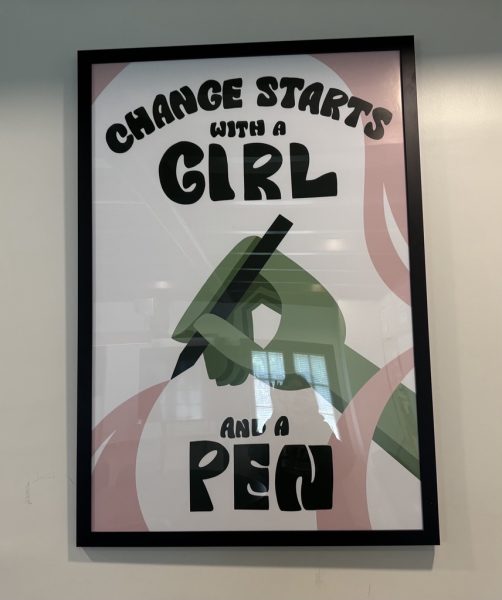
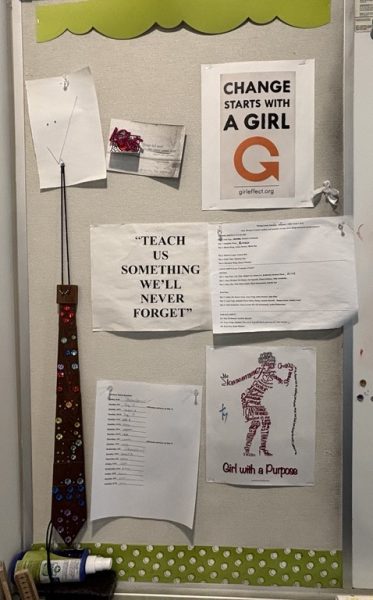
And then there were the details. The things that seemed small at the time, but stayed: the posters on the wall, the repetition of certain phrases, the way he would pause in the middle of a discussion and redirect it just slightly, enough to make you think again.
One poster, especially, comes back to me: change starts with a girl and a pen.
“He kept pointing to it all year,” Lexie F.-W. ’28 said. “It made me realize I can actually have an effect—not just in academic writing, but in everything.”
At the time, it felt like just another thing he would say, another idea to carry through an assignment. But now, it feels bigger than that—like a quiet insistence that writing isn’t separate from the world, that it’s a way of moving through it.
It’s a strange balance to describe: a class that could feel intimidating, structured, and intense, but also unexpectedly open. A teacher who could seem intimidating at first, but became, over time, someone you trusted—not to make things easier, but to make them matter.
I think that’s what makes it hard to write about him now, as he retires. Not because there aren’t things to say, but because so much of what he taught doesn’t feel like something that happened once. It feels ongoing.
Mr. Raines often said that growth is the difference between where you’ve been and where you’re going. It’s the kind of idea that doesn’t fully land when you first hear it. It takes time—sometimes a year, sometimes longer—to realize how much it’s shaped the way you work, the way you think, the way you measure yourself.
Former Westridge student and current P.E. Teacher Coach Allison Camara-Clark ’07 said she now appreciates how Mr. Raines “did not let you coast,” and how he held students to standards that only made sense fully in hindsight.
And he once said that learning happens between teachers and students, but that when we leave, it’s our classmates we remember most. That might be true. But when I think back to EC20, I don’t just remember the people in the room. I remember the way the room worked—the way it asked something of us, the way it held us there long enough to change.
Now, when I walk into that classroom, it’s no longer a place I’m trying to figure out. It’s a place I’m still learning how to understand—not just for what we studied there, but for the way it changed how I approach learning itself.
And maybe that’s the closest thing to an ending his class ever offered—not a final draft, not a finished thought, but the sense that you’ve moved forward, even if you can’t quite measure how.