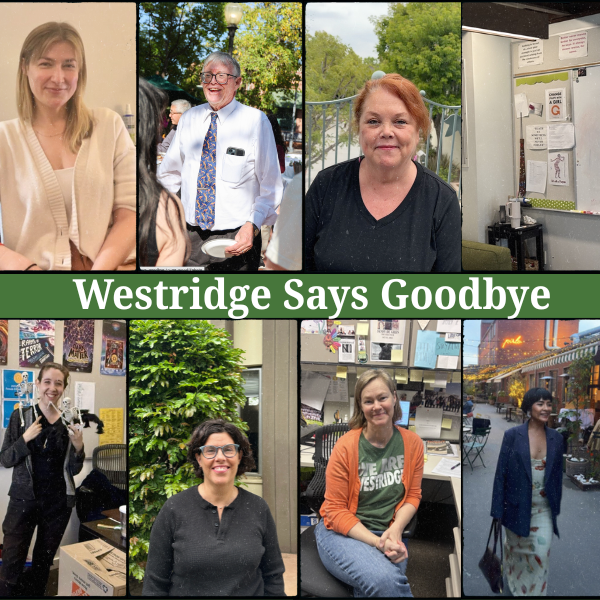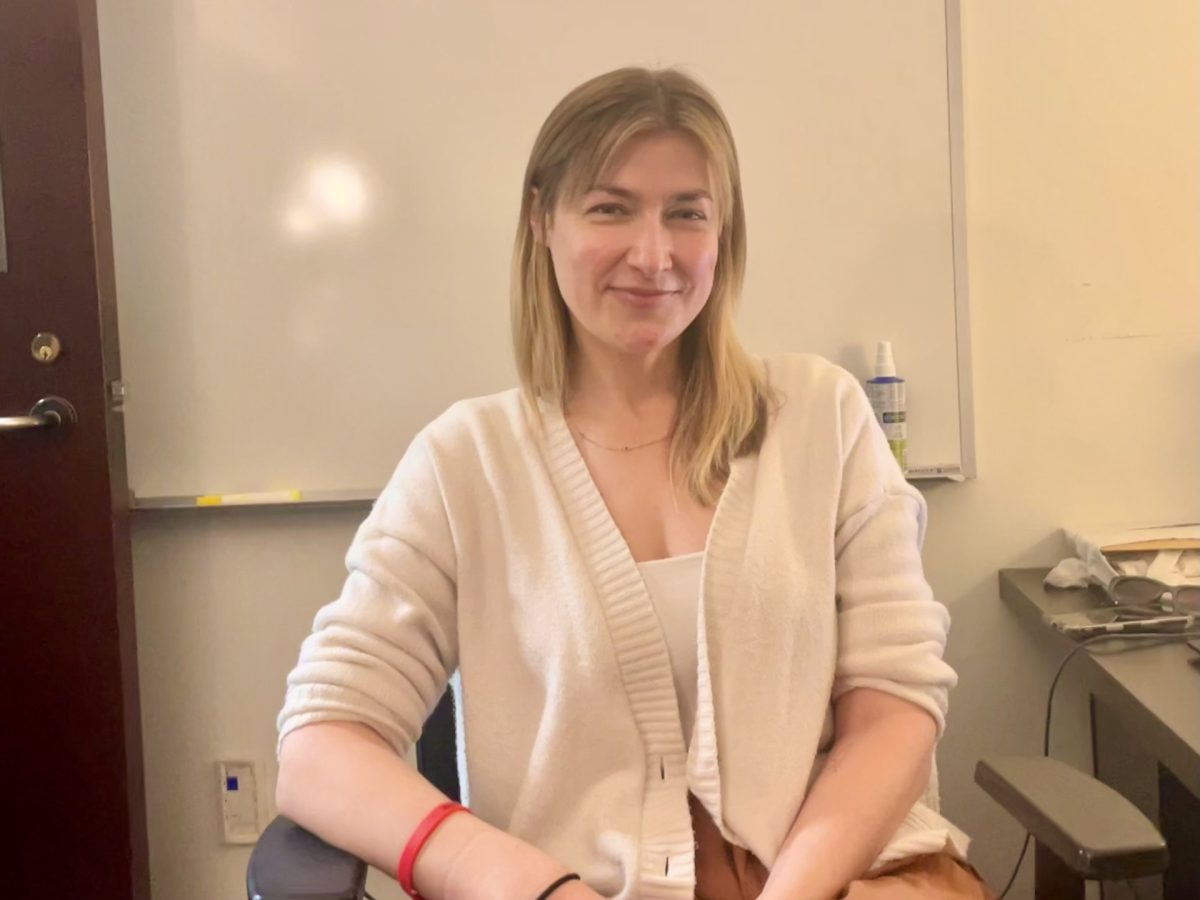


















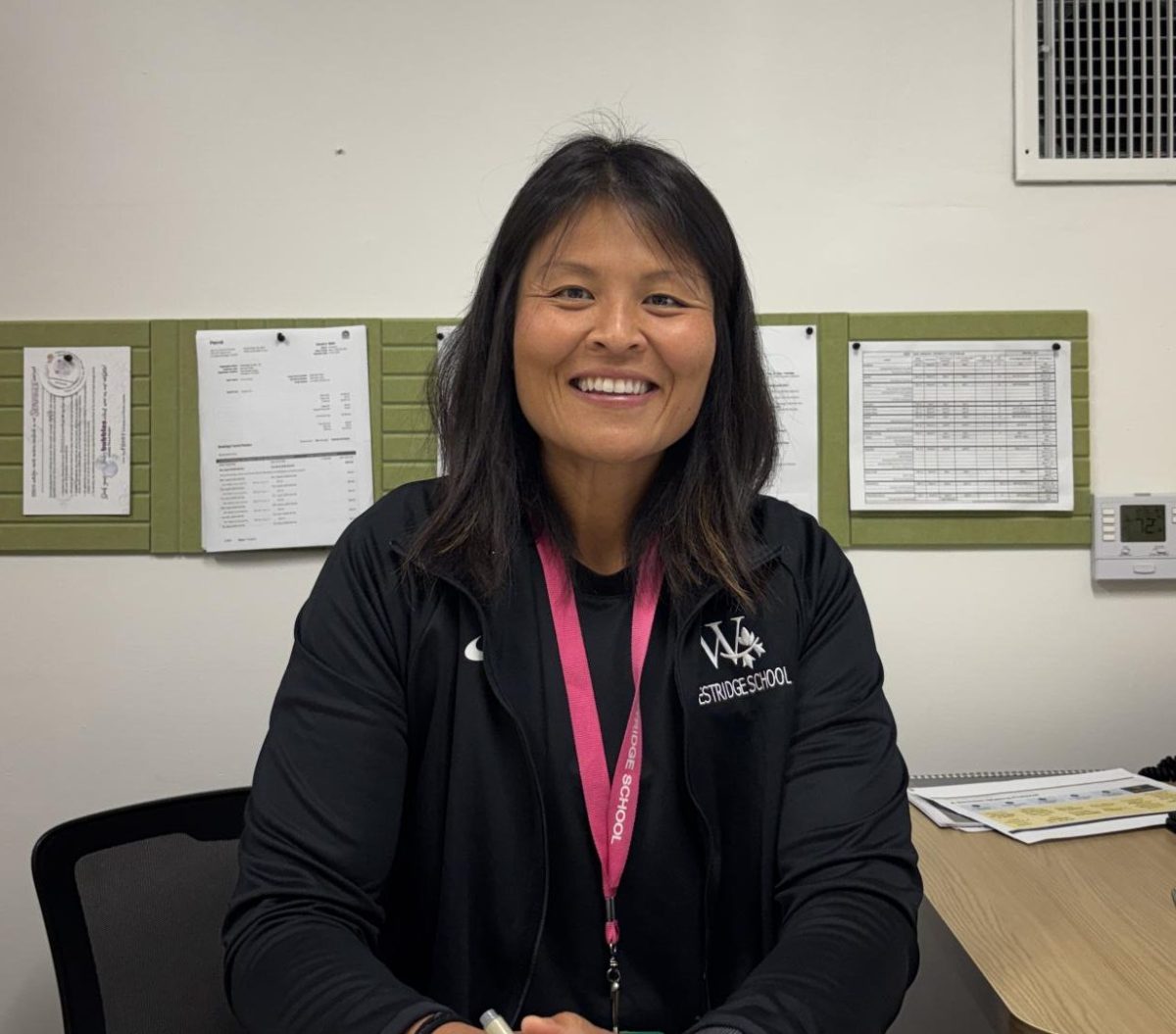
![Dr. Zanita Kelly, Director of Lower and Middle School, pictured above, and the rest of Westridge Administration were instrumental to providing Westridge faculty and staff the support they needed after the Eaton fire. "[Teachers] are part of the community," said Dr. Kelly. "Just like our families and students."](https://westridgespyglass.org/wp-content/uploads/2025/03/dr.-kellyyy-1-e1748143600809.png)
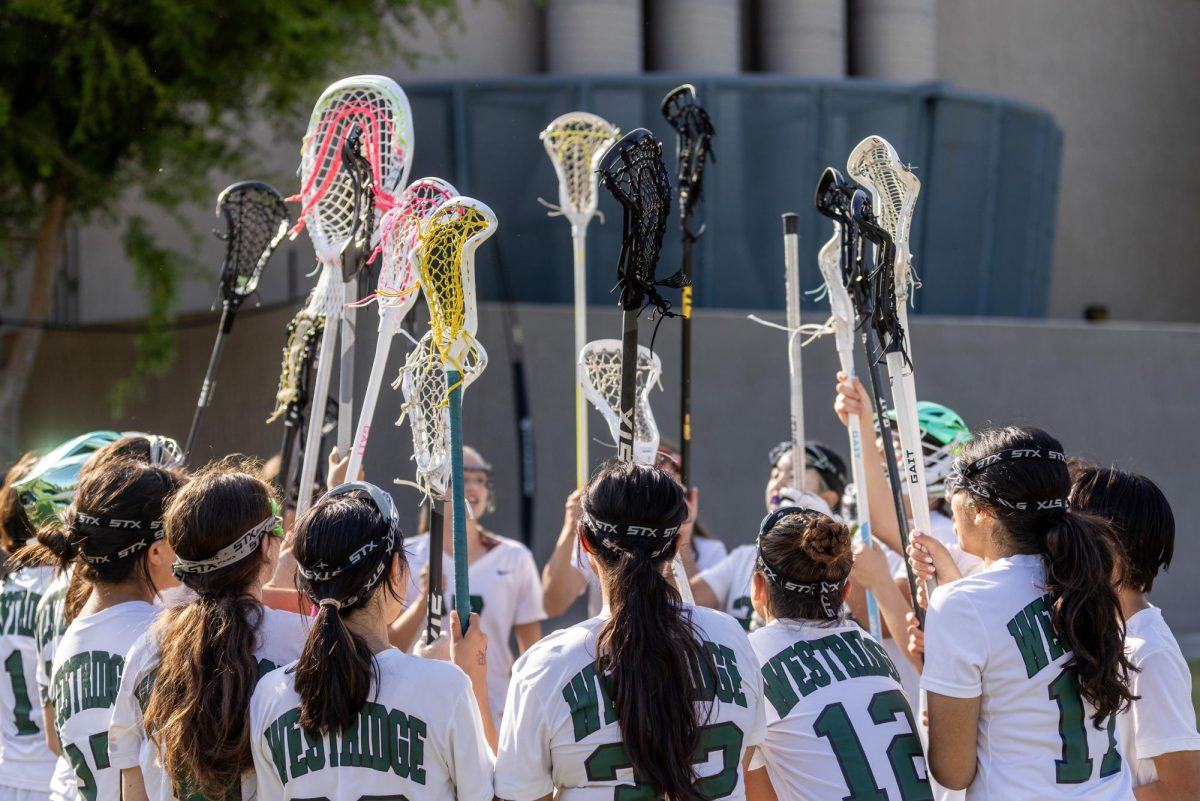
![Lacrosse had an incredible season, making it to the semifinals. Jeff Searock, the father of player Sophie S. '28 has gone to most games and said, "[The season has] been great. Great coaching, great players, kids have great attitude. You can't ask for much more."](https://westridgespyglass.org/wp-content/uploads/2026/05/IMG_3652-1200x900.jpeg)





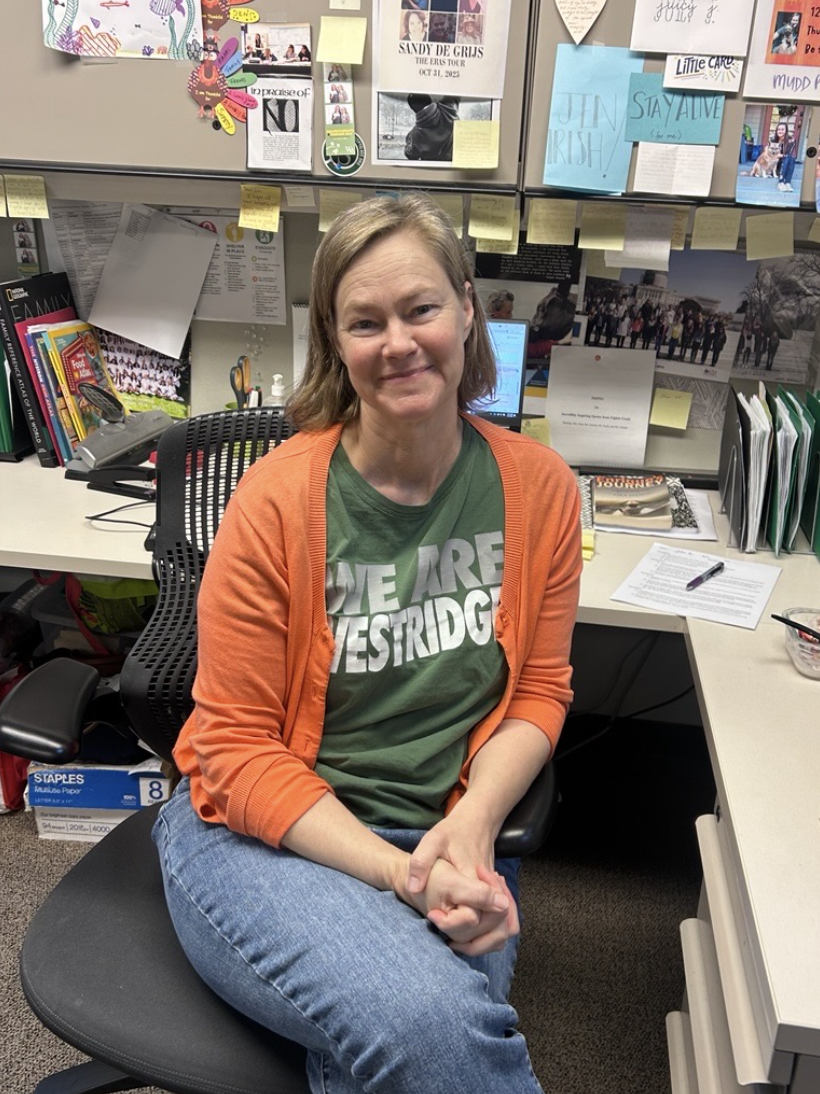




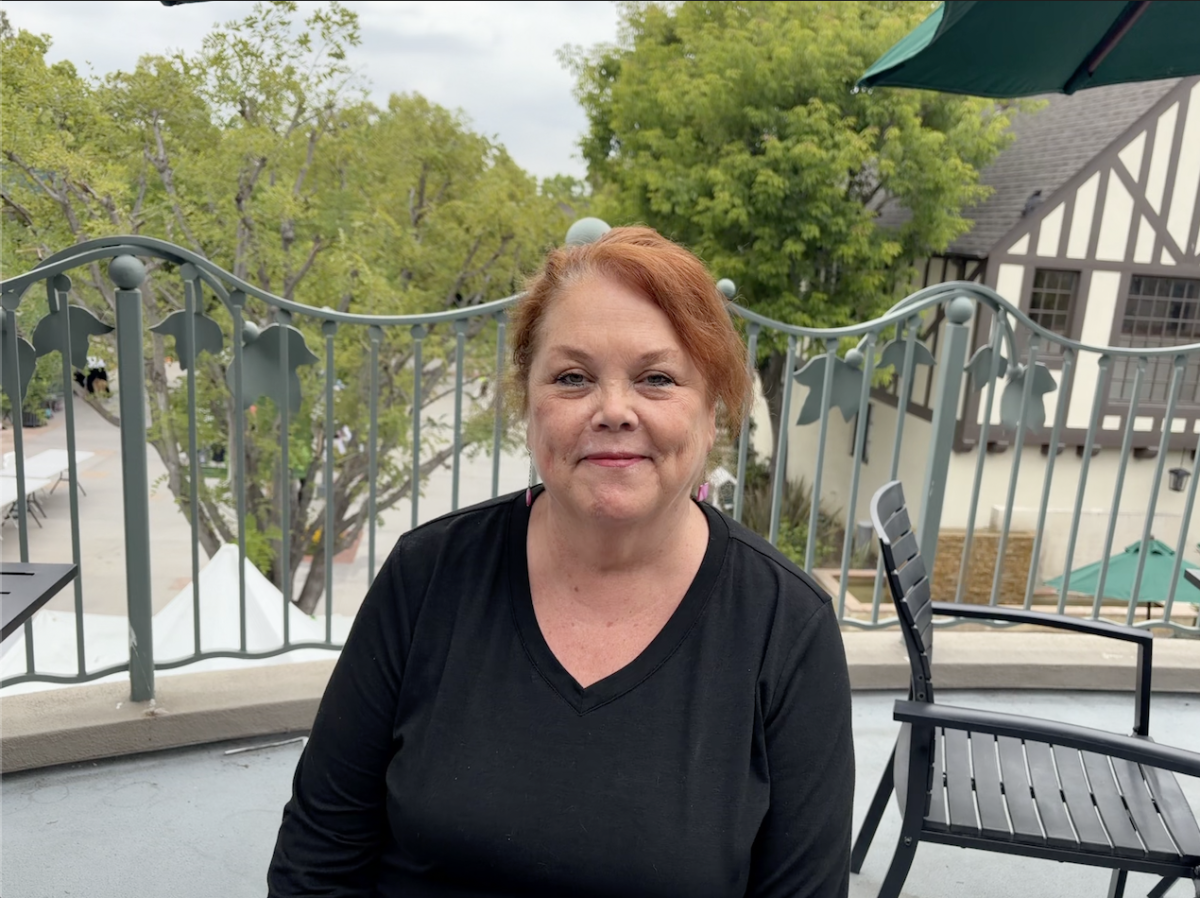
When Ms. Sandy de Grijs came to Westridge 30 years ago as an Upper School History Teacher, she didn’t know what to expect, but quickly, she felt like she’d found her place. “The kids were immediately amazing,” she said, “they would just engage. I was like, ‘Oh my gosh, they do the reading. They’re prepared for class,’ which was not always my experience.”
Now retiring, Ms. de Grijs is grateful for the opportunities that Westridge offered in terms of being able to teach about topics she’s truly passionate about. Following a bout of teaching about the Middle East at UCLA during graduate school, Ms. de Grijs was recommended by a professor that had kids at Westridge to apply for an open teaching position during the summer.
Despite it being her first time teaching high school, her inaugural weeks in the history department took her by surprise. “I remember that exact moment, sort of two weeks into school, it was a Friday, and I was more exhausted than I’ve ever been in my whole life, but also so invigorated…And I was like, ‘okay, this is what I was meant to do.’”
Through it all, Ms. de Grijs has loved bringing her passions into the classroom. In addition to her passion for the Middle East, stemming from living there for three years during her childhood, her passion for learning has also been fulfilled through the 10th-grade genocide project. This project is a tradition she created where students study, analyze, and present on a current or past human rights issue or genocide and decide if it should be considered a genocide.
Over her 30 years, Ms. de Grijs has worked to shift classes of history at Westridge to focus on the lesser-known sides of the past. Through the 10th-grade genocide unit, students are introduced to ongoing and past human rights crises through a scope of genuine humanity.
I’ve been in Ms. de Grijs’ 10th-grade Crisis and Courage class, and I elected to take the Modern Middle East history class this year along with the required We the People class. Every day in class, Ms. de Grijs encourages us to combat harmful ideas, question our own biases, and look deeper than the surface to explore history and how it affects our lives now. In her class, I have learned much about the Middle East, but indescribably more about how to think and talk about current events with empathy, for the sake of finding genuine understanding.
And I know I’m not alone in these reflections. Vivian S. ’26, a fellow student in my Modern Middle East class and former Crisis and Courage student, said, “[Ms. de Grijs is] so funny. These things that we talk about are deep and hard situations. She brings such empathy and openness to [our classes], and she wants to have [us] talk about…[our] points of view.”
Current Crisis and Courage student Piper H. ’28 also brought up Ms. de Grijs’ inside jokes with classes as something that makes her day. “She’s just a really fun person. Sometimes she goes on rambles and stuff, and then she goes like, ‘Dear Diary, [note to self],’ I think that’s really funny. She lights up the classroom,” said Piper. In addition to Ms. de Grijs’ general demeanor, Piper has found enjoyment in her genocide project on the Guatemalan genocide, and appreciated learning about history, especially about unethical US intervention, that she thought she might not have learned about without the project.
The History Department works as a unit to help boost teachers’ passion projects, and for Ms. de Grijs, this is where Modern Middle East and the genocide unit grow larger than just herself. The history office is known for its warm, community-oriented dynamic, and Ms. de Grijs considers it one of the things that she’ll miss the most in retirement.
In her first years at Westridge, Ms. de Grijs taught all of the Modern World classes—the Crisis and Courage predecessor—but once an extra block had to be added, she got to experience the joys of co-teaching with her especially entwined department. Through the years, Ms. de Grijs’ teaching of the class stayed the same, while co-teaching dynamics differed, but she remained grateful throughout it all.
Ms. Jennifer Cutler has worked with Ms. de Grijs since coming to Westridge during Covid, and will miss her presence tremendously. “Working with Sandy de Grijs is like having a master teacher, advocate, mentor, and best friend at my beck and call, 24-7…In my second year…I started teaching Modern [World]—now Crisis and Courage—with Sandy. The course was awesome, and once again, Sandy was available to share all of her information and resources with me. That’s just how she is—generous to a fault. While I am so glad she’s getting a well-deserved retirement, I am beyond devastated to lose her. I don’t ever want [Sandy] to ever go away,” she said.
While teaching with Ms. Cutler, Ms. Willa Greenstone, and History Department Chair Ms. Melissa Kelley, Ms. de Grijs has developed her teaching strategies and learned to collaborate for incredibly successful classes. Reminiscing on the shift to joint teaching, Ms. de Grijs said, “It turns out to be co-teaching this class with other teachers and getting their input and being able to talk about stuff…has been really great.”
In addition to the genocide project, Ms. de Grijs uses her knowledge of—and lived experience in—the Middle East to teach her specialty, the Modern Middle East class, which is a popular elective choice for juniors and seniors alike. “It couldn’t be taught by anyone else,” Vivian said, citing Ms. de Grijs’ decade-spanning knowledge and humanity-filled approach to teaching.
Larkin M. ’27, a Modern Middle East and former Crisis and Courage student, also credits some of the class’ impact to Ms. de Grijs’ genuine personality in the classroom, which she feels to be refreshing. “I like how she explains her opinions, and she’s definitely not afraid to say what she thinks, which is really nice, but then she also opens it up to discussion so everyone else can form their opinions,” she said.
This isn’t new—students from decades ago still feel a connection to Ms. de Grijs and her irreplaceable teaching. “At the [recent] alumni reception…I taught a class, and a former student I’ve taught more than…25 years ago, she said to me, sort of the best thing ever, which was, you’re exactly the same,” Ms. de Grijs said.
Larkin M. thought that Ms. de Grijs’ class offered up different sides to history, including those that weren’t shown in classes she had taken previously. “A lot of the time we have an ethnocentric focus, or very Western focus in history class…last year with the genocide project, like we got to look at all these different areas and cultures and look at kind of the negative impacts of US involvement and intervention in a way we wouldn’t have otherwise,” she said.
While attending the Retirement Celebration on May 13, Ms. Melissa Kelly reminded me of more subtle contributions Ms. de Grijs has made to the Westridge history experience—from the “pacquette,” a 10th grade supplemental textbook invention, to a “hit the Google” self-information session. The “de Grijs-isms,” as Ms. Kelley called them, will live on in the history office, which is now dedicated to Ms. de Grijs, reverberating with the impact of 30 years of meaningful, informed, and impassioned teaching.
In retirement, Ms. de Grijs plans to do “a lot of reading,” she said. “I don’t know, really, what it’s gonna look like, but…I’m sure it’s going to be very weird in August when I’m not coming back…I think it’ll hit me then.”
Still, I, along with all other students impacted by Ms. de Grijs’ meaningful and thought-provoking classes, will be the first to say—we will miss your warm presence on campus so much, and we would love to have you back for a day anytime.