




















![Dr. Zanita Kelly, Director of Lower and Middle School, pictured above, and the rest of Westridge Administration were instrumental to providing Westridge faculty and staff the support they needed after the Eaton fire. "[Teachers] are part of the community," said Dr. Kelly. "Just like our families and students."](https://westridgespyglass.org/wp-content/uploads/2025/03/dr.-kellyyy-1-e1748143600809.png)
![Lacrosse had an incredible season, making it to the semifinals. Jeff Searock, the father of player Sophie S. '28 has gone to most games and said, "[The season has] been great. Great coaching, great players, kids have great attitude. You can't ask for much more."](https://westridgespyglass.org/wp-content/uploads/2026/05/IMG_3652-1200x900.jpeg)











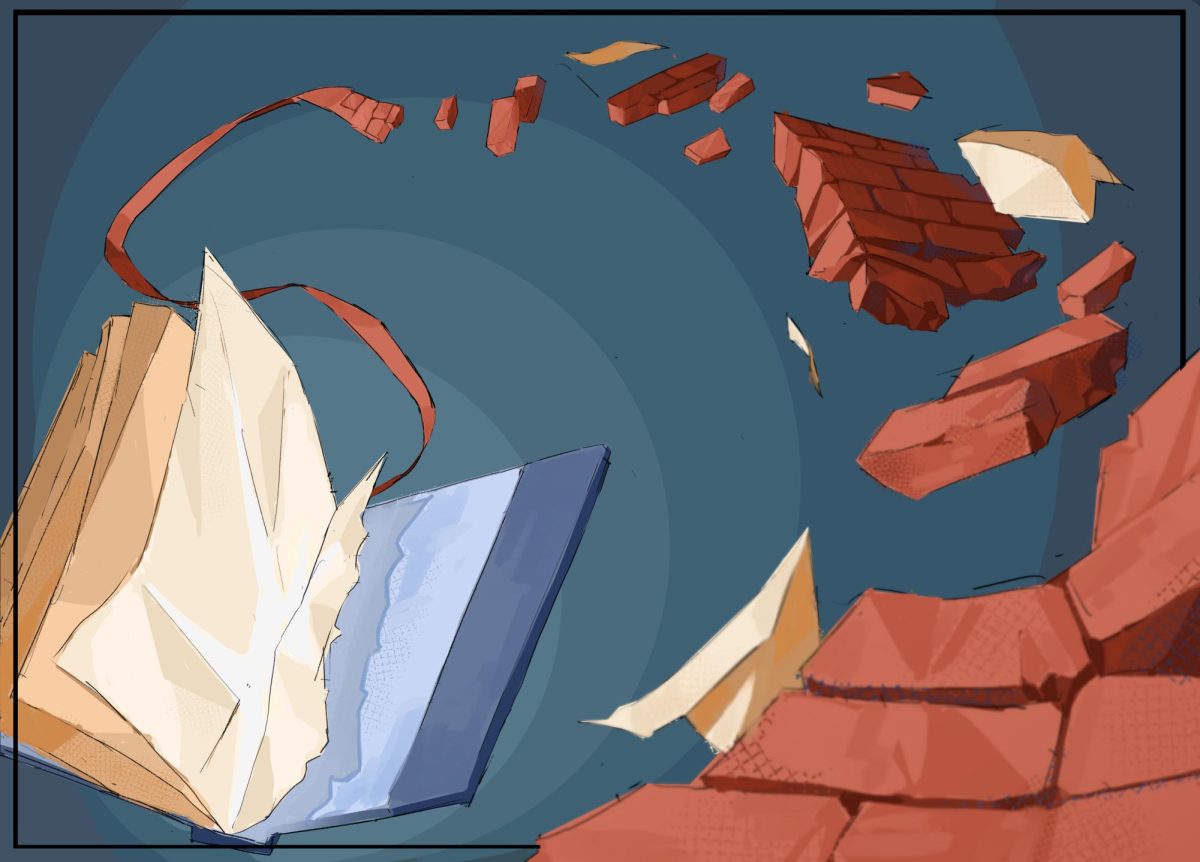
Every year, the English Department examines and rewrites parts of Westridge’s English curriculum, one book at a time. Students often assume the Upper School book list is rigid, but behind the scenes, teachers are constantly revisiting which books stay, which ones go, and what new texts might be worth bringing in. “We as a department look at the course… and [we] think about… any new texts that we’ve really been wanting to introduce,” said English Department Chair Dr. Jessica Bremmer, who has served in the role for multiple years and returned to the position this year.
The department reevaluates the poems, plays, and novels across all grade levels, and the process is especially important in 9th, 10th, and 11th grade, where multiple teachers often teach the same course. These collective decisions ensure that students receive a similar learning experience across sections.
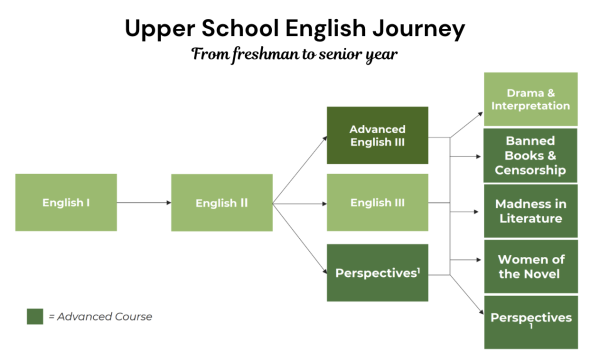
When teachers wish to add something new to the curriculum, the process is not as simple as just adding the text to their own syllabus. Instead, the English Department’s book selection process is a collaborative, department-wide discussion. “One teacher doesn’t make the decision for their ninth-grade class,” said Dr. Bremmer. “We all talk about what makes sense for ninth grade as a whole.”
Even if a text is a beloved mainstay, it still has to fit within the grade’s thematic arc. The department considers how the addition aligns with the course’s goals—whether it strengthens year-long conversations around identity, power, perspective, or literary craft, or fits into the overall trajectory of the course.
Many students notice the intentionality behind the book selections. “I think… [the English Department] probably puts a lot of thought into it and makes an informed decision about not only how each book will appear to us, but how they’ll all appear when put together,” said Charlotte H. ’28.
Because there’s only so much time in a school year, adding a new book usually means removing another. Last year, Homer’s The Odyssey, once a staple of the 9th-grade curriculum, was moved out to make room for different texts. Some students, like Josephine W. ’26, thought the change made sense, even though she enjoyed reading The Odyssey in ninth grade. “[The Odyssey] should be read in a different year of high school because the language might be too difficult for freshmen,” said Josephine.
However, some students missed the opportunity to read The Odyssey in their freshman year, despite knowing the book was a challenging read. “I was quite looking forward to reading [The Odyssey]… and I felt that as a class, we would have really benefited from the different discussions that could have led out of The Odyssey,” said Jieni L. ’28, who read the book independently after it was removed in her freshman year.
In response to the impact of the Eaton Fire, the English Department removed Ray Bradbury’s Fahrenheit 451 from the English I curriculum, a book they had newly added that year. Because the content in Fahrenheit 451 includes firemen who burn books in a society that bans them for promoting unhappiness and dissent, the Department took the recent fires into consideration and replaced Fahrenheit 451 with other texts.
“I remember I taught a student once who had barely escaped a burning house and told me, ‘Anything that’s fire-related causes me to be super anxious,’ said Upper School English teacher Mr. Max Duncan. “I totally get it.”
Balancing student input and experience is something the department takes into account. While students may not always see how decisions are made, many English teachers regularly check in with students throughout the year and invite student feedback on the books they read. According to Dr. Bremmer, teachers commonly ask students if “there are any texts that you would like to see in our curriculum that you don’t have… or any ones you want to make sure we can definitely hang on to?”
However, some students still believe the book selection is mostly up to the teachers. “I think that the English department has its discussions privately. It’s not really up to the students what texts are chosen,” said Liv C. ’28. “And I think in some ways that can be good, in some ways can be bad, but overall, it’s up to teachers to decide what to let us read. I’m not sure there’s much feedback from the students until after we [have] already read the book, and the curriculum doesn’t change too much year to year.”
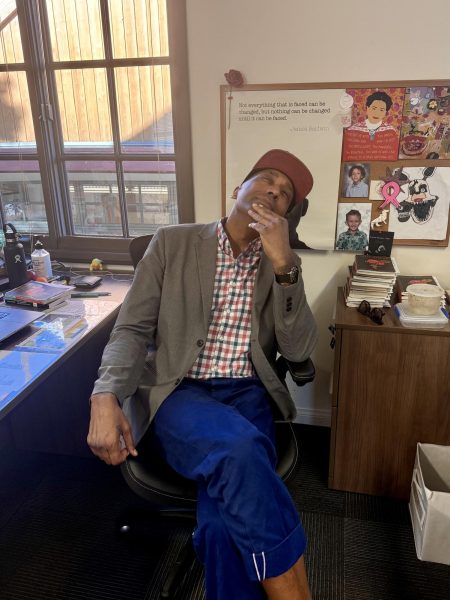
For the English Department, it is especially important that students see parts of themselves reflected in the curriculum. “For me, it’s really important that a student can connect themselves to the book in terms like, ‘This is something where I can see [this book] amplifying part of myself, or seeing a part of myself reflect in this book that I didn’t see beforehand,’” said Mr. Duncan. “I feel it can be really impactful [if] you can use [a] book as a mirror to see yourself and discover more [about] yourself.”
Even if students do not initially connect to a text or see themselves in it, through their discussions and assignments, students appreciate the challenge of stepping into another world. For Liv C. ’28, Kate Chopin’s The Awakening especially resonated and allowed her to connect with the protagonist, Edna Pontellier. “That reflects where I am in life, [as] I’m trying to decide where I want to go to college, and what I want to do with the rest of my career,” said Liv. “I think that kind of indecisiveness and not being sure if I’m making the right choices [really] connects to me deeply.”
The department also intentionally includes books that introduce students to unfamiliar experiences. The curriculum currently includes works that step outside mainstream Western perspectives, such as Han Kang’s The Vegetarian, Julie Otsuka’s The Buddha in the Attic, and Michelle Zauner’s Crying in H Mart. With a wide spectrum of cultures and experiences, the texts allow students to broaden their understanding of the world. “All the grades since middle school have impacted my perception of what literature can be, and how it reflects the world around us,” said Charlotte H. ’28.
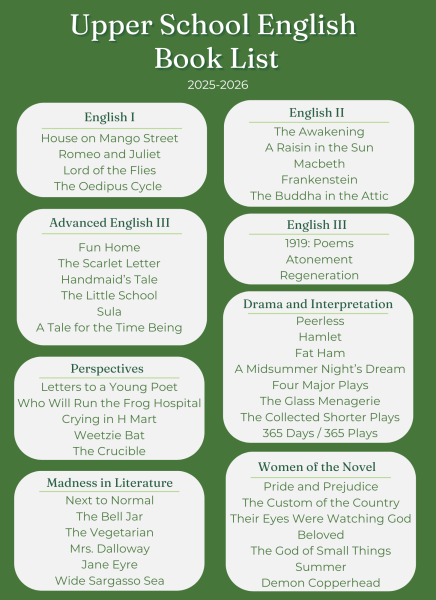
Additionally, the English department deliberately aims to help students navigate discomfort. Instead of avoiding challenging material, the English Department hopes to teach students how to analyze texts thoughtfully. Texts addressing trauma or oppression, such as Margaret Atwood’s Handmaid’s Tale and Alicia Partnoy’s The Little School: Tales of Disappearance & Survival in Argentina, ask students to grapple with difficult political and ethical issues. Additionally, texts like Sylvia Plath’s The Bell Jar and Brian Yorkey and Tom Kitt’s Next to Normal explore themes of mental health.
Josephine W. ’26 recalled debates among her friends about the morality of Walter’s decisions in Lorraine Hansberry’s A Raisin in the Sun. For her, disagreement often drove meaningful engagement. Similarly, Katie M. ’26 remembered intense discussions over Shakespeare’s Macbeth in her sophomore year. “There was a lot of debate over morality and whether [Macbeth] was correct in his actions and whether his actions were reasonable,” said Katie. “But I think it helped us with understanding the play more.”
The curriculum reflects a mix of long-standing classics and newer voices. While works like Mary Shelley’s Frankenstein, Charlotte Brontë’s Jane Eyre, and Kate Chopin’s The Awakening are valued for their literary influence, the department has also intentionally made room for more contemporary, diverse authors in the curriculum. This has included scaling back the number of Shakespeare plays.
“I think we try really hard to find a balance between newer texts and then the ones that would be considered canonical, [like] classic texts as well, because they’re all important, but there’s only so much time,” said Dr. Bremmer. “So it’s just a big give and take, but we don’t intentionally ever say, ‘We don’t want to teach the classics.’ They’re important for a lot of reasons, and it’s important to hear newer voices too.”
Ultimately, the English Department hopes that the books students read will stay with them, and leave a lasting impact on how students read, think, and engage with the world beyond the classroom. “I think that’s one of the great gifts of literature… it gives you an insight into a human experience that isn’t one you’ve lived,” said Dr. Bremmer. “So for students…learning how to be critical readers and thinkers, and then critical writers by extension, I hope our texts lend themselves to that kind of work.”

Amelie • Dec 15, 2025 at 12:29 pm
Impeccable journalism, Karalim and Micki! This was a great read and a very relevant topic. I hope to see more collaborations from you too! Yay!