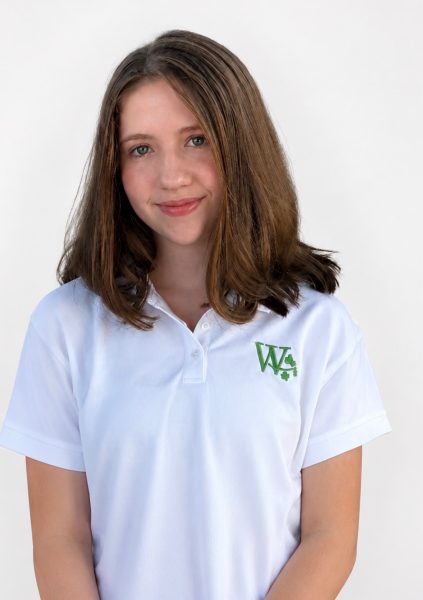





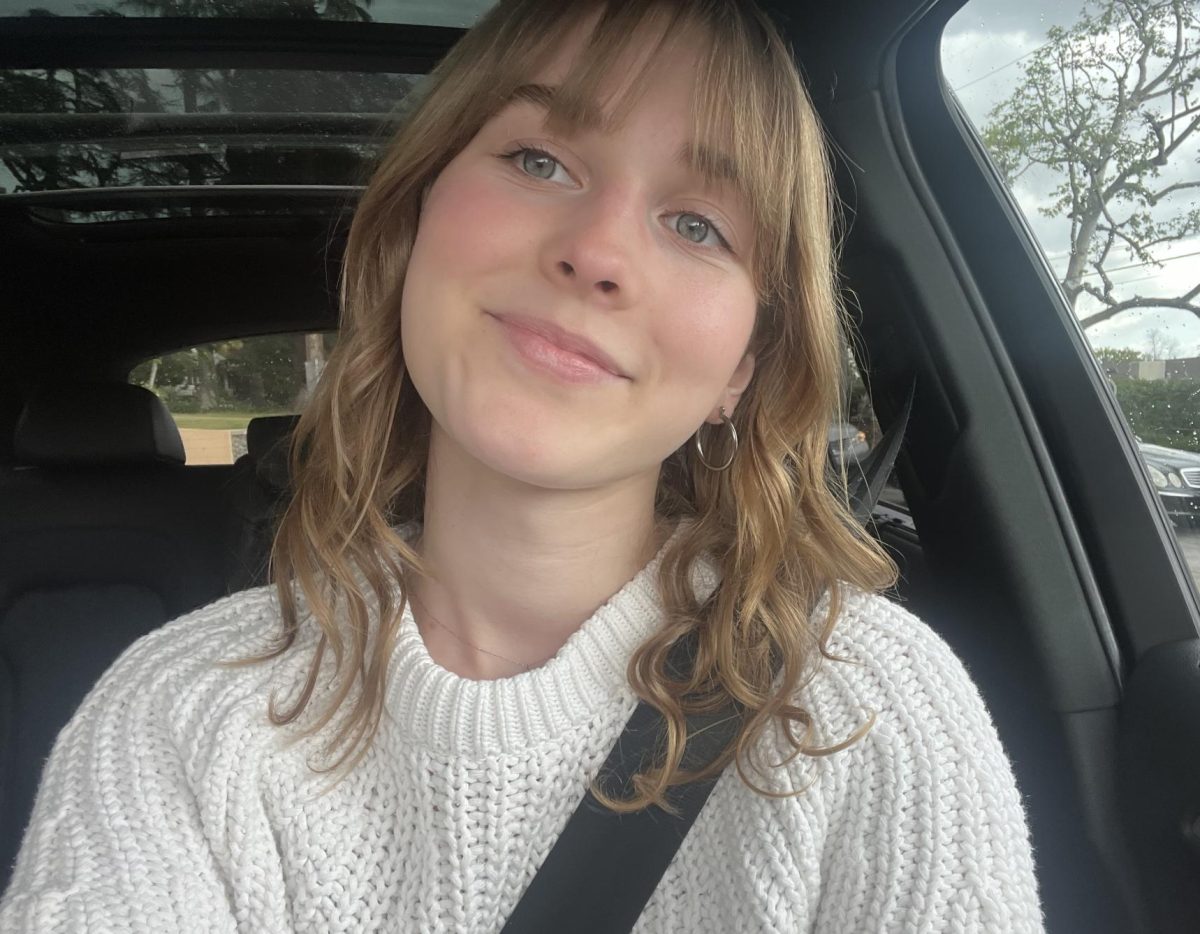




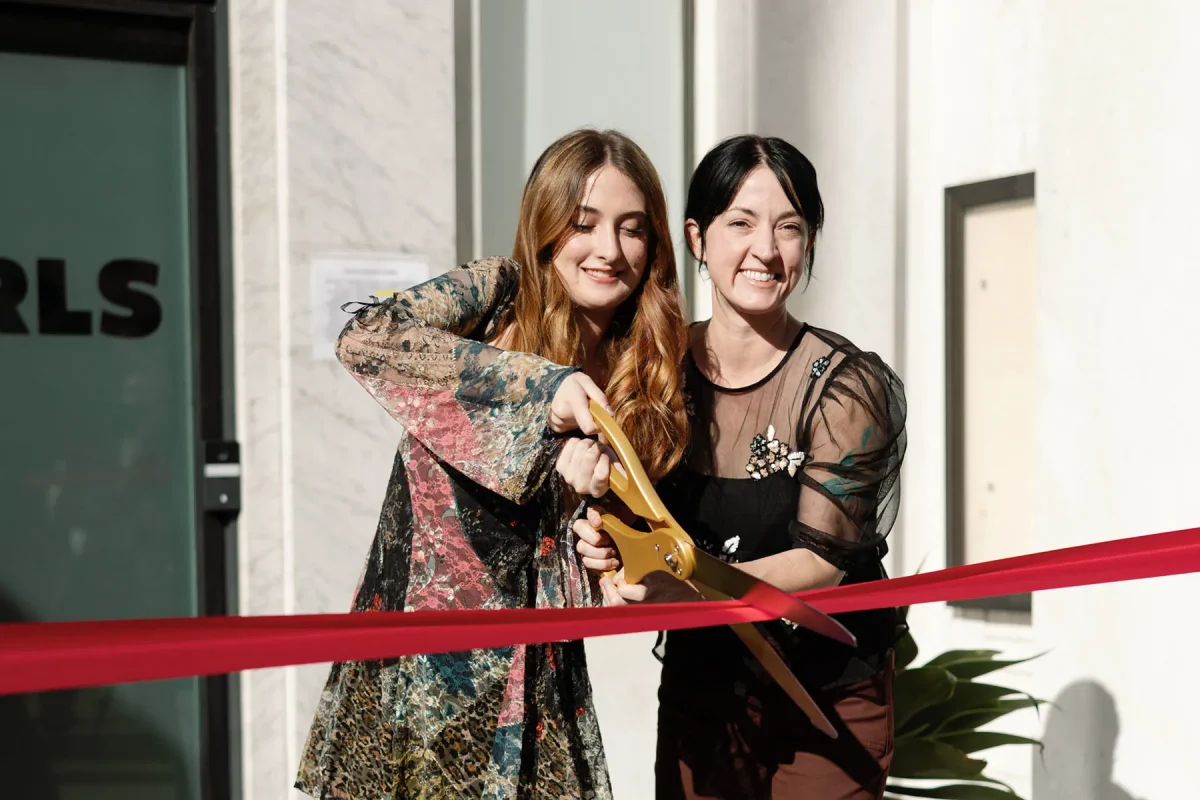

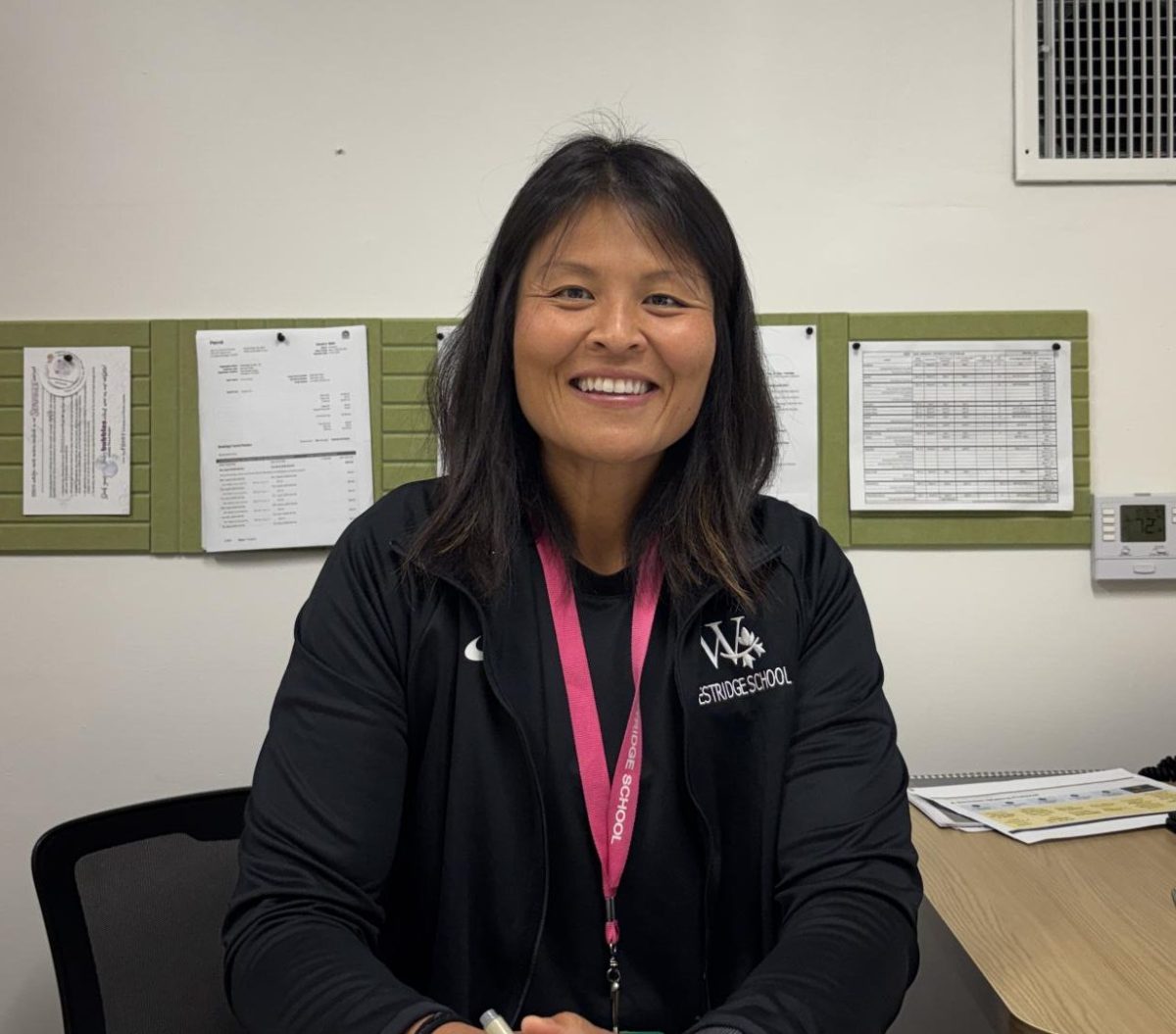
![Dr. Zanita Kelly, Director of Lower and Middle School, pictured above, and the rest of Westridge Administration were instrumental to providing Westridge faculty and staff the support they needed after the Eaton fire. "[Teachers] are part of the community," said Dr. Kelly. "Just like our families and students."](https://westridgespyglass.org/wp-content/uploads/2025/03/dr.-kellyyy-1-e1748143600809.png)
![Lacrosse had an incredible season, making it to the semifinals. Jeff Searock, the father of player Sophie S. '28 has gone to most games and said, "[The season has] been great. Great coaching, great players, kids have great attitude. You can't ask for much more."](https://westridgespyglass.org/wp-content/uploads/2026/05/IMG_3652-1200x900.jpeg)




It was nightfall on October 7, 2023, when I heard the news that shattered the world. The darkness felt heavier than usual, as if it had settled with purpose. Yet above it, the stars still burned. I wanted answers, some explanation, some reassurance that justice had not been abandoned. None came.
In searching for steadiness, my mind returned to the first place I had learned what constancy felt like: the small synagogue attached to my Jewish day school. I remembered the eternal light flickering softly above the sanctuary. Not a bonfire, not a torch, just a small steady flame that somehow illuminated everything.
I remembered Rabbi Aimee Gerace most of all. She strummed her guitar, led prayers with warmth, and made every person feel essential. No one was too young or too old to matter. She taught me that Jewish life was built not from grand gestures, but from many small sparks joined together.
Shortly after October 7, Rabbi Aimee passed away after battling breast cancer. I was devastated to think her final view of the world had been one marked by fear and hatred. Wanting to honor her courage, I decided to paint something that could hold the light she had given others.
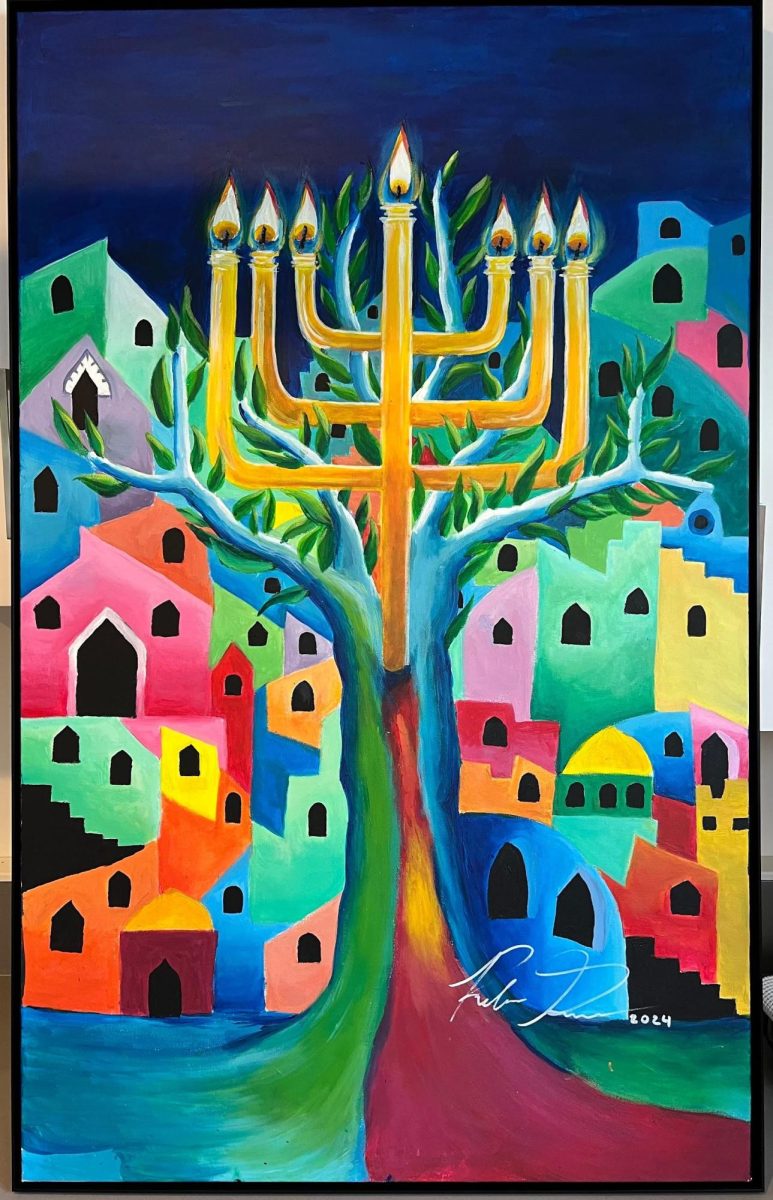
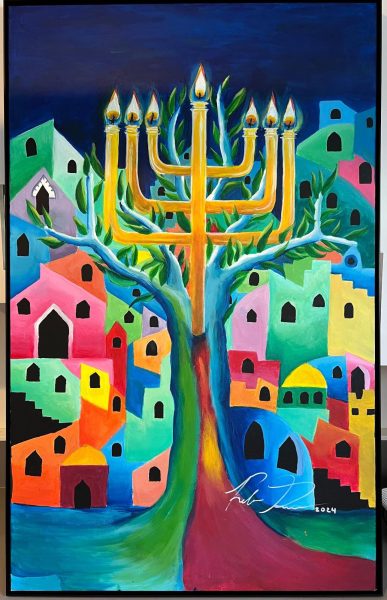
The finished piece showed Jerusalem rising in layered color. In the foreground, a vibrant Tree of Life wrapped around a glowing menorah. Buildings curved inward toward the flame, guiding the eye upward. It was a painting about endurance, faith, and light that refused to disappear.
The painting was unveiled after Shabbat services. Later I learned that Rabbi Aimee’s family had gathered around it and were deeply moved. It then hung in the synagogue for nearly two years. A few months before disaster struck, it was moved upstairs.
That small decision changed everything.
On January 7, 2025, the Eaton Fire erupted with terrifying speed. Winds exceeding 70 miles per hour drove flames across hillsides and neighborhoods. By nightfall, I had evacuated my home.
At a hotel, I opened my phone to messages pouring in. Then came the one that pierced me: “The synagogue burned down.”
I searched online and saw images of the sanctuary ablaze. Firefighters stood where clergy once prayed. Burned beams replaced prayer books. Inside those walls lived so many of my memories, from childhood services to my bat mitzvah.
I felt as though something sacred had been erased.
Still, even in grief, a strange sense of hope remained. Maybe destruction could become the foundation. Maybe from ruins something stronger could rise.
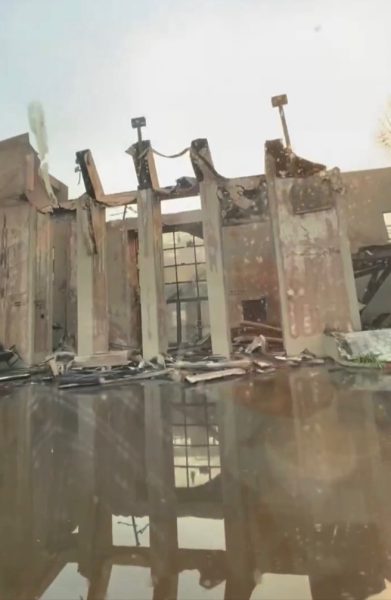
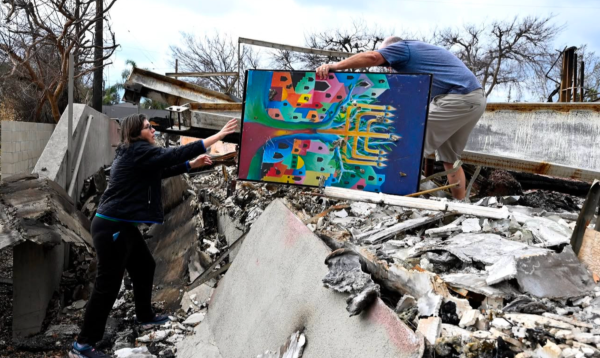
Weeks later, my family returned to check whether our house had survived. Though scorched on the outside, it still stood. That same day my mother opened an NPR article about the fire, and froze. The cover image was my painting, contrasted against the wreckage of the synagogue.
Because the painting had been moved upstairs before the fire, part of it remained visible above the rubble, allowing it to be spotted by the aerial shot in the NPR article.
We could not believe it.
My family rushed to the site before the forecasted rain arrived. Yellow police tape surrounded the property. After frantic calls, synagogue leadership granted my family access to enter.
Inside, much of the campus was destroyed. Nails, shattered glass, unstable beams, and ash covered the ground. But beneath the debris, vivid color emerged.
My painting was there.
Dust-covered but largely intact, it had only two puncture holes in one corner. Against the blackened ruins, its colors looked brighter than ever. It felt miraculous.
Shortly after, my synagogue launched a fundraiser to rebuild. I began messaging public figures and organizations, asking for help. Most of them never responded. Then one morning I checked the donations page and saw that Mayim Bialik, a Jewish actress, had contributed.
It felt surreal that someone I had reached out to cared enough to help.
The synagogue later appeared on national television to describe the devastation and to show how Torah scrolls had been saved. But after the interview with my rabbi and cantor, antisemitic comments flooded social media accounts connected to the synagogue.
Even in tragedy, hatred found a way to appear.
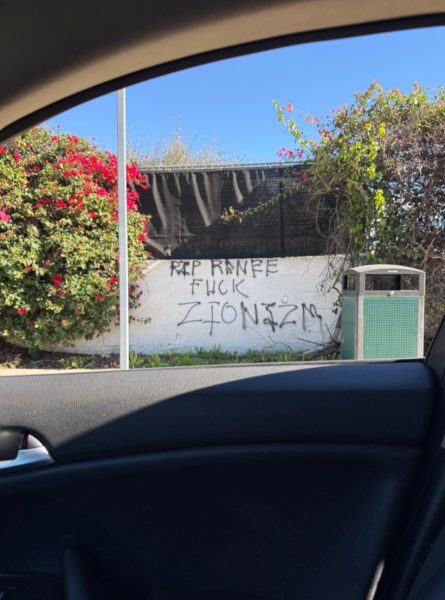
Nearly a year later, the remaining structure was vandalized with anti-Zionist graffiti. The walls had already been burned to ash and beams, yet even the ruins were not spared.
I joked with friends about the misspelling in the graffiti, but beneath the humor was a truth Jews know too well: whether we stand in prosperity or sift through ruins, we remain a people repeatedly marked for hatred.
And yet I felt hopeful.
Because after darkness, fire, and hatred, something essential still stood.
My painting survived.
I once believed resilience meant surviving destruction. Now I understand it means growing from it.
Fire consumes, yet it also reveals. Ash settles, yet it nourishes roots. Darkness deepens, yet it sharpens the stars. The synagogue walls fell. The Temple once fell. Yet the covenant did not fall. Light does not belong to buildings. It moves. It migrates. It endures.
My painting did not simply survive the fire. It carried forward the light the fire could never reach.
Because wherever even one spark survives, the story is not over.
It is only beginning again.