


























![Dr. Zanita Kelly, Director of Lower and Middle School, pictured above, and the rest of Westridge Administration were instrumental to providing Westridge faculty and staff the support they needed after the Eaton fire. "[Teachers] are part of the community," said Dr. Kelly. "Just like our families and students."](https://westridgespyglass.org/wp-content/uploads/2025/03/dr.-kellyyy-1-e1748143600809.png)

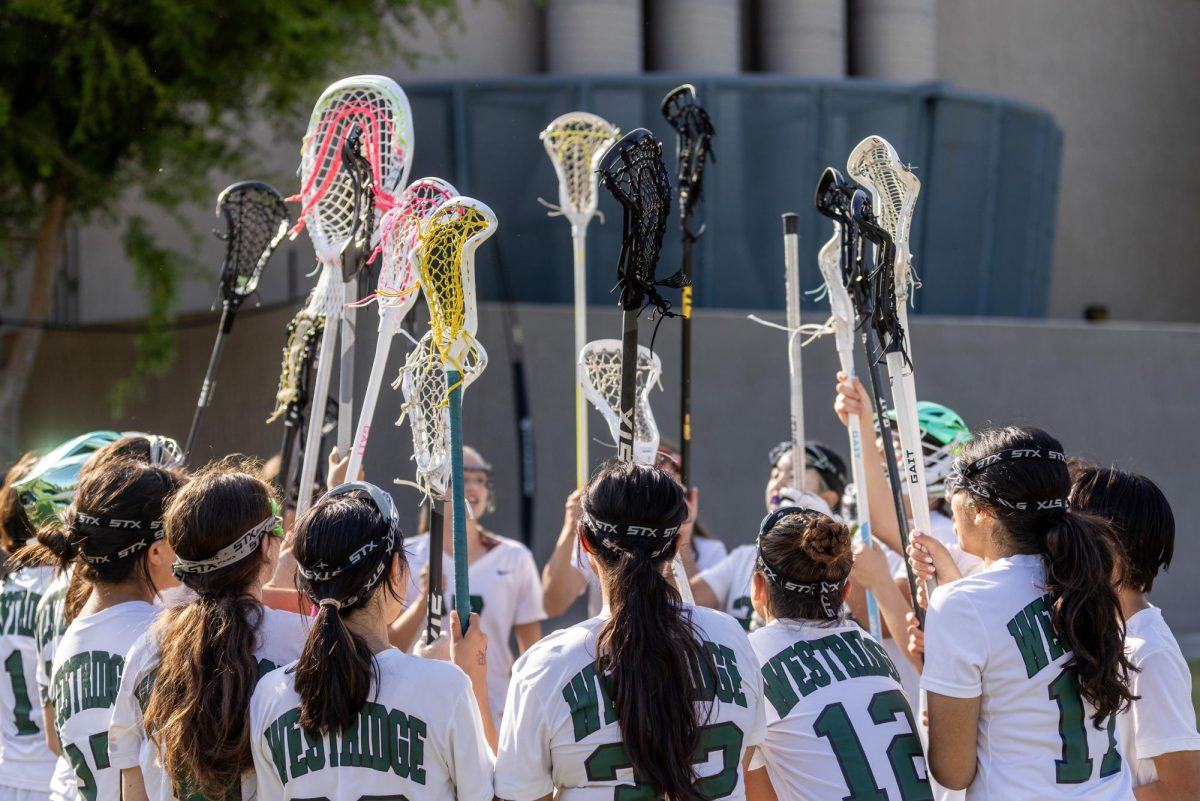
![Lacrosse had an incredible season, making it to the semifinals. Jeff Searock, the father of player Sophie S. '28 has gone to most games and said, "[The season has] been great. Great coaching, great players, kids have great attitude. You can't ask for much more."](https://westridgespyglass.org/wp-content/uploads/2026/05/IMG_3652-1200x900.jpeg)












Climbing has been a part of my life ever since the end of the COVID pandemic. Before COVID, I had only dabbled once or twice in rock climbing as a nine-year-old. I had gone once to the summer climbing camp held at The Stronghold Climbing Gym. But the pandemic cut my endeavors short. Around 2022, after in-person school started up once again, I went back to the same gym and joined the recreational team. A year later, I found that I really enjoyed climbing. It was much different than any of the other sports I had tried before—it was individual but also collaborative. I joined the competition team there soon after and began competing.
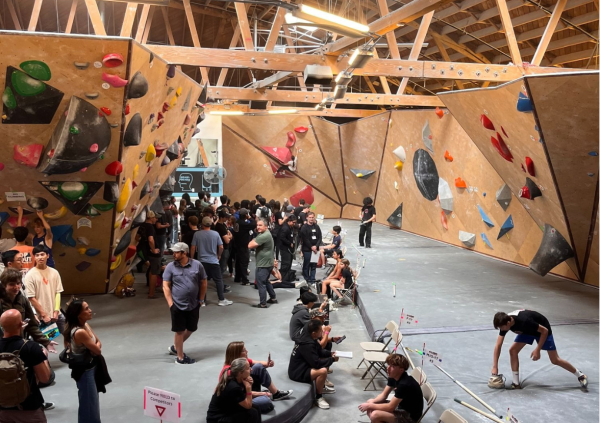
Competitive climbing is done indoors and is usually divided into three categories: bouldering, ropes, and speed. Speed climbing is exactly what it sounds like. Two people race up a standardized wall and vie for the fastest time. In bouldering and ropes, however, the main goal is not to be the fastest, but to get the furthest up the wall. Rope climbing is done on tall walls (usually about 40 feet tall) with use of a rope to catch your fall. Bouldering is done without the rope, but the walls are much shorter (around 15 feet), and there are pads below to cushion your fall. In these youth climbing competitions, kids on climbing gym teams from all over LA compete at several competitions throughout the season. On March 14, I competed in a climbing competition.

6:00 a.m.:
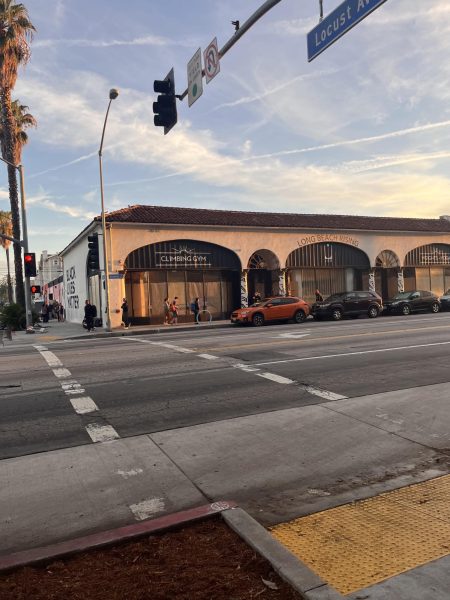
After waking up, I rummaged through my dresser, and pulled out my team shirt. I got dressed, checked my bag for my climbing shoes, chalk bag, and threw in a small snack. Each competition is held at a climbing gym in my region. Typically, these can be anywhere from 15-minute drives to grueling two hour trips early in the morning. This time, it was being held at a gym in Long Beach. I was running late, so I hopped in the car with my mom, and we picked up breakfast from Starbucks on the way.
7:00 a.m.:

After arriving at the gym, my mom went to check in as a volunteer judge. As a competitor, I went to go check in to ISO (isolation). ISO is a sectioned-off area in the gym for competitors to warm up in so they avoid seeing any of the climbs that they
will be climbing beforehand. There are no electronics allowed, so I had to put my phone in a basket to retrieve after I finished climbing. Once I arrived in ISO, I found the area o
f the gym where my team had settled in, and put my bag down wherever I could find room. Especially at smaller gyms, the area for ISO is tiny, chalk filled, and very crowded, since all the competitors are crammed into ISO before the competition begins.
8:00 a.m.–8:30 a.m.:
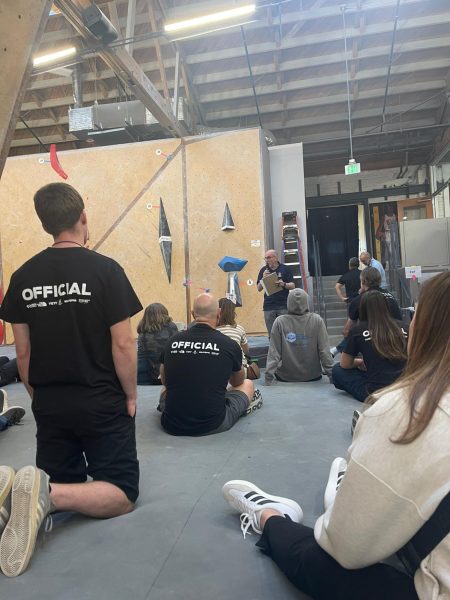
ISO closed, and no more competitors were allowed in. If you don’t check in on time, they will not allow you to compete at all, and the check-in table will turn you away. A couple days before the competition, each competitor is given a start time that tells them when they will leave ISO and begin climbing. Climbers are also divided into categories based on age and gender and climb on designated, unique climbs for each category. My start time wasn’t until around 9:30, so I went up to the yoga room with my friends from the team and stretched.
8:30 a.m.:
Around ISO, printed out copies of the start times were taped to the walls. Climbers with earlier start times began to make their way towards the entrance to the main area of the gym. I didn’t start climbing until 9:30, so I didn’t have to warm up right away.
9:00 a.m.–9:30 a.m.:
I started warming up at around 9:00. It was still crowded, but many people had left to go start climbing. In ISO, there are typically walls with climbs on them for competitors to warm up. I began on easier routes, then moved on to different terrains
(e.g. a steeper wall, or a more vertical wall) to prepare for whatever my competition routes might be. Before 9:30, I gathered my things and sat in my designated chair, next to other competitors from other age categories who were also going at the same time as me.
9:30 a.m.:
We were led outside of ISO, and to the main area where the competition takes place. I’m instructed to look at the floor while I walk to your climb so I don’t get an early look at the walls. I’m led to another chair in front of my first climb, facing away from the wall. I have four climbs, and four minutes to try each one. I have to wait in my chair for four minutes while the person before me climbs, and then I can get out of my chair, face the wall, and begin climbing after the four minutes passes. The process is a little nervewracking, especially when I have to wait in a chair before I climb and hear the loud buzzes of the timers placed around the gym.
The gym’s air is fuzzy and filled with chalk, making it feel claustrophobic, especially with the swaths of parents and coaches
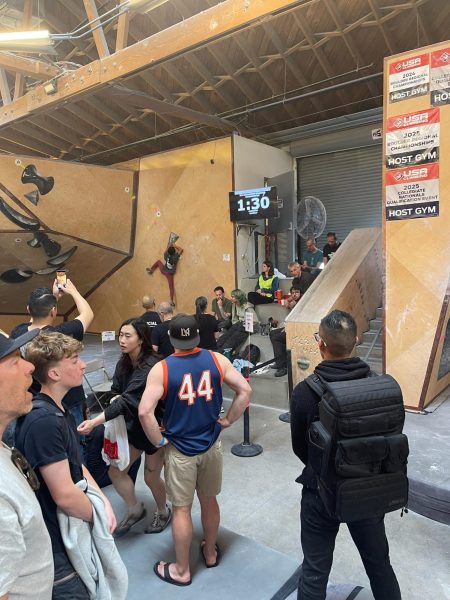
standing tiptoed on the mats, shoving phones over heads and shouting bits of motivation to the people climbing. The timer’s loud beep signaled the end of the climbing time, and indicated the start of the transition period.
One thing I enjoy about climbing is its open-endedness. Even though everyone in my category has the same set of four climbs, each person comes up with different ways to climb it. One person might opt for more dynamic, quick movements, while another could make their way up the wall slowly and methodically. Even on a single climb, there are many different ways to look at it.
9:40 a.m.:
As I went through my rotation of resting and climbing, I began to feel a bit exhausted. While the four minutes in the chair creeps by slowly, the four minutes of climbing time seems to go by five times as fast, not allowing for much rest or hesitation. I am only able to get three to four attempts on each climb, and each attempt is especially tiring while I’m on the steeper walls. The first climb in my rotation was balancy and on a flat wall, and my second was nestled in a corner, requiring lots of pressing. After my second climb, I was starting to feel the exhaustion from my recent attempts. As I sat in my chair, I watched the timer tick down until it hit 10 seconds.
I picked up my chalk, stood up, and continued facing away from the wall until the transition period was over. Then, my four minutes of climbing began.
The climb in front of me was on an overhung wall with small blue holds. I picked up a brush, and used it to brush off the layers of chalk left over from other competitors on some of the holds. I looked at the climb, and planned out in my head what I
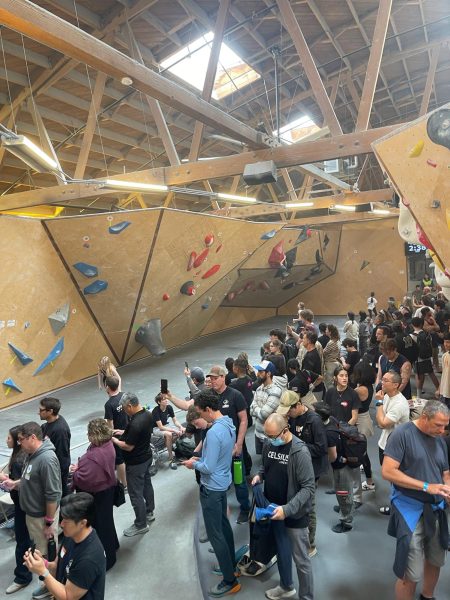
would do for each move. I didn’t want to waste too much time, so I chalked up my hands and walked up to the wall. I grabbed the two starting holds indicated with tape, and placed my feet on the two other start holds in order to legally start the climb. I continued climbing, but after placing my foot and trying to go to a sideways-facing hold, my hand slipped and I fell onto the mats. My arms were tired, so I rested for around a minute while I reevaluated the climb. After trying it again, I was able to nearly get to the top, but barely missed the last hold.
10:00 a.m.:
After making the stops through all four of my climbs, I was finally allowed to leave the last chair at 10:00. There were still a lot of people climbing, so my friends and I went around and watched other people try our climbs. It’s always interesting to see how other people did your climbs, and how it compared to the way you approached it. While you are spectating, you can cheer people on, but you can’t give them instruction. Even when they’re not climbing, or if they’re waiting in their chair, you can’t talk to them.
12:00 p.m.:
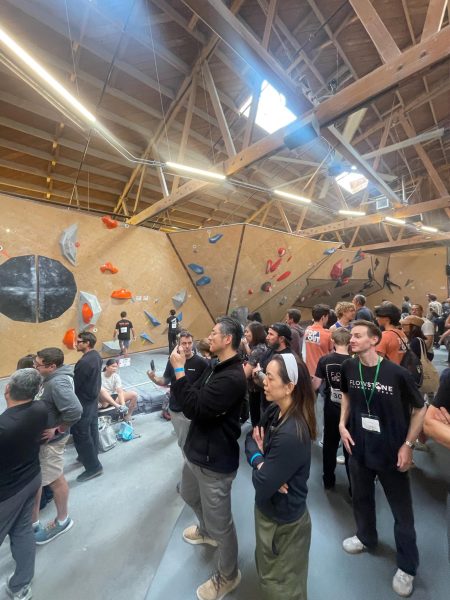
The climbing period ended for everyone, and the competition was over. After the climbing period, there is a designated time for appeals. The judges score you based on how far you got up the climb—there is a low zone, high zone, and top (finishing the climb). A low zone is worth the least, and a top is worth the most. For each zone, you must use the hold to make a movement, and in order to top a climb, both your hands must be touching the hold with control. If a judge didn’t give you the correct score for how far you got, you can appeal, and show them video proof to get your points. After the appeal period, my friends and I checked our scores, and we all qualified for the next competition!