











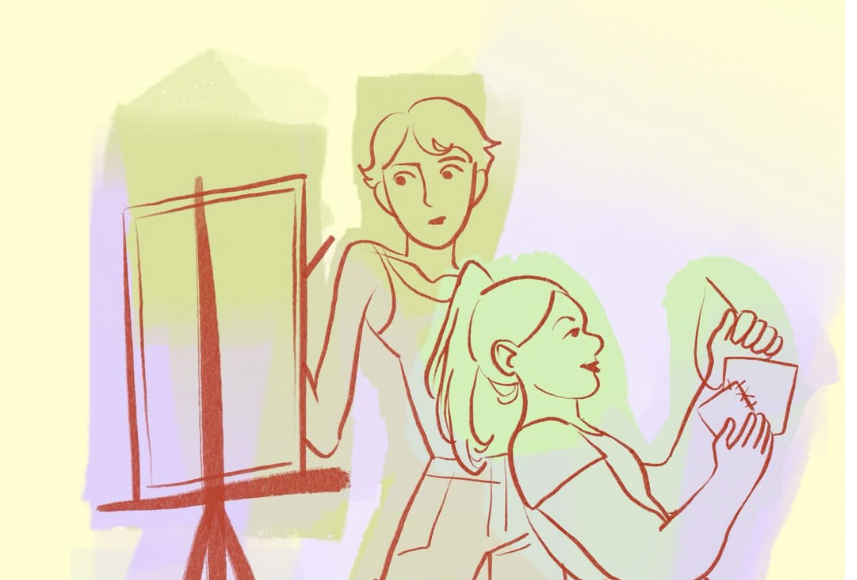




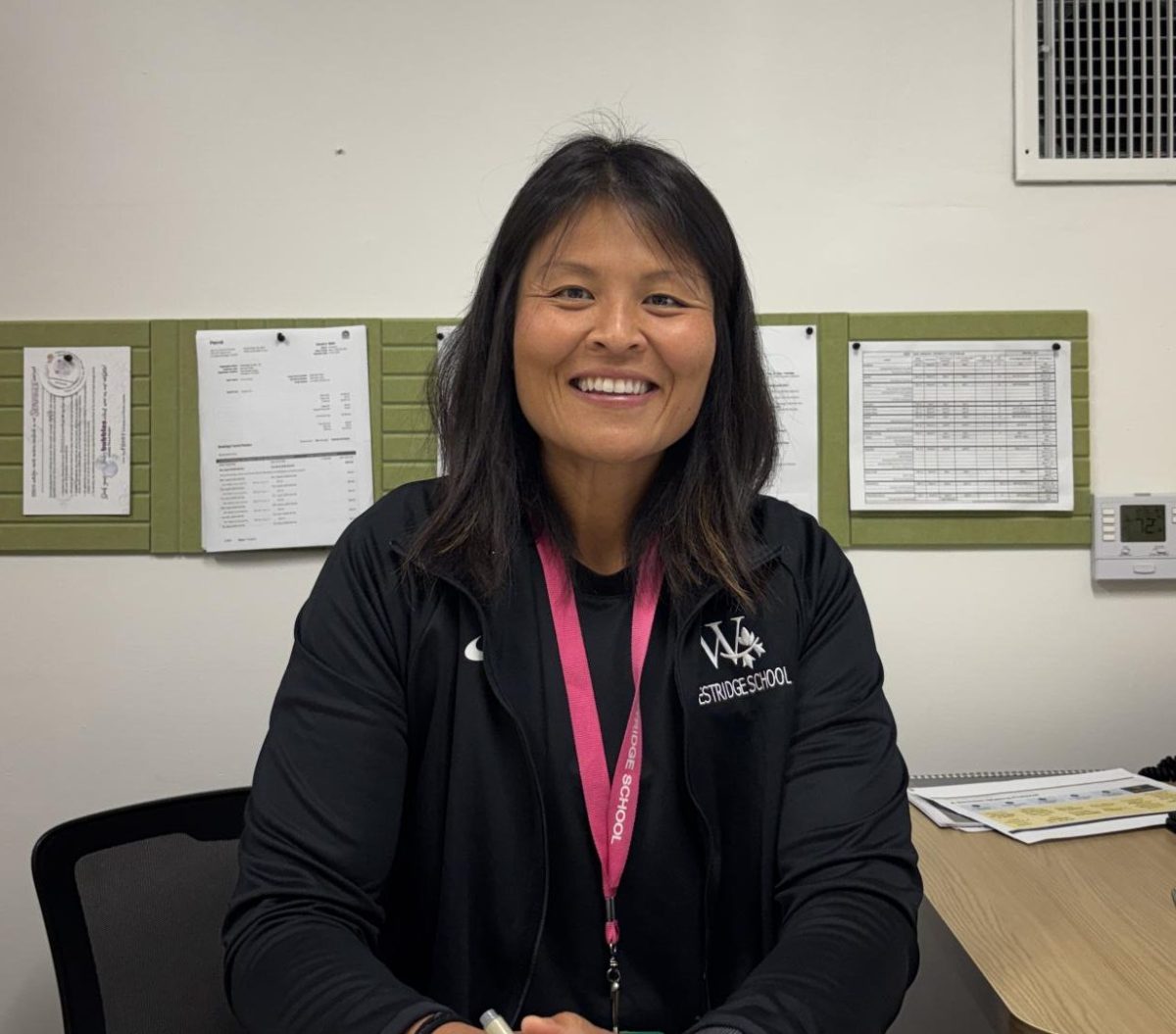
![Dr. Zanita Kelly, Director of Lower and Middle School, pictured above, and the rest of Westridge Administration were instrumental to providing Westridge faculty and staff the support they needed after the Eaton fire. "[Teachers] are part of the community," said Dr. Kelly. "Just like our families and students."](https://westridgespyglass.org/wp-content/uploads/2025/03/dr.-kellyyy-1-e1748143600809.png)
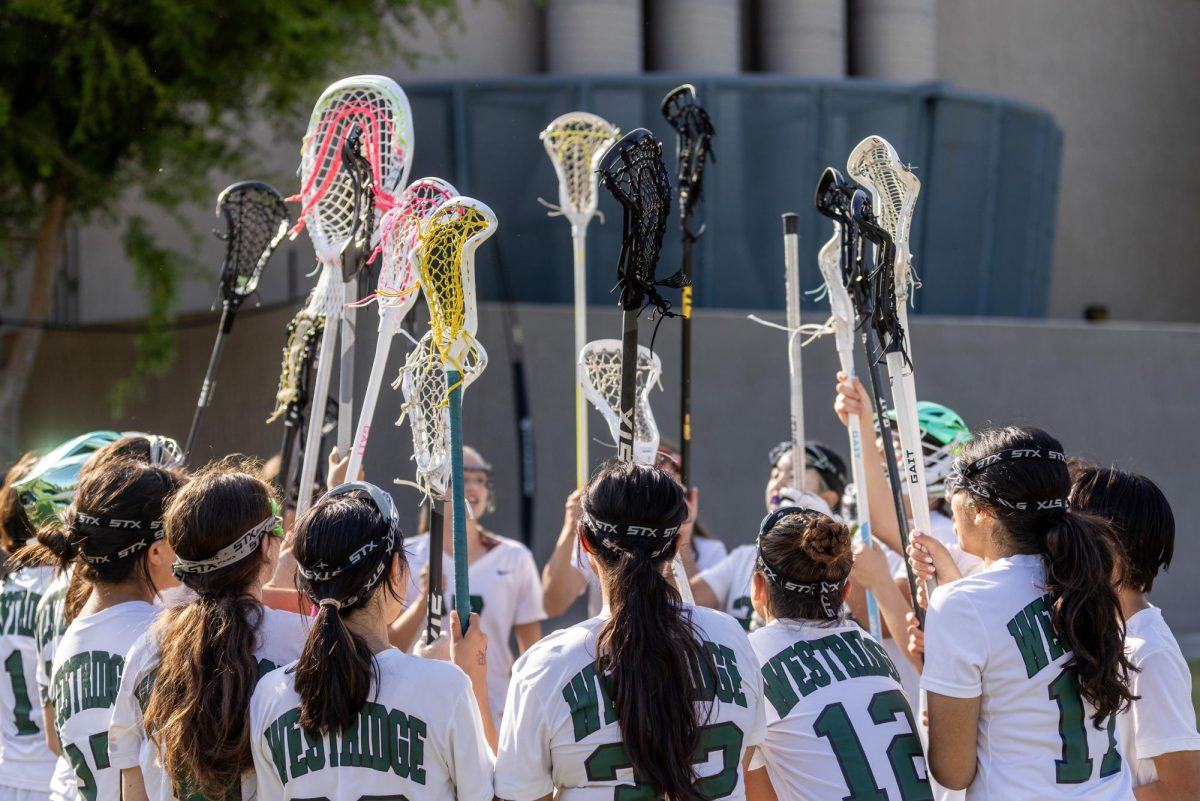
![Lacrosse had an incredible season, making it to the semifinals. Jeff Searock, the father of player Sophie S. '28 has gone to most games and said, "[The season has] been great. Great coaching, great players, kids have great attitude. You can't ask for much more."](https://westridgespyglass.org/wp-content/uploads/2026/05/IMG_3652-1200x900.jpeg)









“Do you think it’s worth applying there?” my sibling Maddie asks, fork paused halfway to their mouth. Around me, dinner stops. My mom starts listing pros and cons. My dad mentions rankings, then “keeping options open.” The food cools while the conversation stretches, looping back on itself—prestige versus fit, ambition versus reality. I sit there quietly, pushing food around my plate, watching it unfold like a script everyone else seems to know by heart.
At the time—months before Maddie would commit to MIT—I didn’t understand how one question could take up an entire meal. I didn’t know what made a college “worth it,” or why applying somewhere could feel like a statement about who you were or who you were trying to be. But I was learning anyway—about how decisions are made slowly and collectively, about how uncertainty sounds when spoken out loud, about how college isn’t just a destination but a negotiation between dreams, pressure, and reality that plays out in real life, across dinner tables, with doubt baked into every sentence.
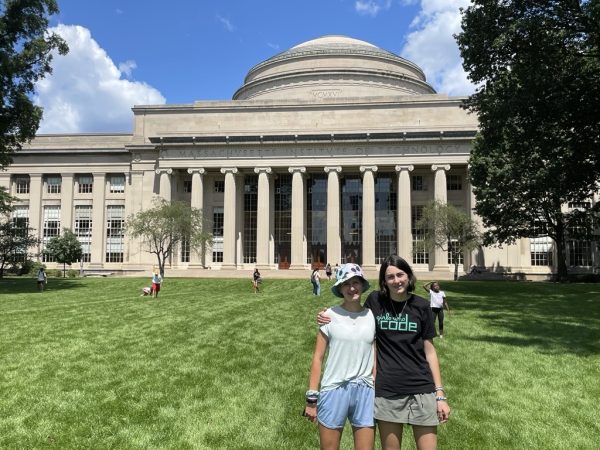
That’s how I learned the college process—by watching someone I love navigate stress, second-guess their choices, achieve milestones, and grow in real time. For me, Maddie became an informal guide, a reality check, and a source of reassurance all at once. Long before I even started to think about applications, I was absorbing the language of college from the other end of the table.
The word “college” has been in my head since the summer before eighth grade, when I went on my first college tour with Maddie. We toured MIT, Northeastern, and Brown before I even knew what an acceptance rate was. I sat through info sessions for schools I had no interest in attending, slowly picking up phrases like “test optional,” “early action,” and “school rankings” without understanding what they meant.
Back then, it felt like background noise. Now I realize it was passive learning. I was memorizing timelines without knowing the terms. I was learning that planning happens months before deadlines, that stress spikes in October, that winter is for waiting and spiraling and refreshing portals. Most of all, I was learning what the polished success stories don’t show: the exhaustion, the comparison, the way even the most confident people start doubting everything they’ve done.
The hardest part of the college process for Maddie wasn’t the workload; it was the identity piece—and watching that unsettled me more than any deadline ever could. “It felt like I was selling myself,” they told me. “Like I had to boil myself down to a couple of specific traits and make myself look good.”
They talked about how uncomfortable it felt to constantly polish and reframe themselves, about how essays started to feel less like self-expression and more like a performance of who they’re supposed to be. “It felt like my writing wasn’t mine anymore,” they said. “It was a simplified, perfected version of myself.”
Hearing that made me realize how early the college application process starts rewriting you—before you’ve even applied anywhere. It made me wonder what parts of myself I’ll feel pressured to smooth over when it’s my turn. It taught me something no checklist ever could: the college process tangles effort with worth, convincing people that if they don’t get into the “right” school, it means something about who they are.
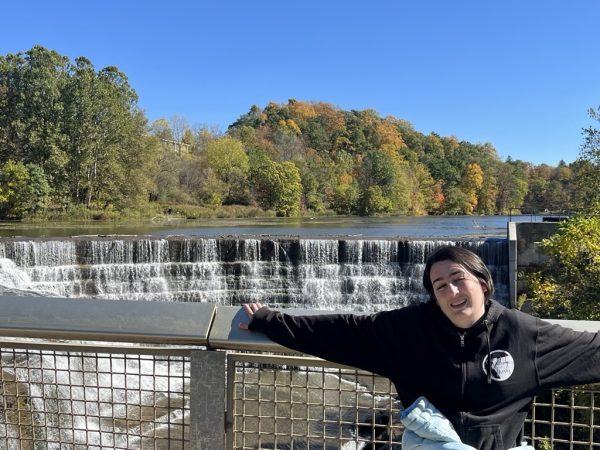
By October, Maddie was exhausted by the whole process. They described anxiety, conflicting advice from counselors and parents, and the pressure of building a college list that didn’t even feel like theirs. “There were schools I didn’t care about at all, but I was still writing essays for them,” they told me—referring mostly to “safety” schools that didn’t feel like a good fit. That moment stayed with me. It was the first time I realized how little control this process actually gives you—and how much it can take from you emotionally.
From the outside, it looked like a perfect success story: strong grades, big acceptances, a top-10 engineering school. But from the inside, it was messy and overwhelming and raw. Watching that disconnect made me start to question the idea that everyone has it figured out. Maybe they don’t. Maybe they’re just better at telling a neat version of the story afterward.
Not every aspect of the process felt forced, though. The MIT essays, Maddie said, felt the most authentic because they wrote them first—before the burnout settled in. One was written alone in their room, headphones on, music playing, just writing. Another came from dictating a thousand-word emotional monologue out loud at midnight for their personal essay. Their MIT interview felt real, too. “I just got to talk about what I love,” they said.
Those moments mattered to me. They showed me that even in a system that flattens people into word limits, test scores, and checkboxes, there are still cracks where something authentic can come through.
And somewhere between watching all of that and living alongside it, I started collecting lessons of my own.
Maddie has given me practical advice: start early, write drafts before senior year starts, and don’t underestimate burnout. But the most important lessons weren’t spoken. I learned that effort doesn’t always equal outcome—and that isn’t a failure. That parents can give helpful advice and still make things more complicated. That the process will make you feel smaller before it makes you feel proud. I learned that college isn’t just something you apply to. It’s something that leaks into your house, your dinner table, your sleep schedule, your sense of self. And maybe most importantly, I learned that things can work out—not because the process is fair or predictable, but because people are resilient in ways the process never measures.
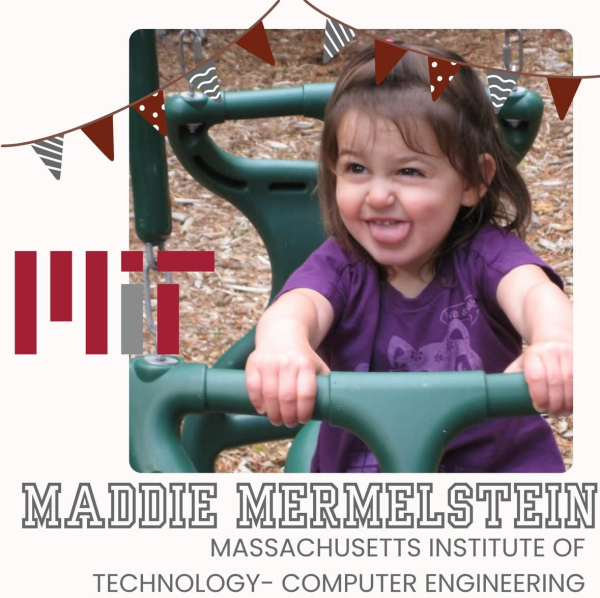
Now, my parents are starting to look at me the way they used to look at Maddie—measuring timelines, college lists, and possibilities I’m not ready to name. SAT dates are creeping closer. The word “college” is shifting from background noise to foreground pressure. And sometimes, at dinner, I catch myself answering questions that aren’t even about me yet.
But I’m less scared than I would’ve been if Maddie hadn’t gone first. Because I’ve already seen behind the scenes. I know the process is messy. I know it’s emotional. I know it doesn’t follow a script.
I didn’t learn the college process from a checklist or a polished success story. I learned it from the other side of the table—watching someone I love stumble, argue, cry, celebrate, and come out the other side still themself.