




























![Dr. Zanita Kelly, Director of Lower and Middle School, pictured above, and the rest of Westridge Administration were instrumental to providing Westridge faculty and staff the support they needed after the Eaton fire. "[Teachers] are part of the community," said Dr. Kelly. "Just like our families and students."](https://westridgespyglass.org/wp-content/uploads/2025/03/dr.-kellyyy-1-e1748143600809.png)

![Lacrosse had an incredible season, making it to the semifinals. Jeff Searock, the father of player Sophie S. '28 has gone to most games and said, "[The season has] been great. Great coaching, great players, kids have great attitude. You can't ask for much more."](https://westridgespyglass.org/wp-content/uploads/2026/05/IMG_3652-1200x900.jpeg)















Ever since I could read, I have been devouring books like candy. From Crockett Johnson’s Harold and the Purple Crayon to Homer’s The Odyssey, I like to think I have some experience reading. In this column, I’m going to review books read in my current English classes. Currently, I am in Advanced English III, and we have read a diverse range of books, including Toni Morrison’s Sula and Alicia Partnoy’s The Little School. I’m here to tell you my honest opinion away from the graded discussions and analytical papers. I am not a part of the English department; I’m not even a senior, but as your designated reviewer, I’m telling you my honest opinion. Think of me as the GoodReads of Westridge. I hope you have fun reading my review, and hopefully I can get you ready to read!
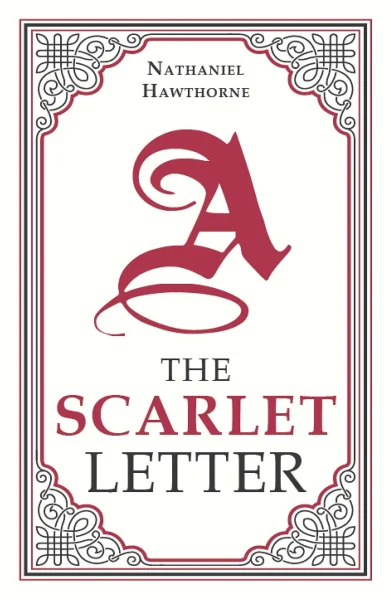
Nathaniel Hawthorne’s The Scarlet Letter book review:
*Warning: this review contains plot descriptions and spoilers*
First of all, let’s just start by saying Nathaniel Hawthorne was ahead of his time. The Scarlet Letter is set in 17th-century Puritan Boston, 200 years before Hawthorne was alive, yet he imbues the book with forward-thinking feminist principles. The story follows Hester Prynne, who is forced to wear a scarlet “A” on her chest, a symbol of her adultery, after having a child out of wedlock. When I write it like that, it sounds like yet another man shaming a woman about her life choices. However, I believe the book is inherently feminist. This opinion is highly debated; in fact, we talked about whether Hawthorne’s book is feminist or not in my English class. Hester, the strong, independent, single mom, openly defies the male-dominated Puritan society. Hester turns her “A,” a symbol meant to shame her, into a mark of her personal strength. She adorns her “A” with elaborate, artistic embroidery and gold thread, subtly defying the drab society around her.
Additionally, two men physically decay from their obsession with Hester, while she actively gets more beautiful. I mean, if this doesn’t sound at least a little bit feminist, what does?
Now, was the book completely scintillating at all times? I’m here to be completely transparent, so I have to say no. Hawthorne’s writing is extremely dense at times and hard to pick up again. It feels like Hawthorne wrote some of the dialogue not to advance the plot, but to hear himself talk. I did find myself dreading our nightly reads at certain moments, especially towards the end of the book. I never felt fully hooked on the story, partly because the ending of the book didn’t satisfy me. After everything that Hester went through, after defying Puritan society and leaving Boston, she comes back. She even lives in the same house she was exiled from. It felt like Hawthorne fought so hard for Hester to break out of her pre-packaged box, only to put her right back into it. She physically returns to the symbol of her external shame. It disappointed me slightly as I felt that Hawthorne was holding the promise of Hester’s independent departure from society.
Here’s the question I know you’ve all been waiting for: Should it be required? My answer is no. While reading the book, I experienced a feeling of indifference that I just can’t place. While I appreciate Hester and all the ways she exhibits her feminine power, I wasn’t completely gripped in the way I know I can be. For example, in Toni Morrison’s Sula, Sula leaves her community and comes back, much like Hester, but Sula’s return is marked by independence rather than conformity. That’s the kind of character I’m gripped by.
Maybe I’m slightly scarred by this book because of the in-class writings and analytical papers I wrote for it, but would I go back to it? Probably not. I’m not here to say “don’t read this book,” as I did appreciate and enjoy the time we spent on it, but I am here to say: Nathaniel Hawthorne was not life-changing.