



















![Dr. Zanita Kelly, Director of Lower and Middle School, pictured above, and the rest of Westridge Administration were instrumental to providing Westridge faculty and staff the support they needed after the Eaton fire. "[Teachers] are part of the community," said Dr. Kelly. "Just like our families and students."](https://westridgespyglass.org/wp-content/uploads/2025/03/dr.-kellyyy-1-e1748143600809.png)
![Lacrosse had an incredible season, making it to the semifinals. Jeff Searock, the father of player Sophie S. '28 has gone to most games and said, "[The season has] been great. Great coaching, great players, kids have great attitude. You can't ask for much more."](https://westridgespyglass.org/wp-content/uploads/2026/05/IMG_3652-1200x900.jpeg)











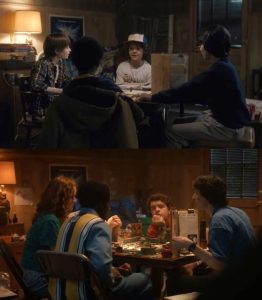
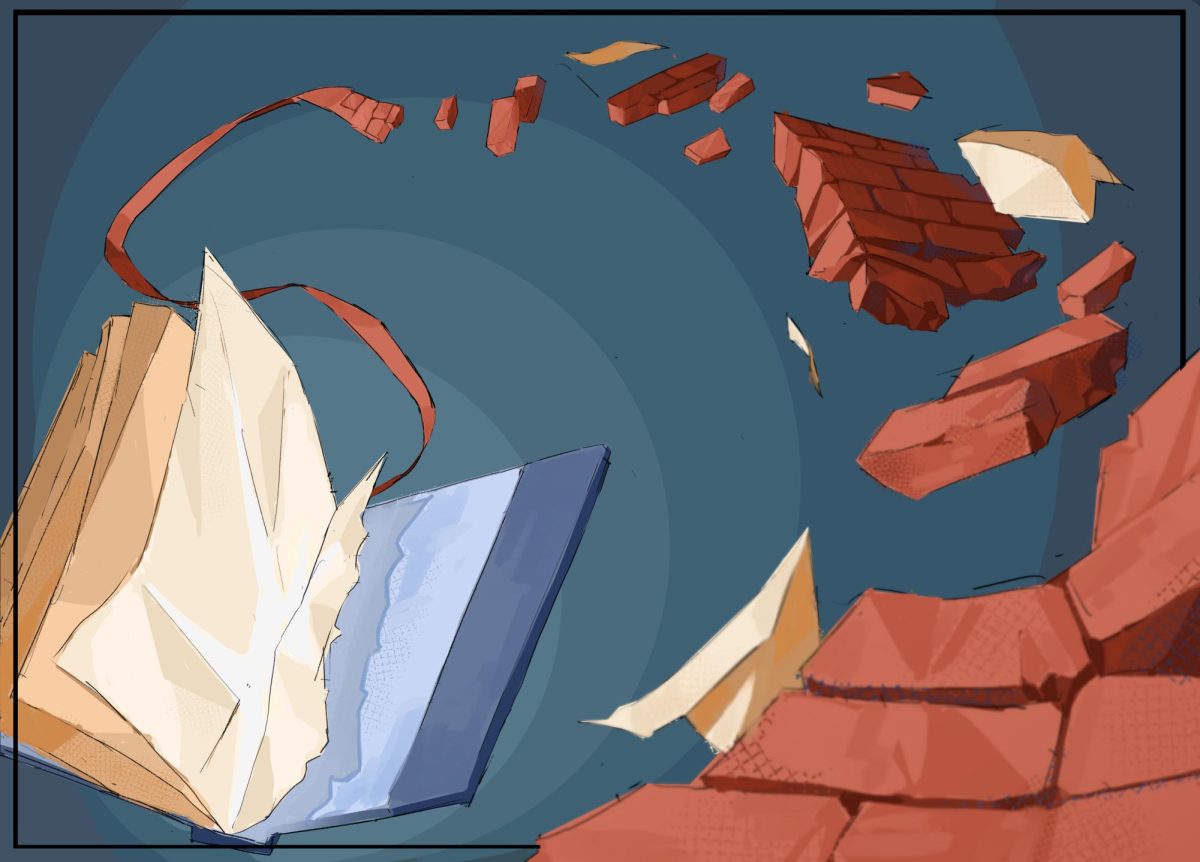
Bright colored and boldly patterned 80s shirts. Binders scribbled with notes and drawings. Dim lights exuding mystery. Five kids, no longer kids, huddled around a table. Dice and figurines of soldiers, kings, and monsters scattered everywhere. Dramatic roleplaying, laughing, bantering, shivering, screaming, and swearing as the story heightens, and bang, the climax! Some hooray, some snap, and…
We cry.
Because we’re back to where everything started: Mike’s basement, the classic D&D table, and very excited kids–Mike, Will, Lucas, Dustin, and now Max. As Mrs. Wheeler shouts “the lasagna’s getting cold” one last time after nine years, the music starts. They put away their binders, then their childhood too, and head upstairs, into whatever adulthood has for them. As they do that, Holly, Derek, and their friends burst into the basement to play D&D, eager to receive what has been passed along by the older kids–friendship, love, and stories.
I’m not crying, you are!
And yet despite the uncontrollable tears, Season 5 did not hook me and many others the way it once did. It feels as if we broke up, and that lover we once worshiped became a source of bitterness we talk trash about.
Many of us criticized it for being boring and slow-paced, lacking in action and urgency compared to previous seasons, where it felt like every scene had a purpose. Fans were also disappointed by plot holes and a lack of plot twists, especially compared to the elaborate fan theories that circulated for years. With the show’s large cast, many criticized that some relationships were unexplored, distant, or flawed, including the relationship between the Mind Flayer and Vecna. Vecna, once a supervillain, was seen by some as weaker in Season 5, especially after the reveal that he is a vessel for the Mind Flayer rather than a mastermind on his own. The ending, in particular, sparked backlash, with some going as far as writing an alternate ending because the original one felt too quiet, anticlimactic, and safe while the audience expected a darker, more epic conclusion.
Honestly, I understand these frustrations, some of which are true shortcomings, and some of which I defend with this: the expectations were simply too high.
No show can fully satisfy the individual hopes of over 1.2 billion viewers, especially when it comes to Stranger Things fans. We simply cannot get enough. For years, the show conditioned us to expect constant escalation: more powerful monsters, higher stakes, twists, budding romances, and new characters. Social media floods us with expectations again and again with spicy conspiracy theories and cinematic edits, until we believe that the only way to end our dear show is through dramatic battles, insane plot twists, and gut-wrenching character deaths that leave us depressed for months—thus, anything that deviates becomes a horrific betrayal.
But Season 5 is closing everything in, from unresolved relationships to dangling plot points. Mysteries excite; answers do not—and this season is almost entirely about answers.
Instead of submitting to the drama and twists that binge culture in films favors over depth, Stranger Things 5 chooses meaning over virality, completing major character arcs and coming-of-age themes. Of course, the Duffer Brothers know what we want—given the countless Reddit posts and TikTok conspiracy theories—and yet the Brothers chose to draw an earnest, emotional, and profound full stop to the show, prioritizing emotional character arcs and meaningful themes. Although many criticise them for playing it safe, isn’t this a form of risk-taking in itself? Choosing their dedication to their art over public expectations?
Stranger Things Season 5 is not particularly bad nor particularly great. It is exactly how it should be.
The pacing of this season mirrors the process of growing up itself—slow, awkward, reflective, at times underwhelming, at times overwhelming, and oftentimes simply disappointing.
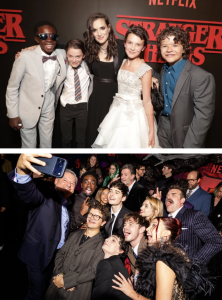
This makes a whole lot of sense when we look at the show beyond its monsters and lore, and realize that the core conflict is growing up in a world that no longer feels safe. Hawkins, a town brimmed with monsters and evil scientists, becomes a microcosm for the adult world—dangerous, unjust, and indifferent to how young we are when it asks us to carry its weight. Many fans—myself included—grew up with the show, and like its characters, we who used to ride bikes and go to high school parties were shoved into a world of trauma, grief, identity, complicated love, responsibility, and power.


Vecna, once an all-powerful and simplistic villain, transforms into a symbol for trauma. preying on children and killing people, Vecna represents the people who are hopelessly consumed by trauma. On the other hand, characters like Eleven, Will, and Max—really, almost everyone in the show—demonstrate that trauma doesn’t end, but is carried, shared, and gradually made survivable.

Grief is another thing that is lived with instead of defeated—Hopper, Dustin, Max, and Mike are all forever changed, moving on with grief instead of moving over it. Through Dustin’s withdrawal and Eleven’s death/disappearance, this season reveals a sad and beautiful truth: grief is the price we pay for love.
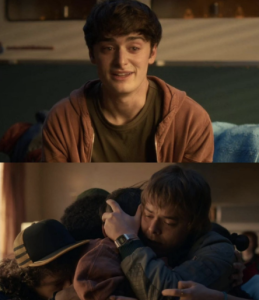
Just like how we must cultivate the strength to live with grief, we must also muster the courage to live authentically. The theme of identity and queerness is woven strategically in past seasons and strengthened in Season 5, with the vulnerable scene of Will coming out about his queer identity and Robin’s touching delivery—“I had all the answers. [I] just needed to stop being so …scared… Once I did that, oh, I felt so free. It’s like I could fly, you know?” Becoming yourself is not about chasing or discovering, but finding the courage to stop hiding and to exist honestly.
In the journey to self-acceptance, Will encounters numerous obstacles, including unrequited love. While Byler fans like me and Stancy fans are disappointed at the end of our ships, this season emphasises that love is complicated, messy, and at times distant (like Nancy and Jonathan’s relationship in Season 4). We fight for it—some get their happy ending, and some don’t. But life goes on—Will will meet a man who loves him as much as he loved Mike, and Steve will find his dream woman and have six little nuggets.
Just as navigating love requires difficult choices and a great deal of growing up, navigating corrupt and unfair systems demands the characters to grow, protect, and fight. Power and responsibility are explored through the contrast between Eleven and antagonists like Dr. Kay, Vecna, and the Mind Flayer—all of which are extremely powerful. While Eleven uses her powers to protect to the point of self-sacrifice, the villains wield their powers selfishly and obsessively, causing innocent people to bear the consequences of their actions.
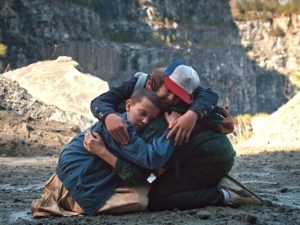
But in its essence, Stranger Things is a tale of friendship, of a found family that got through the hardest times, through and through. Let us not forget what made us fall madly in love with the show—not the lore, monsters, or the Upside Down but the heartfelt, and at times, messy bonds between people.
When I first heard about the general plot of the show, I did not bother to watch it—monsters, ill-fated kids, alternate dimensions, and evil governments—I thought to myself, “Here we go again.” But little did I know that I fell in love with it—headfirst, straight down, at the speed of light.
So no, it is not the plot or lore that created the magic of Stranger Things, but the people who face it— together. By placing less emphasis on the lore of the show, Season 5 reveals profound messages and reminds us why we stayed for all nine years.
If you’re in love with the characters, Season 5 offers a bittersweet and consoling ending. But if you’re more invested in the mythology, you may be disappointed. Both reactions can coexist. This season is warm, emotional, and deeply moving. But it’s not perfect—no goodbyes are. Some feel a sense of closure, and some feel as if their most loved person went away too quickly without a proper goodbye. Much of the show’s criticism stems not from the show’s disappointing ending, but the fact that we are grieving; so here’s a small guide to surviving the end of Stranger Things:
But at the end of the day—no matter how many times you rewatched the show, no matter how many demogorgon figurines you bought, no matter how many Steve edits you watched, and no matter how many times you listened to “Running Up That Hill”—the real way to cope is to just let the show live in your heart. Build it a strange, nostalgic cottage there, just like how Mike built a faraway home with three waterfalls for Eleven in his heart. Accept its imperfections and carry its strange beauty to others, to the Dereks and Hollys of the world. Season 5 may not have delivered the most exciting twists and lore, but it gave us something deeper—lessons of growing up, of facing trauma, loss, identity, love, and responsibility with the ones we love—and that, perhaps, is why Season 5 is exactly how it should be.
We love Stranger Things, and grief is what remains when something meaningful ends. Keep grieving. Keep loving.