








![Dr. Zanita Kelly, Director of Lower and Middle School, pictured above, and the rest of Westridge Administration were instrumental to providing Westridge faculty and staff the support they needed after the Eaton fire. "[Teachers] are part of the community," said Dr. Kelly. "Just like our families and students."](https://westridgespyglass.org/wp-content/uploads/2025/03/dr.-kellyyy-1-e1748143600809.png)
![Lacrosse had an incredible season, making it to the semifinals. Jeff Searock, the father of player Sophie S. '28 has gone to most games and said, "[The season has] been great. Great coaching, great players, kids have great attitude. You can't ask for much more."](https://westridgespyglass.org/wp-content/uploads/2026/05/IMG_3652-1200x900.jpeg)




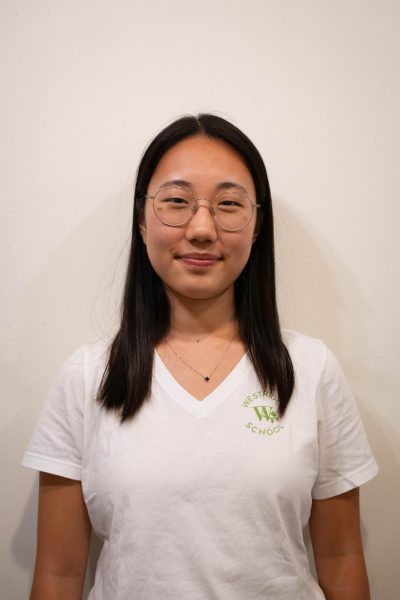
When Spyglass Staff Writer Nia H. ‘27 arrived home from school on Wednesday, October 15, her mind was racing with interview questions. In two hours, she, along with senior Selah J. from the Archer School for Girls, was to lead an interview with author, progressive activist, and 2015 National Book Award for Nonfiction winner Ta-Nehisi Coates (whose biggest fan happens to be Nia’s mother). Despite having practiced multiple times, Nia was more nervous than ever.
The interview was organized by the nonprofit organization Private School Village (PSV). Private School Village brings together Black and Brown students from over 100 private schools throughout Los Angeles County. PSV’s goal is to provide opportunities for these students to feel empowered in private schools, which systematically lack significant BIPOC student populations in their student bodies.
Nia and Selah, the co-presidents of PSV, led the first of what will be a series of interviews intended to be watched by BIPOC students at private schools, and this webinar specifically had an intended audience of Black students at private schools, though anyone could watch the webinar. Coates, who was chosen to be the first speaker, was a journalist at The Atlantic and published multiple books about political, cultural, and social issues in relation to the Black experience in America. “We were trying to get speakers who [already] speak to a Black audience and those who are relevant to Black students especially,” said Danisha Abdul-Jabbaar, Deputy Director of Private School Village.
This series of interviews is a way for BIPOC students, especially those who attend Predominantly White Institutions (PWI), to “see themselves” in a landscape where there are otherwise few opportunities to do so. “We also understand that they are navigating a lot in these spaces. They are not only navigating the simple, blatant, ‘I look different.’ They are also navigating multiple microaggressions on a daily basis,” said Ms. Abdul-Jabbaar. “When we’re talking with these speakers, we want the speakers to pour into our students.”

About an hour before the interview, Nia prepared to do one last run-through of the entire interview, but this time, with Mr. Coates himself. She collected her notes, adjusted her glasses, and then opened her computer and attempted to enter an online call with Selah, Ms. Abdul-Jabbaar, and Ms. Lisa Johnson, Founder and Executive Director of PSV. However, due to the unexpectedly large number of RSVPs, PSV directors decided to change the link to increase the quality of the webinar, which in turn created several other technical issues. In the end, Nia and Selah were not able to do the run through with Mr. Coates, and they met him for the first time seconds before the event commenced.
As Nia made sure one last time that her notes were good to go, she ran into another problem: she was sent a different set of questions from Selah’s. The phrasing of the questions was different, and the speaker order was mixed up. She quickly tried to come up with a solution, so she propped her phone up in front of her computer while questions were sent to her live by text. Nia found herself being vigilant, just in case something didn’t go according to plan. “One time, Selah went back to back for four questions, and I was just silent and confused. It was definitely a struggle,” Nia said.
Nia doesn’t have a lot of interviewing experience, but working with Selah, whom she had worked with in various PSV-affiliated projects since August of this year, helped her gain the confidence she needed to overcome the technical difficulties. “Selah and I have a pretty compatible work style,” said Nia. “She’s also a really good speaker, and I think even just her confidence made it a little bit easier.”
In the week prior to the event, Nia received many emails from Westridge teachers congratulating her on the opportunity. Of the over 200 people who watched the webinar, a large number were Westridge teachers watching Nia interview Mr. Coates. Although she was nervous, Nia was “really happy” that they were watching, since a lot of the topics they were discussing were about Black students at private schools.
Additionally, Nia and Selah weren’t afraid to address challenging topics throughout the interview. For example, Selah asked Mr. Coates about his opinion on the way the N-word should be used. Mr. Coates touched on the complexity of the word and how people could navigate around it. “We all have language that we use within certain groups of people that we don’t use within other groups of people. People do not respect Black people as human beings, and because [of that], they don’t respect them as having communities,” said Mr. Coates in the webinar. “They don’t respect us as having a language amongst ourselves…because you literally had hundreds of years of pop culture telling you these people aren’t worth anything.”

The webinar acknowledged the N-word’s prevalence in literature and in academic discussion, and the three of them discussed the “right way” to teach it. “When you’re a teacher, it’s good to know what things are happening within the community, what is okay to teach, and what boundaries you need to set in your classroom,” said Nia. “If you’re not within a community, it’s hard to get a raw perspective unless you’re going to talk to someone who’s in it.”
Mr. Coates also gave advice to Black students at private schools. Due to the lack of diversity at private schools as a whole, Black students don’t just balance out academics and extracurriculars, but they also have to grapple with their identity as a minority in the student body. “I really do think that we have to make sure that we are guarding the self-esteem of our children. I think these private spaces where we are minorities hit Black [students] in a very different way,” said Mr. Coates in the webinar. “There has to be some guardrails established, so that folks understand that they’re beautiful.”
While listening to Mr. Coates’ responses, Nia kept her composure, all while acting professionally, coming up with follow-up questions, and occasionally checking her texts for important updates. Nia also had to stay on her toes whenever Mr. Coates asked follow-up questions to her, and at one point, the temple of her glasses broke, a mishap which she had to quickly cover up. Despite the challenges, Nia stayed poised. “I think I started to loosen up towards the end,” she said. “But in the beginning and in the middle, I was just paranoid that it didn’t go well, but I think it was perceived really well.”
What stuck with Nia long after the webinar ended was the fact that she got to promote inclusivity and justice towards people like her, and the way she regained hope as she heard the experiences of people who channeled resilience in similar situations. She said, “After the interview, I was definitely relieved to be done. But I was also very grateful for the opportunity.”